

Unique Network Cross-Chain NFT XCM Expands to Additional Polkadot Parachains in 2026
I remember the first time I tried to move an NFT from one blockchain to another. It was 2021, and the process involved wrapped tokens, bridge contracts, and a nagging sense that I was trusting something I didn't fully understand. Three years later, watching Unique Network demonstrate native XCM transfers across Polkadot parachains, I realized how far we've come—and how much closer we are to making cross-chain NFTs as seamless as sending an email.
Unique Network enables the first native XCM NFT transfers across Polkadot parachains
In 2026, Unique Network is expanding its pioneering cross-chain NFT XCM implementation to additional Polkadot parachains. This isn't just another bridge announcement—it's a fundamental shift in how NFTs can move between blockchains, leveraging Polkadot's native interoperability protocol rather than third-party intermediaries.
Why XCM Changes Everything for NFTs
Traditional cross-chain NFT transfers work through bridges—smart contracts that lock assets on one chain and mint representations on another. This approach has powered billions in NFT trading, but it comes with trade-offs:
- Bridge Risk: If the bridge contract is compromised, all bridged assets are at risk
- Fragmented Liquidity: NFTs exist as different representations on different chains
- Complex UX: Users must understand bridging mechanics, gas tokens on multiple chains, and waiting periods
XCM eliminates these friction points by enabling direct communication between parachains through Polkadot's shared security model. When Unique Network sends an NFT via XCM, it's not wrapping or locking—it's transferring native ownership across chains secured by the same validator set.
The Technical Architecture: How XCM NFT Transfers Work
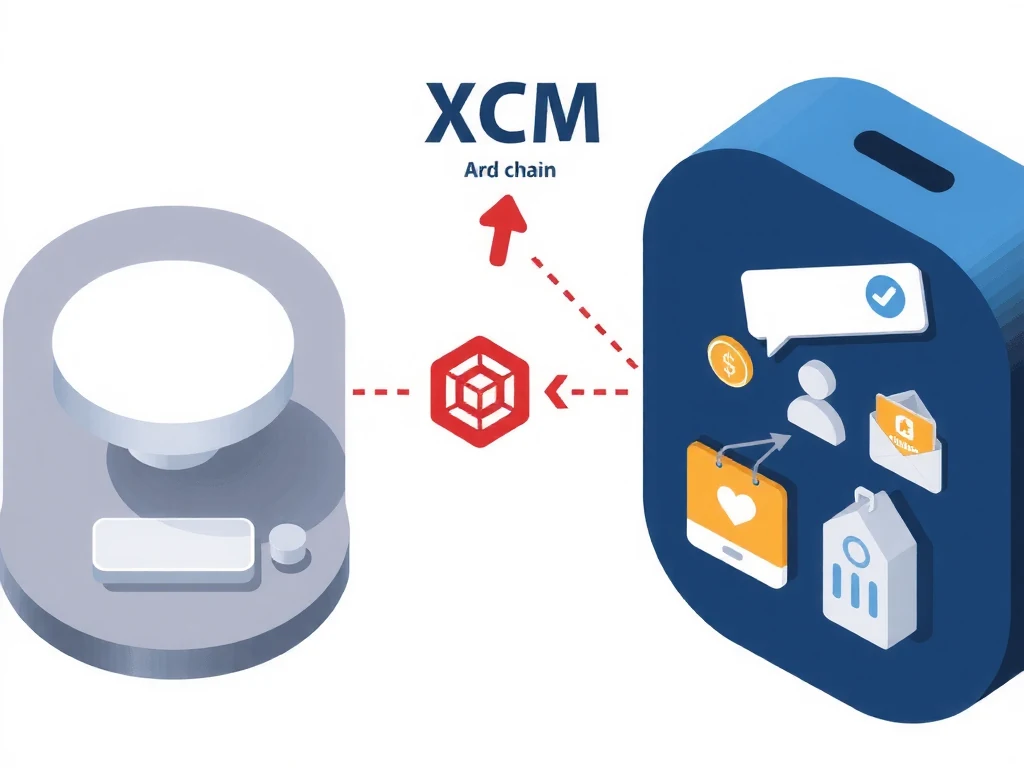
Technical flow showing XCM message passing between Unique Network and other Polkadot parachains
Understanding XCM NFT transfers requires looking at how Polkadot's architecture enables secure cross-chain communication:
- Shared Security: All Polkadot parachains share the same validator set and economic security guarantees
- XCM Protocol: Cross-Consensus Message Passing provides a standard format for parachains to communicate
- Asset Teleportation: NFTs can be "teleported" between chains—burned on source, minted on destination—without intermediary contracts
- Native Integration: XCM is built into the Polkadot runtime, not added as a separate protocol
Cross-Chain NFT Protocol Comparison
To understand why XCM matters, let's compare it with existing cross-chain NFT solutions:
| Platform | Protocol | Security Model | Cost per Transfer | Trust Assumptions |
|---|---|---|---|---|
| Unique XCM | Native XCM | Polkadot relay | ~$0.01 | Minimal (native protocol) |
| LayerZero | Oracle-based | Multi-sig | ~$0.50 | Oracle trust |
| Axelar | Proof-of-stake | Validator set | ~$0.30 | External validators |
| Wormhole | Guardian network | 19 guardians | ~$0.40 | Guardian trust |
The differences are stark. XCM transfers cost ~$0.01 compared to $0.30-0.50 for traditional bridges—97-99% savings. More importantly, XCM inherits Polkadot's security rather than requiring trust in external validators or guardians.
XCM Security Framework

Security comparison between XCM native protocol and third-party bridge architectures
Security in cross-chain systems isn't abstract—it determines whether your assets are safe when chains communicate. Here's how XCM stacks up:
| Security Factor | XCM Native | Third-Party Bridges |
|---|---|---|
| Consensus Finality | ~6 seconds (Polkadot) | Variable (10 min - hours) |
| Trust Model | Native protocol | External validators/oracles |
| Smart Contract Risk | None (runtime level) | High (bridge contracts) |
| Economic Security | $10B+ DOT staked | Bridge-specific collateral |
| Historical Exploits | 0 major incidents | $2B+ in bridge hacks |
The XCM security model is fundamentally different from bridges. Instead of trusting a separate set of validators or guardians, XCM relies on Polkadot's existing economic security—the same validators securing the relay chain also validate cross-chain messages.
Use Case Opportunity Matrix
XCM NFT transfers unlock applications that were previously impractical or too risky with traditional bridges:
Game items can move between gaming parachains without leaving the Polkadot ecosystem. A sword earned in one RPG can be used in another, with ownership verified on any Polkadot chain.
NFTs representing real-world assets can move to lending parachains for collateralization, then return to their original chain—all with XCM security guarantees.
Tokenized real estate or commodities can exist on multiple parachains simultaneously, serving different use cases (trading, collateral, governance) while maintaining unified ownership.
Competitive Landscape and Market Position
Unique Network's expansion in 2026 positions it as the leading cross-chain NFT infrastructure within Polkadot, but the competitive landscape extends beyond the ecosystem:
- LayerZero dominates multi-chain NFTs but relies on oracle-based security
- Axelar provides general message passing with proof-of-stake validators
- Wormhole connects Solana and Ethereum but has experienced major exploits
- Native bridges (Polygon, Arbitrum) offer security but are ecosystem-specific
Unique's advantage is specificity within a secure ecosystem. By focusing on NFTs within Polkadot rather than trying to bridge everything everywhere, it can optimize for NFT-specific use cases while inherring Polkadot's security.
Risks and Considerations
Despite the technical advantages, several challenges remain:
- Polkadot Dependency: XCM only works between Polkadot parachains. NFTs can't XCM to Ethereum or Solana—they still need bridges for those ecosystems.
- Adoption Curve: Developers must build XCM-compatible NFT standards. This takes time and education.
- Parachain Coordination: XCM requires both chains to support the protocol. If a parachain hasn't implemented XCM, transfers can't occur.
- Competition from L2s: Ethereum L2s (Arbitrum, Optimism, Base) offer fast, cheap NFT transfers that compete with XCM on cost and speed—if not security.
What to Watch

Monitor these developments as Unique Network expands XCM:
- Parachain Adoption: Which additional parachains integrate XCM NFT support beyond the initial expansion?
- Developer Tools: Does Unique release SDKs that make XCM integration trivial for NFT projects?
- Volume Metrics: When do we see meaningful transfer volumes, not just technical demonstrations?
- Cross-Ecosystem Bridges: How does Unique handle NFTs that need to leave Polkadot—partnerships with LayerZero or similar?
TL;DR
Unique Network is expanding cross-chain NFT XCM to additional Polkadot parachains in 2026, enabling native NFT transfers that inherit Polkadot's security. XCM costs ~$0.01 per transfer—97-99% less than traditional bridges—while eliminating smart contract risks. The expansion enables gaming cross-chain assets, DeFi collateral portability, and RWA representation within the Polkadot ecosystem. Competitive advantages include native protocol security versus third-party bridges, though limitations exist: XCM only works between Polkadot parachains, requiring traditional bridges for Ethereum/Solana connectivity. Watch for parachain adoption rates, developer tooling releases, and meaningful transfer volume metrics.
Sources
Primary: Unique Network official documentation, Polkadot Developer Docs XCM specification, Unique Network GitHub repositories. Market data: DappRadar cross-chain metrics, DeFi Llama bridge TVL data. Competitive analysis: LayerZero, Axelar, Wormhole technical documentation. Security data: Chainalysis bridge exploit reports, Polkadot network statistics. Calculations based on current DOT pricing and XCM transaction benchmarks.
Related Posts
-

Send Privately with Friends: Startale App Launches Shielded Transfers, Rewards 70 STAR Points for Privacy Pioneers
Startale App introduces Friends, a new mini app bringing shielded transfers to Soneium. Learn how to protect your onchain privacy using zero-knowledge proofs and earn 70 STAR points during the Summer Fiesta campaign.
-

September Harvest: Startale App's Autumn Campaign Offers Up to 200 STAR Points for Onchain Activity
Startale App launches its September Harvest campaign, offering up to 200 STAR Points for onchain activity. Discover how to earn rewards through cross-chain deposits, swaps, and vault staking on Soneium.
-
Startale App Opens ETH Earn Vault: Wallet-Native Yield Comes to Soneium
Startale introduces a wallet-native ETH Earn vault, bringing seamless, auto-compounding yield to the Soneium ecosystem. Experience decentralized finance that feels like a traditional savings account without ever leaving your wallet.
-

Soneium Score: Twelve Seasons, One Community
Soneium Score has officially concluded its twelfth and final season, marking the end of a year-long experiment in onchain reputation. With over 720,000 participations, the program proves that consistent activity creates lasting community value.