

Fed Governor Cook on Tokenization: Why the Federal Reserve Is Taking Digital Assets Seriously
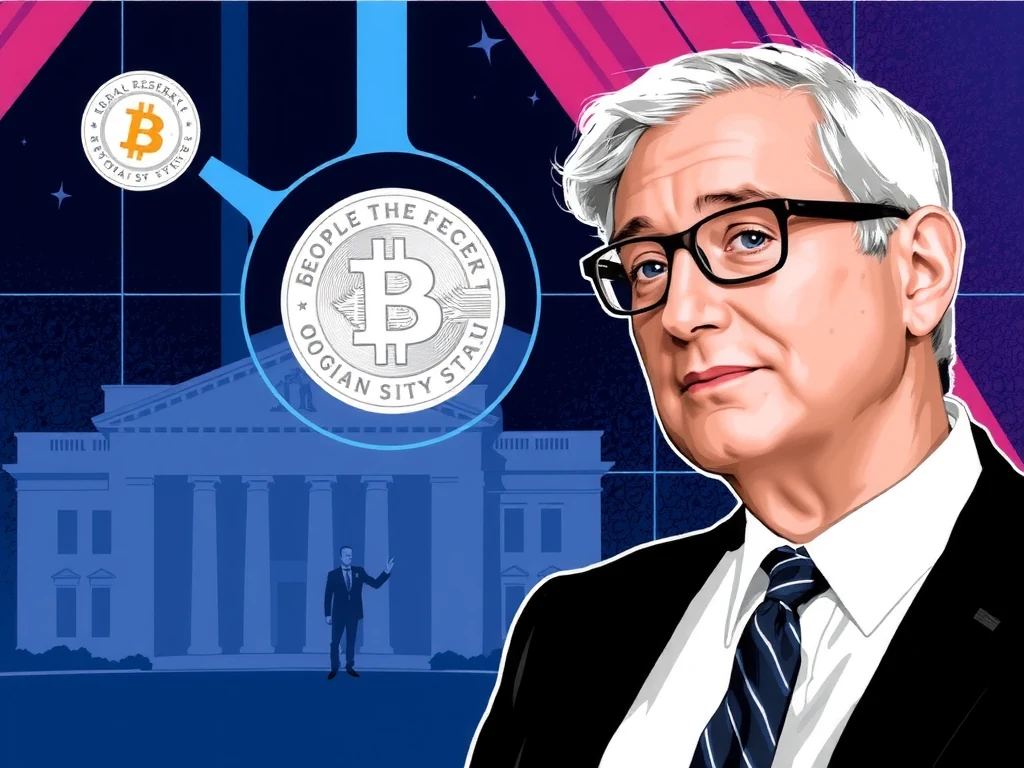
Governor Cook's May 2026 speech reveals the Fed's evolving stance on tokenization and its implications for Bitcoin markets.
On May 8, 2026, Federal Reserve Governor Lisa Cook delivered a speech that signaled a significant shift in the central bank's approach to digital assets. Speaking at the Central Bank of West African States conference in Dakar, Senegal, Cook addressed what she called "the perspectives on tokenization and implications for the financial system." The speech was notable not merely for its content, but for its existence: a Federal Reserve governor devoting a major address to tokenization suggests the technology has moved from peripheral curiosity to systemic consideration.
Cook's remarks come at a pivotal moment. Tokenized assets in the United States have more than doubled in recent years, according to her speech. Major financial institutions are processing hundreds of billions in daily transactions on tokenized settlement platforms. And Bitcoin, the original tokenized asset, continues to demonstrate that decentralized digital scarcity can function as both a speculative instrument and, increasingly, a treasury reserve asset. For market participants, Cook's speech offers clues about how the Federal Reserve views the intersection of traditional finance and blockchain technology.
Key Metrics at a Glance
What Cook Actually Said: The Speech in Context
Cook's address was carefully calibrated. She acknowledged that tokenization "could reshape global financial markets by improving cross-border payments, liquidity management and access to capital markets." At the same time, she warned that "the fast-growing technology also introduces new financial stability and operational risks." This balanced framing—opportunity alongside risk—reflects the Federal Reserve's institutional tendency toward caution, but it also represents a departure from earlier Fed rhetoric that often treated digital assets as speculative novelties.
Perhaps most significant was Cook's explicit statement that tokenization would function "as a complement to traditional finance rather than supplanting it." This formulation matters for Bitcoin markets because it establishes a framework for coexistence rather than displacement. If the Federal Reserve views tokenization as complementary infrastructure, regulatory policy may increasingly accommodate Bitcoin and similar assets as permanent features of the financial landscape rather than temporary disruptions requiring suppression.
The Scale of Tokenization: By the Numbers
Cook's speech cited concrete data points that illustrate tokenization's growing relevance. One market participant, Broadridge, announced processing over $400 billion in daily repo transactions on its tokenized settlement platform—representing 392% year-over-year growth. The Federal Reserve Bank of New York has published research on tokenized investment funds and their financial stability implications. These are not marginal developments; they suggest tokenization is becoming infrastructure for significant portions of wholesale financial markets.
Implications for Bitcoin Markets
While Cook's speech focused on institutional tokenization rather than retail cryptocurrency markets, the implications for Bitcoin are significant. If the Federal Reserve accepts tokenized assets as legitimate financial infrastructure, the conceptual barrier between "traditional finance" and "crypto" begins to dissolve. Bitcoin may increasingly be evaluated not as a speculative anomaly but as a functioning component of a broader tokenized ecosystem.
The speech also matters for Bitcoin because it signals regulatory trajectory. A Federal Reserve that acknowledges tokenization's benefits while warning of its risks is likely to pursue measured regulation rather than prohibition. For Bitcoin holders and institutions considering Bitcoin treasury strategies, this regulatory posture—neither hostile nor laissez-faire—may provide the clarity needed for broader adoption.
What to Watch Next
- Fed policy statements: Whether other Fed governors or the Board itself expands on Cook's framework.
- Regulatory implementation: How the SEC and CFTC align their tokenization rules with the Fed's complementary stance.
- Institutional adoption: Whether banks and asset managers accelerate tokenization projects following Fed acknowledgment.
- Bitcoin correlation: Whether Bitcoin increasingly trades as a tokenized asset alongside traditional financial instruments.
TL;DR — The Bottom Line
What Happened: Federal Reserve Governor Lisa Cook delivered a major speech on tokenization, acknowledging its potential to reshape financial markets while warning of new risks.
Why It Matters: It signals the Fed's recognition of tokenized assets as permanent financial infrastructure, with implications for Bitcoin's regulatory treatment.
Key Framework: Tokenization will "complement, not replace" traditional finance—establishing a coexistence model rather than displacement.
Risks Remain: Financial stability and operational concerns mean regulation will accompany growth, but prohibition appears unlikely.
What to Watch: Follow-up Fed policy statements, regulatory alignment between agencies, institutional adoption acceleration, and Bitcoin's evolving correlation with tokenized assets.
Categories: Bitcoin, Policy, Federal Reserve
Tags: Federal Reserve, Lisa Cook, tokenization, digital assets, financial stability, monetary policy, BCEAO
Sources:
- Federal Reserve: Speech by Governor Cook on Tokenization
- Federal Reserve: Speech PDF
- BIS: Lisa Cook Speech Review
- American Banker: Fed's Cook on Tokenization
Filip Peshko is Senior Opinion Columnist & Blockchain Technology Analyst at TotesTek. Views expressed are his own.
Related Posts
-
Government Forfeits Over $400 Million in Assets Tied to Helix Darknet Cryptocurrency Mixer
The Department of Justice announced on January 29, 2026, that Judge Beryl A. Howell entered a final order of forfeiture for more than $400 million in seized cryptocurrencies, real estate, and monetary assets tied to Helix, a darknet cryptocurrency mixing service that processed ov
-
Federal Reserve Sunsets Novel Activities Supervision Program, Returning Crypto and Fintech Oversight to Normal Supervisory Process
The Federal Reserve Board announced on August 15, 2026, that it would sunset its Novel Activities Supervision Program and return oversight of banks' crypto and fintech activities to the standard supervisory process. The announcement is less dramatic than it sounds — the Fed is no
-

Aave Proposes Onboarding BTC.b to Aave V4 Core Instance on Ethereum Mainnet
Aave Governance submitted a proposal on August 28, 2026, to onboard BTC.b — Bitcoin-backed collateral on the Avalanche network — to the Aave V4 Core Instance on Ethereum Mainnet. The proposal represents a significant expansion of Bitcoin representation within decentralized lendin
-

Federal Reserve Publishes Research on Stablecoins and Digital Asset Runs in August FEDS Paper
The Federal Reserve's research division released a paper in August that few retail investors will read but that every stablecoin holder should understand. Finance and Economics Discussion Series 2026-055 examines the mechanics of digital asset runs, the conditions that trigger th