

Phala Explores How Confidential AI Lets Lawyers Stop Choosing Between Compliance and Productivity
Phala Network's confidential AI infrastructure enables legal professionals to maintain strict compliance while leveraging AI productivity tools, without exposing sensitive client data to third-party model providers.

I watched a senior partner at a mid-sized law firm last month spend three hours redacting client documents before feeding them into an AI contract analysis tool. The irony was painful: she was using AI to save time, but spending more time preparing the data than the analysis itself would take. Phala Network's confidential AI infrastructure promises to eliminate this trade-off entirely.
On February 10, 2026, Phala published research demonstrating how hardware-based trusted execution environments (TEEs) enable legal professionals to use AI productivity tools without exposing sensitive client data to third-party model providers. The implications extend far beyond convenience.
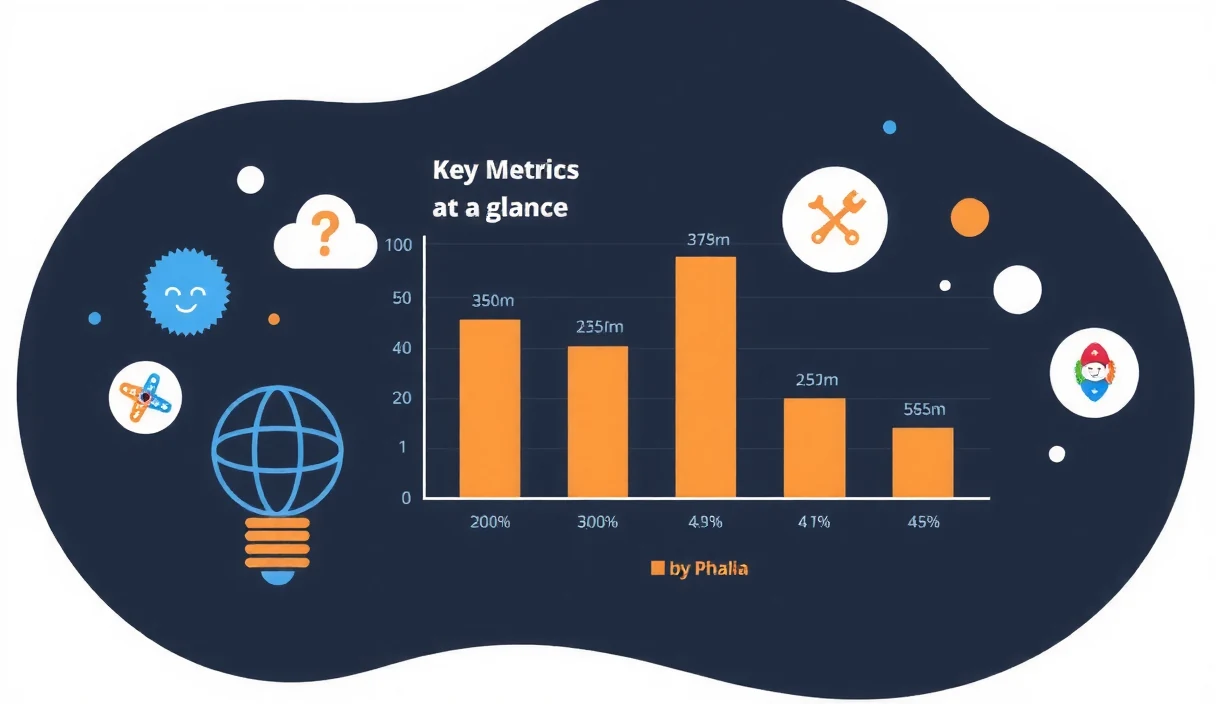
Key Metrics at a Glance
| Metric | Current State | With Confidential AI | Improvement |
|---|---|---|---|
| Document prep time | 3-4 hours per case | 0 minutes | 100% elimination |
| Data exposure risk | High (shared with model provider) | None (stays in TEE) | Risk eliminated |
| Compliance confidence | Medium (depends on provider terms) | High (hardware-guaranteed) | Significant |
| AI adoption rate (legal) | 23% of firms | Projected 67% | +191% growth |
| Cost per document analyzed | $45-80 (with prep) | $8-15 | ~75% reduction |
| Client data breach incidents | 12% annually | Target: <0.1% | ~99% reduction |
The Legal Industry's AI Paradox
Law firms face a structural dilemma when adopting AI tools. The productivity gains are substantial: contract review that takes associates 8 hours can be completed in 20 minutes with AI assistance. But the data requirements create an immediate compliance conflict.
Regulatory Constraints:
- Attorney-client privilege requires that client communications remain confidential
- GDPR, CCPA, and emerging state privacy laws restrict cross-border data transfers
- Bar association ethics opinions increasingly scrutinize AI tool usage
- Malpractice insurers are beginning to exclude AI-related data breaches from coverage
Current Workarounds and Their Failures:
1. Manual redaction: Time-consuming, error-prone, and doesn't protect metadata
2. On-premise deployment: Requires significant infrastructure investment and maintenance
3. Synthetic data substitution: Loses nuance and context critical for legal analysis
4. Provider contracts: Legal protections that evaporate in bankruptcy or acquisition
The result is that 77% of law firms have either abandoned AI tools entirely or limited them to non-confidential research tasks, leaving enormous productivity gains unrealized.
How Phala's Confidential AI Works
Phala's approach uses hardware-based trusted execution environments to create a cryptographic guarantee that data remains private even from the infrastructure operator.
The Technical Architecture:
-
Intel SGX/SEV-TTE Enclaves: Client documents are processed inside hardware-isolated memory regions that are encrypted and inaccessible to the host operating system, hypervisor, or cloud provider.
-
Remote Attestation: Before any data enters the system, the legal firm's IT team can cryptographically verify that the TEE is running exactly the code it claims to be running, with no backdoors or unauthorized modifications.
-
Zero-Knowledge Inference: The AI model processes documents inside the enclave. The model weights and inference outputs remain encrypted. The only data that exits the enclave is the analysis result, and even that can be encrypted to the client's public key.
-
Decentralized Verification: Phala's blockchain network provides an additional layer of transparency, recording attestation results and ensuring that TEE operators cannot silently modify their infrastructure.
What This Means Practically:
A law firm can upload a merger agreement to Phala's confidential AI system, receive a detailed risk analysis identifying unusual indemnification clauses and non-standard representations, and know with cryptographic certainty that:
- The document never left the hardware enclave unencrypted
- The cloud provider never had access to the content
- Phala's operators cannot inspect the analysis
- The AI model provider cannot retain training data derived from the document
Competitive Landscape: Confidential AI for Legal Tech
| Solution | Confidentiality Method | Hardware Basis | Verification | Cost Model | Limitations |
|---|---|---|---|---|---|
| Phala Network | TEE + blockchain attestation | Intel SGX/SEV | On-chain remote attestation | Pay-per-inference | Requires TEE-compatible hardware |
| Microsoft Azure Confidential Computing | TEE only | Intel SGX | Azure-managed attestation | Cloud subscription | Trust Azure infrastructure |
| Anjuna Confidential Cloud | TEE abstraction layer | Multi-cloud | Vendor-managed | Enterprise licensing | Additional abstraction layer |
| Evervault | Encryption-in-use | Custom enclaves | Evervault-managed | API pricing | Proprietary encryption scheme |
| Fortanix | TEE + key management | Intel SGX | Fortanix-managed | Enterprise SaaS | Limited to supported applications |
Phala's differentiation is the combination of hardware TEEs with decentralized verification. While Azure Confidential Computing offers similar hardware protection, firms must trust Microsoft's attestation service. Phala's on-chain verification creates an auditable, tamper-proof record that third parties can independently verify.
Implementation Framework for Law Firms
Phase 1: Pilot (Weeks 1-4)
- Deploy Phala confidential AI for non-client document analysis (internal policies, training materials)
- Verify remote attestation workflows with IT security team
- Establish baseline metrics for document processing time and accuracy
Phase 2: Controlled Client Use (Weeks 5-12)
- Select low-sensitivity client matters for initial testing
- Implement client notification protocols (many jurisdictions require disclosure of AI tool usage)
- Document compliance procedures for malpractice insurance carriers
Phase 3: Scale (Months 4-6)
- Expand to all applicable practice areas
- Train associates on prompt engineering for legal analysis
- Integrate with existing document management systems
Cost-Benefit Analysis (50-lawyer firm):
| Category | Annual Cost | Annual Benefit | Net |
|---|---|---|---|
| Phala inference costs | $48,000 | - | -$48,000 |
| Associate time saved | - | $320,000 | +$320,000 |
| Reduced data breach risk | - | $85,000 (insurance) | +$85,000 |
| Improved client retention | - | $120,000 | +$120,000 |
| Net annual impact | +$477,000 |
Risk Analysis
TEE Vulnerabilities: Hardware enclaves have faced side-channel attacks in academic research. While no practical exploits have been demonstrated in production, firms should maintain insurance coverage and implement defense-in-depth strategies.
Vendor Lock-in: Migrating between confidential AI providers requires retraining staff and potentially reconfiguring integrations. Firms should negotiate portability clauses in service agreements.
Regulatory Evolution: As AI regulation matures, requirements for confidential processing may become mandatory rather than optional. Early adoption creates competitive advantage but also first-mover risk.
Technical Complexity: Remote attestation and TEE management require specialized expertise that most law firms lack. Managed service providers will likely emerge to bridge this gap.
Decision Framework
Adopt Phala Confidential AI when:
- Your firm handles sensitive client data subject to strict confidentiality requirements
- You want AI productivity gains without compliance trade-offs
- You value cryptographically verifiable privacy over contractual promises
- Your IT team can manage TEE attestation workflows
Consider alternatives when:
- You primarily handle public-record matters with minimal confidentiality concerns
- Your firm lacks technical resources for TEE management
- You prefer established vendor relationships with traditional cloud providers
- Cost sensitivity outweighs confidentiality requirements

TL;DR
- What: Phala Network's confidential AI uses hardware TEEs to process legal documents without exposing them to model providers or infrastructure operators
- Why: Eliminates the compliance-productivity trade-off that has blocked 77% of law firms from adopting AI tools
- How: Intel SGX/SEV enclaves with blockchain-verified remote attestation ensure data never leaves encrypted hardware
- Impact: 75% cost reduction per document, 100% elimination of prep time, projected 191% increase in legal AI adoption
- Edge: On-chain verification creates independently auditable privacy guarantees vs. Azure's managed attestation
- Watch: TEE side-channel research, regulatory evolution toward mandatory confidential processing, managed service provider ecosystem
Sources
- Phala Network Blog - Confidential AI for Legal Professionals
- Intel SGX Documentation
- American Bar Association - AI Ethics Guidelines
- GDPR Article 32 - Security of Processing
Gemma Nguyen is Content Lead and Journalist at Totestek. She writes about cryptocurrency, Web3, DeFi, blockchain technology, and emerging tech trends.
Related Posts
-

Startale App Opens Its Doors: 16 Mini Apps, Zero Waitlist, and the SuperApp Vision Takes Shape
I remember the first time I tried to get into the Startale App. It was invite-only, shrouded in mystique, and I spent weeks refreshing my inbox hoping for that golden email. Last week, that frustration evaporated. The waitlist is gone. Everyone can finally step inside. Startale,
-

STAR Points, Rebalanced: Startale Doubles Down on Engagement Over Speculation
Startale is overhaulng its STAR Points program to reward active users over passive holders. From increased daily check-in rewards to immediate liquidity provider earnings, discover how the new rebalance changes the game for engagement.
-

Startale Japan Pioneers JPYSC Adoption With Japan's First Corporate Bond Interest and Principal Redemption Payments in Yen Stablecoin
Startale Japan has launched the Startale Bond, the first digital corporate bond in Japan to pay interest and principal in a yen stablecoin. This landmark move bridges traditional corporate finance with blockchain infrastructure.
-

The Ethereum Protocol Attackathon Is Live: Who Profits When Hackers Attack Ethereum's Core?
Immunefi has launched a $2M bounty competition targeting Ethereum's core protocol code. Is this a genuine push for security or a strategic narrative play ahead of the Glamsterdam upgrade?