

Doosan Robotics and peaq Partner on Physical AI to Finance Robots and Monetize Their Spare Capacity
Doosan Robotics partners with peaq to integrate Physical AI capabilities into decentralized machine economies, enabling robots to autonomously finance operations and monetize unused capacity on peaq's Polkadot-based DePIN network.
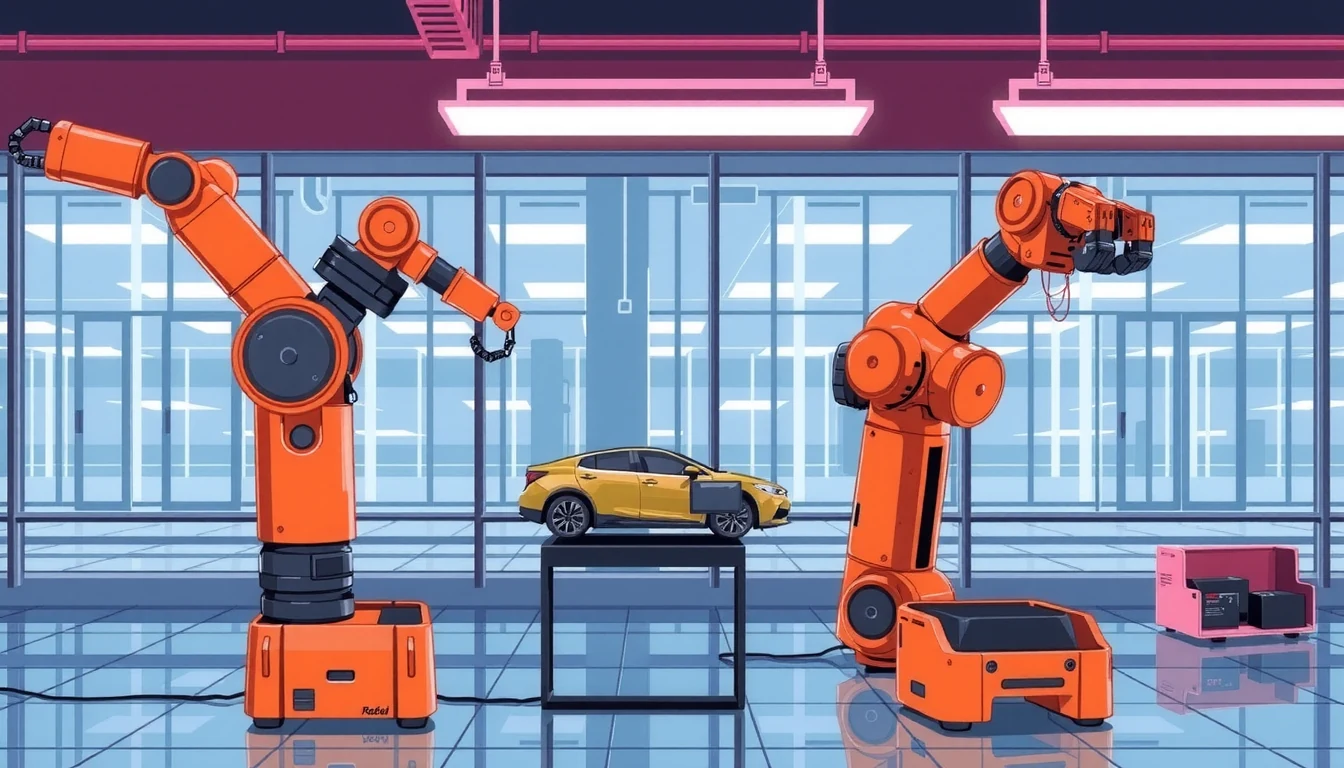
I have written about automated finance for years, but I have rarely seen a partnership that treats a machine as its own balance sheet. Most industrial robots are financed against the buyer's credit rating, depreciating on a schedule that has little to do with what the machine actually does. That is what makes the new alliance between Doosan Robotics and peaq worth watching. It is not just another blockchain integration. It is an attempt to turn a robot's daily output into a verifiable asset class.
Key Metrics at a Glance
| Metric | Detail |
|---|---|
| Partnership Announced | September 16, 2026 |
| First Robot Status | Live on peaqOS, testing in Berlin |
| Doosan Global Presence | 45 countries, 5 kg to 30 kg payload range |
| Safety Certification | PL e, Category 4 by TÜV SÜD |
| Sensor Standard | Torque sensors in all six joints |
| Next Milestone | Technical University of Munich hackathon, October 2026 |
What This Partnership Actually Does
Doosan Robotics and peaq have entered an agreement aimed at giving robots the infrastructure to do business on their own terms. The core idea is simple: a robot that can prove what it did, when it did it, and how well it performed becomes a different kind of collateral than a line item on a factory owner's balance sheet.
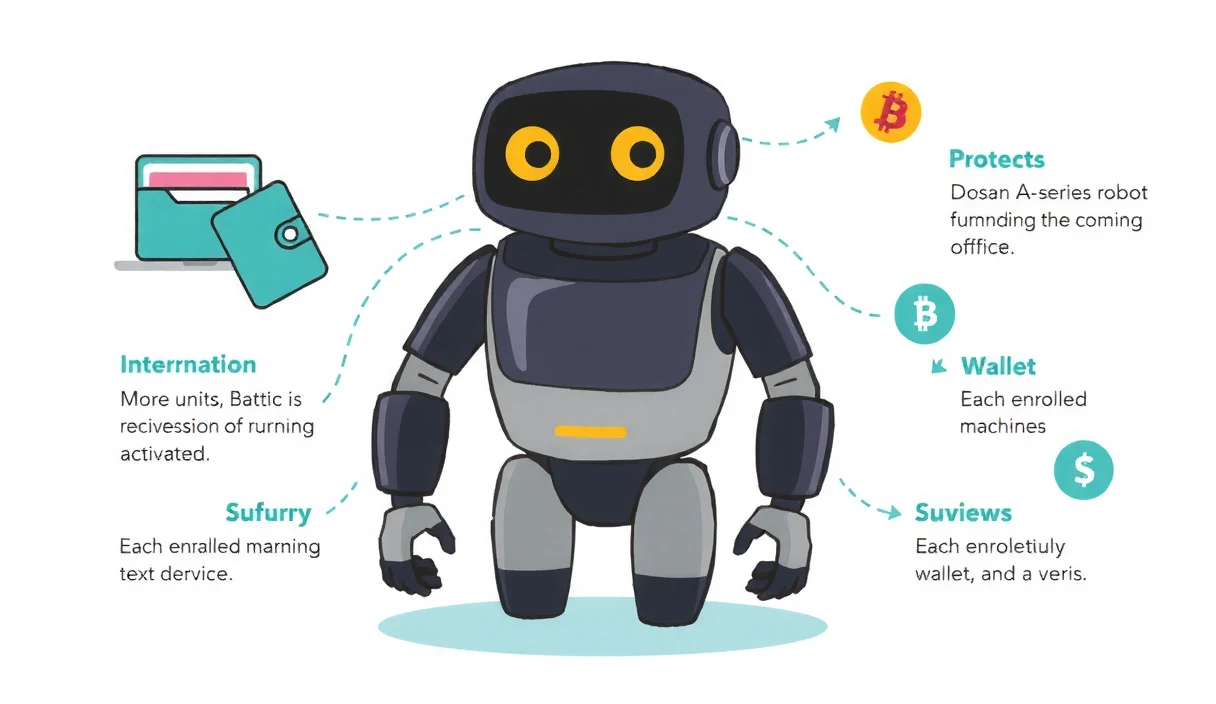
The first Doosan A-Series robot is already running peaqOS in peaq's Berlin office. More units are being activated in the coming months. Each enrolled machine receives an identity, a wallet, and a verified performance record that lenders and insurers can assess directly.
The Gap in Industrial Robot Finance
A robot works. The operator knows it works. And no one else can verify it. Utilization sits in a log file. Uptime is a claim. That makes a productive robot hard to underwrite, hard to resell, and hard to defend on a spreadsheet.
Doosan Robotics builds collaborative robots, or cobots, deployed across manufacturing, logistics, energy, medical, and food and beverage sectors. The company is one of the few cobot makers to cover 5 kg to 30 kg payloads from a single control platform. Every Doosan cobot carries a torque sensor in all six joints as standard, so force, contact, and cycle behavior are sensed at the joint rather than inferred from motor current. The machine already produces the fine-grained evidence a performance record needs.
What peaqOS Gives Every Doosan Robot
peaqOS layers several capabilities onto each enrolled machine:
- Activate gives the robot an identity and a wallet.
- Qualify turns its track record into a credit rating lenders can check.
- Verify adds the manufacturer's attestation that it is a genuine Doosan machine with genuine firmware and history.
- Scale lets it pay for the compute, storage, and services it needs.
- Stream lets a fleet share what it learns peer to peer, without revealing raw data.
- Monetize lets it earn from spare resources, such as data or compute.
- Tokenize turns it into a liquid asset that can be financed and share revenue with co-owners.
Privacy First
Physical AI raises the stakes on data. These machines see workcells, processes, and the people around them, and none of that can leave the customer's control. Under this partnership, it does not. Processing happens locally, at the machine or edge layer, on the Doosan controller inside the customer's own cell. peaq does not collect, receive, or store raw machine data. Verification produces proofs and aggregate indicators only, and no operator-critical data is disclosed.
What gets shared is that the robot performed, not what it saw. A fleet of Doosan robots can pool what they learn to train better models, with no customer's workcell exposed.
The Roadmap
Phase One is already complete. peaqOS has been installed on the first Doosan A-Series robot and is in active testing.
Phase Two places the first robot with a supervised student cohort at the Technical University of Munich, where teams build on the stack against a jointly defined challenge, culminating in a hackathon at the end of October.
Phase Three adds more robots in commercial deployments and training centers. Each activation adds identity, verified performance, and a financial record that lenders and insurers can assess machine by machine.
Phase Four targets machine-based financing across the Doosan range: a robot underwritten against what it demonstrably does and earns, standing as the collateral behind its own purchase, rather than against the balance sheet of whoever owns it.
Why This Matters for DePIN and Machine Economies
The Decentralized Physical Infrastructure Networks, or DePIN, sector has spent years talking about machines that earn. Most of those conversations have focused on sensors, energy, or wireless networks. Industrial robots are a harder problem because they are expensive, complex, and safety-critical. Doosan brings the hardware credibility. peaq brings the on-chain identity and finance rails. Together, they are testing whether a factory cobot can become a self-financing asset.
If the pilots succeed, the implications go beyond Doosan. Any machine with verifiable output could, in theory, be underwritten the same way. The shift from owner-based financing to machine-based financing would reshape how industrial equipment is bought, sold, and insured.
TL;DR
- What: Doosan Robotics and peaq are integrating peaqOS into Doosan cobots to create verifiable, financeable machine assets.
- Why: Industrial robots are currently financed against buyer credit, not machine performance, because no trusted performance record exists.
- Impact: The first robot is already live on peaqOS; the roadmap leads to machine-based financing, spare capacity monetization, and tokenized robot assets.
- Watch: The Technical University of Munich hackathon in October 2026 and the first commercial deployment pilots.
Sources
- peaq Official Blog: Doosan Robotics and peaq Partner on Physical AI
- Doosan Robotics Official Website
- peaq Machine Explorer
Gemma Nguyen is TotesTek's Content Lead and Journalist, covering cryptocurrency, Web3, DePIN, and the intersection of blockchain with real-world infrastructure.
Related Posts
-

The Meme Coin That Grew a Digital Identity: Inside WUD Universe and the Cozy Cabin
There comes a moment in the lifecycle of every meme coin when the community must answer a fundamental question: what now? Most meme coins handle this the way a firework handles gravity. They peak, they fade, and someone eventually asks what happened to the treasury while the Disc
-

Moonbeam Strategic Update: Moonbeam Network Relaunches on Base
I remember when Moonbeam first launched as a Polkadot parachain. It was one of the most anticipated deployments in the ecosystem, promising Ethereum compatibility inside Polkadot's shared security model. Four years later, the landscape looks very different. On July 3, 2026, Moonb
-

Moonriver Migrates to Base: When a Kusama Parachain Becomes an Ethereum Layer 2 Token
The announcement arrived on July 7, 2026, with the polite language of a network that had spent four years building its own blockchain infrastructure and was now admitting that infrastructure was not where the users were. Moonriver—the Kusama parachain that had served as the canar
-

Hyperbridge Update on Recovery Efforts and Next Steps After April Token Gateway Exploit
I was on a call with a DeFi protocol founder when the news broke. Hyperbridge's Token Gateway had been exploited, and all bridging operations were paused. The founder's first question wasn't about the attacker. It was: 'How long until they publish a detailed recovery plan?' In th