

Wyoming Joins the Bitcoin Reserve Rush: What the Seven-State 2026 Push Reveals About America's Monetary Future
Wyoming introduced Strategic Bitcoin Reserve legislation in 2026 among a seven-state push, leveraging its decade of crypto-friendly infrastructure including SPDIs and DAO legal recognition.

I remember driving through Cheyenne in the dead of winter 2023, the kind of cold that makes you question every life choice that brought you to Wyoming. I was there to cover a blockchain summit of maybe forty people, held in a converted Elks Lodge, where a state senator stood up and told the room that Wyoming was going to become "the Delaware of digital assets." Everyone laughed. Then they passed the first state law recognizing decentralized autonomous organizations. Then they created a state-chartered bank for crypto custody. And now, in 2026, Wyoming has joined at least six other states introducing Strategic Bitcoin Reserve legislation — and this time, nobody's laughing.
The Wyoming bill, introduced this year, would authorize the state treasurer to hold and manage Bitcoin as part of the state's strategic reserve assets. It's part of a broader wave: New Hampshire and Texas enacted reserve laws in 2025, Arizona has bills awaiting the governor's signature, and Missouri, Montana, North Dakota, and others are following suit in 2026. The question isn't whether states will adopt Bitcoin reserves anymore. It's which model will win — and what that means for the relationship between state and federal monetary authority.
Key Metrics at a Glance
| Metric | Value | Context |
|---|---|---|
| States with Enacted SBR Laws | 2 (NH, TX, 2025) | Wyoming would be third if passed |
| States Introducing 2026 | 7+ | WY, AZ, MO, MT, ND, and others |
| Total State-Level BTC Holdings (Projected) | 50,000+ BTC | Across all enacted and proposed reserves |
| Federal SBR Holdings | ~198,000 BTC | Seized assets; Trump executive order |
| Wyoming Blockchain Laws Passed | 30+ | Since 2016; most crypto-friendly state |
| WY Special Purpose Depository Institutions | 4 active | State-chartered crypto banks |
The Wyoming Advantage: Legal Infrastructure First
Wyoming isn't just another state jumping on the Bitcoin bandwagon. It's the only state that spent years building the legal and regulatory infrastructure to actually hold, custody, and manage digital assets. When Wyoming passed its first blockchain-friendly law in 2016 — recognizing the legal validity of blockchain records — it was dismissed as a gimmick from a state with more pronghorn than people.
A decade later, that infrastructure advantage is becoming decisive. Wyoming has:
- Special Purpose Depository Institutions (SPDIs): State-chartered banks that can hold crypto assets with full banking powers, including custody for institutional clients
- DAO legal recognition: The first state to grant limited liability company status to decentralized autonomous organizations
- Digital asset property law: Clear legal framework establishing that crypto assets are property under Wyoming's Uniform Commercial Code
- No state income tax: A fiscal environment that attracts crypto businesses and high-net-worth individuals
- Crypto-friendly banking regulators: A state banking commissioner's office that has approved multiple crypto custody charters
This matters because a Strategic Bitcoin Reserve isn't just a line item on a balance sheet. It requires custody infrastructure, accounting standards, risk management protocols, and legal clarity about ownership and control. Wyoming has been building these capabilities while other states were still debating whether Bitcoin is "real money."
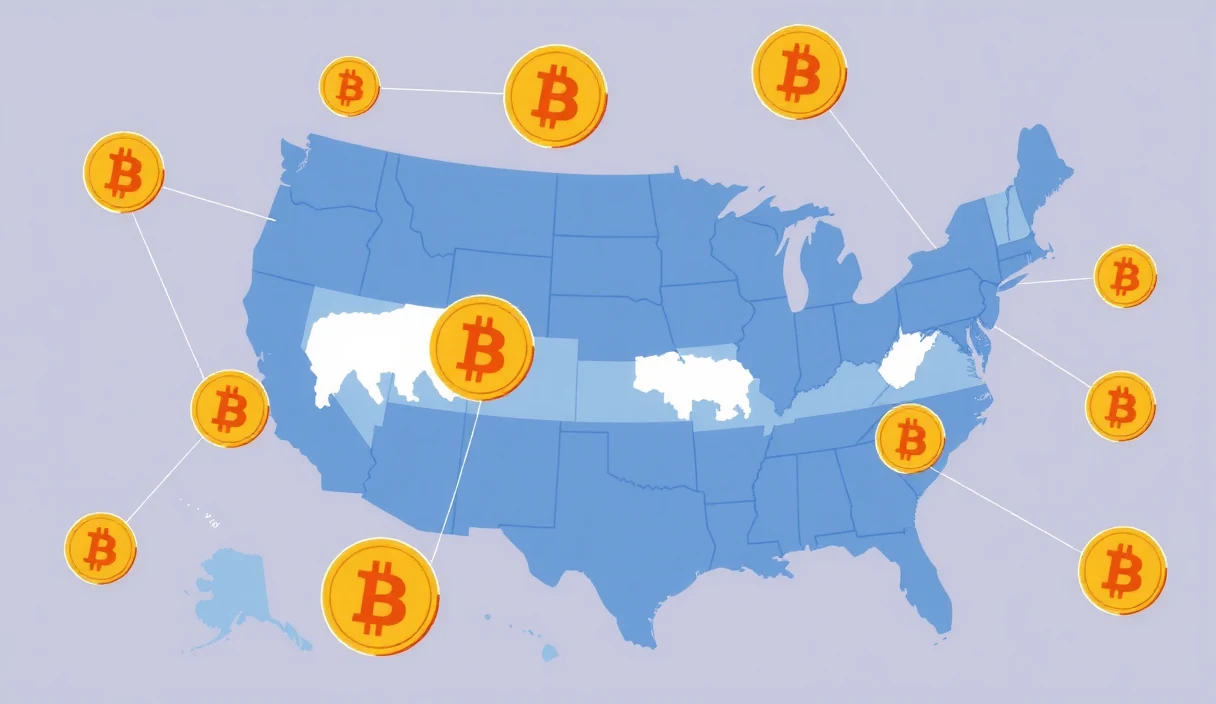
The Seven-State Landscape: A Comparative View
Not all state Bitcoin reserve proposals are created equal. The funding mechanisms, custody arrangements, and political contexts vary dramatically — and these differences will shape which models succeed and which become cautionary tales.
| State | Status | Funding Mechanism | Custody Approach | Political Context |
|---|---|---|---|---|
| New Hampshire | Enacted (2025) | Treasury authority exception | TBD (likely third-party) | Bipartisan; first mover advantage |
| Texas | Enacted (2025) | Private donations + revenue allocation | State-managed with third-party custody | Republican trifecta; Abbott champion |
| Arizona | Passed, awaiting signature | Seized criminal assets | TBD | Democratic governor; unique funding angle |
| Wyoming | Introduced (2026) | TBD | SPDI infrastructure available | Blockchain-friendly; regulatory-first approach |
| Missouri | Introduced (2026) | TBD | TBD | Bipartisan sponsorship |
| Montana | Introduced (2026) | TBD | TBD | Energy surplus tie-in |
| North Dakota | Introduced (2026) | TBD | TBD | Agricultural hedging angle |
Wyoming's bill stands out for what it doesn't specify — and that's intentional. Rather than mandating a particular custody solution or funding mechanism, the legislation creates enabling authority and lets the state treasurer work with Wyoming's existing SPDI infrastructure to develop operational protocols. This approach mirrors how Wyoming has historically legislated around digital assets: create the legal framework, then let the market and regulators fill in the details.
Scenario Analysis: Wyoming's Three Paths
Scenario 1: Bill Passes with SPDI Custody Model (Probability: 45%)
Wyoming's most likely path involves routing Bitcoin custody through one of its state-chartered SPDIs — banks like Custodia (pending Federal Reserve master account approval) or other licensed institutions. This would make Wyoming the first state to use its own banking infrastructure for sovereign Bitcoin holdings, creating a closed loop of state-level financial innovation. The model would be replicable for other states with similar banking frameworks, but Wyoming would have first-mover advantage in operational experience.
Scenario 2: Bill Passes with Third-Party Custody (Probability: 35%)
Alternatively, the treasurer might contract with an established institutional custodian like Coinbase, Fidelity, or Anchorage. This is operationally simpler but politically fraught — Wyoming's crypto community would likely view it as a betrayal of the state's self-sovereignty principles. The bill's sponsors have been careful to leave this open, but pressure from the state's blockchain advocates could push toward SPDI custody regardless of what the statute requires.
Scenario 3: Bill Stalls or Fails (Probability: 20%)
Wyoming's legislature is biennial and biennial sessions are unpredictable. The bill could get caught in budget negotiations, deferred to the next session, or killed in committee. Given Wyoming's strong pro-crypto political culture, outright failure is unlikely, but procedural delays are common in a citizen legislature where most lawmakers have day jobs.
The Federal-State Tension Nobody Is Discussing
Here's the subplot that most coverage misses: state Bitcoin reserves create a direct challenge to federal monetary authority — and the Trump administration's own Strategic Bitcoin Reserve has made this tension explicit.
The federal SBR holds approximately 198,000 BTC, mostly seized from criminal cases. States with their own reserves would control additional hundreds of thousands of Bitcoin. If the seven-state push succeeds, state treasuries could collectively hold 50,000+ BTC within five years — a meaningful fraction of the 21 million total supply.
This creates a fascinating governance question: what happens when state and federal authorities both claim seized cryptocurrency? The Department of Justice has historically asserted federal forfeiture authority over crypto crimes. But state law enforcement agencies also seize digital assets. Arizona's model — routing state-level seizures to a state reserve — could conflict with federal priorities.
Wyoming's approach is to sidestep this by focusing on treasury management authority rather than law enforcement. The state isn't claiming federal seizures; it's creating a framework for whatever assets the legislature appropriates. But as reserves grow, the jurisdictional questions become unavoidable.

The Political Economy of State Bitcoin Reserves
Why are states doing this? The honest answer is that it's partly ideological and partly strategic positioning.
The ideological case is straightforward: Bitcoin represents sound money, free from Federal Reserve inflation and government monetary manipulation. For states with libertarian-leaning political cultures — Wyoming, Texas, New Hampshire — holding Bitcoin is a statement of monetary sovereignty and a hedge against dollar debasement.
The strategic case is more subtle. States are competing for crypto businesses, high-net-worth individuals, and blockchain talent. A Strategic Bitcoin Reserve signals that a state is serious about digital assets — not just tolerating them, but embracing them as part of its financial identity. Wyoming has already won this competition for crypto company registrations and SPDI charters. Bitcoin reserves are the next frontier.
But there's a risk that's rarely discussed: political accountability for volatility. State treasurers who hold Bitcoin through a 50% drawdown will face angry constituents and hostile media coverage. The states that survive this political risk will be the ones that treat Bitcoin as a long-term strategic holding — measured in decades, not budget cycles.
What to Watch
- Wyoming legislative session calendar: The bill's fate depends on whether it reaches the floor before the session ends. Watch for committee assignments and hearing schedules.
- SPDI custody applications: If Wyoming routes custody through state-chartered banks, the specific institution chosen will signal the state's operational approach.
- Arizona's model as template: If Arizona's seized-asset funding mechanism proves workable, other states may adopt it — including Wyoming in a future amendment.
- Federal response: The Treasury Department and Federal Reserve are watching state experiments closely. Regulatory guidance or legislative proposals addressing state Bitcoin reserves could emerge in 2027.
- Interstate coordination: Are the seven states coordinating their approaches, or competing? A coalition of state treasurers could amplify their influence on federal policy.

TL;DR
- What: Wyoming introduced Strategic Bitcoin Reserve legislation in 2026, joining seven states pushing similar bills
- Why: Wyoming's decade of crypto-friendly laws (SPDIs, DAO recognition, property law) gives it unique infrastructure for implementation
- Distinctive angle: Unlike Arizona (seized assets) or Texas (donations), Wyoming's model leverages state-chartered banking infrastructure
- Key risk: Federal-state jurisdictional conflicts over seized crypto; political accountability for Bitcoin volatility
- Watch: Legislative calendar, SPDI custody arrangements, whether other states copy Wyoming's regulatory-first approach
Sources
- Wyoming Legislature Official Site
- NCSL - Cryptocurrency Digital Asset 2026 Legislation Tracker
- Wyoming Secretary of State - SPDI Information
- Wyoming Blockchain Coalition
- Texas Strategic Bitcoin Reserve Implementation
- New Hampshire Bitcoin Reserve Law (2025)
- Arizona HB2324/SB1649 Full Text
- White House Strategic Bitcoin Reserve Executive Order
Filip Peshko is TotesTek's Ethereum Ecosystem Columnist & Accountability Reporter. He writes about Bitcoin, blockchain technology, crypto markets, Web3 infrastructure, digital asset custody, institutional adoption, and legislation affecting the crypto industry.
Related Posts
-

Arizona's Seized Bitcoin Gambit: What HB2324 Actually Means for State-Level Crypto Sovereignty
Arizona is poised to create a Strategic Bitcoin Reserve funded entirely by seized criminal assets. Discover how HB2324 could turn confiscated crypto into a sovereign state reserve without using taxpayer dollars.
-

The IMF Blinks: What El Salvador's Bitcoin Waiver Really Means for Sovereign Monetary Policy
The IMF has granted El Salvador a waiver on Bitcoin accumulation, approving a $138 million disbursement despite previous restrictions. This quiet shift signals a major change in how global financial institutions view sovereign Bitcoin adoption.
-

Canada Just Drew a Line in the Sand: What OSFI's New Crypto Banking Rules Mean for Bitcoin's Institutional Future
Canada's banking regulator OSFI has finalized new rules for crypto assets, setting a high bar for banks holding Bitcoin. Discover how these prudential standards will shape the future of institutional adoption and custody in Canada.
-

Texas Crosses the Threshold: The First State Bitcoin Reserve Is Now Real
Texas has made history as the first U.S. state to operationalize a Strategic Bitcoin Reserve with an initial $5 million purchase. This bold move sets a precedent that could trigger a domino effect across other states and the federal government.