

Web3 Identity: Self-Sovereign Systems and the Future of Digital Authentication
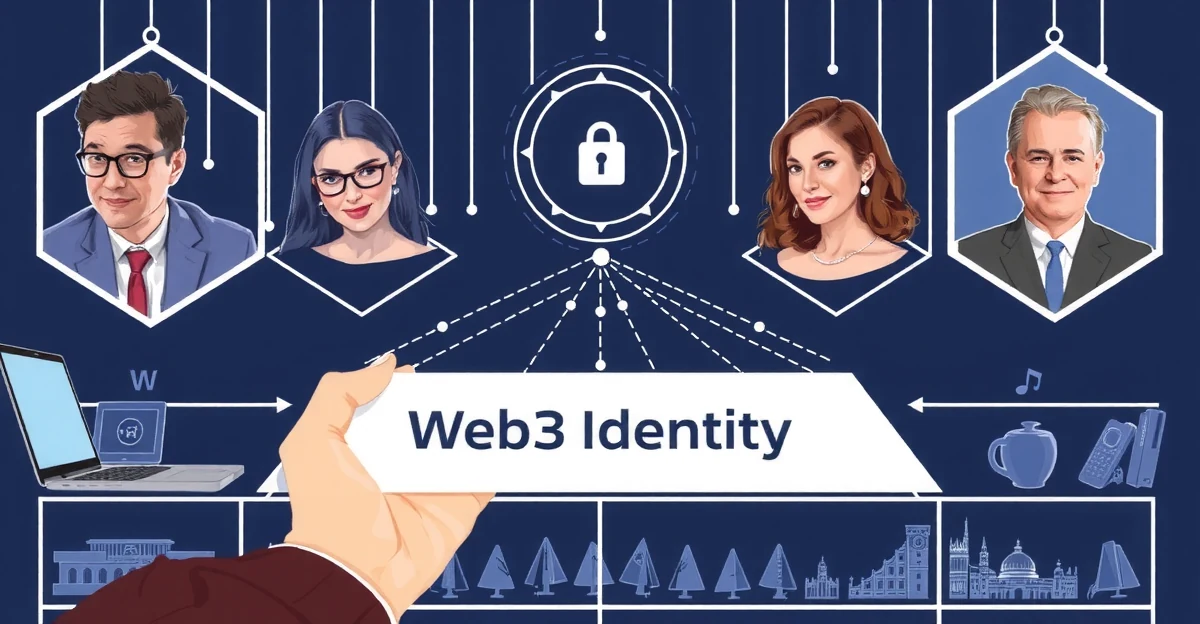
Digital identity is broken. For decades, we've traded our personal data for access to online services, creating a landscape of fragmented, vulnerable identities controlled by centralized authorities. Web3 is offering an alternative: self-sovereign identity systems that put users in control of their own credentials and personal information.
The Centralized Identity Problem
Today's digital identity infrastructure relies on a model that centralizes control and risk. We create accounts on hundreds of platforms, each storing our personal information in siloed databases. Data breaches expose millions of records. Identity theft costs billions annually. And users have little visibility into how their information is used or shared.
The authentication experience is equally fragmented. We manage dozens of passwords, rely on password managers that become single points of failure, and submit to increasingly invasive verification processes. The convenience of "Sign in with Google" comes at the cost of surveillance and platform dependency.

Self-Sovereign Identity
Self-sovereign identity (SSI) represents a fundamental shift in architecture. Rather than storing identity data with service providers, individuals hold their own credentials in digital wallets. These credentials are cryptographically signed by trusted issuers but controlled by the user. Verification happens peer-to-peer, without calling back to central servers.
The technical foundations are established standards. Decentralized identifiers (DIDs) provide persistent, cryptographically verifiable identity references not tied to any single platform. Verifiable credentials encode attestations in tamper-evident formats. Blockchain networks provide decentralized registries for public keys and revocation status. Together, these components enable identity systems that work across platforms while remaining under user control.

Privacy by Design
Modern SSI systems incorporate sophisticated privacy protections. Selective disclosure allows users to prove specific attributes without revealing their entire credential. Zero-knowledge proofs enable verification of claims without exposing the underlying data. Users can share proof of age without revealing birth date, or demonstrate residency without exposing their full address.
This privacy-preserving capability addresses regulatory requirements as well as user preferences. Compliance with know-your-customer regulations no longer requires storing copies of sensitive documents. Data minimization becomes practical rather than aspirational. The technology enables privacy that satisfies both users and regulators.

Real-World Applications
The technology is moving from concept to production. Digital credentials for academic achievements allow graduates to share verifiable records without requesting transcripts from institutions. Professional licenses can be cryptographically verified without contacting issuing boards. Healthcare credentials enable secure sharing of vaccination records and medical history across providers.
For Web3 specifically, SSI addresses critical infrastructure needs. Users can prove reputation across platforms without doxxing themselves. DAOs can verify membership credentials without maintaining centralized databases. Compliance requirements can be met without compromising the pseudonymous nature of blockchain interactions.
Adoption Challenges
Despite technical maturity, widespread adoption faces obstacles. User experience remains a barrier—managing cryptographic keys and credentials requires more sophistication than traditional password systems. Institutional acceptance is uneven, with many organizations hesitant to rely on credentials they don't directly control. Regulatory frameworks are still evolving to accommodate decentralized identity models.
Progress is being made. Wallet interfaces are improving, making credential management accessible to non-technical users. Major institutions are piloting credential issuance. Standards bodies are updating frameworks to recognize verifiable credentials. The infrastructure is approaching mainstream usability.
The Path Forward
Self-sovereign identity represents more than a technical upgrade—it's a reconceptualization of digital personhood. In a world where data is currency and identity is power, giving users control over their own credentials is fundamentally transformative. The systems being built today will shape how we authenticate, verify, and trust each other online for decades.
The transition won't happen overnight. Legacy systems have decades of inertia. Network effects favor established platforms. But the direction is clear. Each new credential issued, each wallet downloaded, each integration completed moves the ecosystem toward a user-centric model. The infrastructure is ready. The standards exist. The remaining work is implementation and adoption.
Sources
- W3C DID Core - Decentralized identifiers specification
- Ethereum Identity - Ethereum decentralized identity documentation
- Ceramic Network - Decentralized data network for Web3 identity
- ENS - Ethereum Name Service for decentralized naming
TL;DR
Self-sovereign identity systems put users in control of their digital credentials. Unlike centralized identity models where platforms store personal data, SSI enables individuals to hold cryptographically signed credentials in digital wallets. Decentralized identifiers and verifiable credentials provide technical foundations for cross-platform identity that remains under user control. Privacy-preserving features allow selective disclosure and zero-knowledge proofs that verify attributes without exposing underlying data. Production applications include academic credentials, professional licenses, and healthcare records that can be verified without contacting issuing institutions. Adoption challenges include user experience complexity and institutional acceptance, but wallet interfaces and standards are improving. The shift represents a fundamental reconceptualization of digital personhood, moving toward user-centric identity infrastructure.
Related Posts
-

How Polkadot Proof of Personhood Works: Recognition Games and Ring-VRF Privacy
I have watched the same Twitter account post the same conspiracy theory under three different handles in the same thread. I have seen bot farms amplify political messages until the platform itself could not distinguish organic from artificial engagement. And I have watched develo
-

peaqOS and World ID Enable Proof of Human for Robots and Machines
I watched a delivery robot in Seoul pause at an apartment door last month, its sensors scanning the person who stepped out to collect medication. The hatch stayed sealed. Not because the robot was broken, but because it had no way to know whether the person in front of it was the
-
ENS Community Proposes Privacy-Preserving Names Standard for Stealth Address Resolution
The proposal appeared on the ENS governance forum in August 2026 with the careful optimism of someone who believes that privacy and usability can finally coexist on Ethereum. ENSIP-XX, the Privacy-Preserving Names Standard, defines a resolution scheme that maps ENS names to steal
-

Phala Launches GPU TEE on Phala Cloud for Confidential AI Model Deployment
I keep hearing the same question from teams experimenting with AI inside regulated industries: what happens when the model is useful, but the data is too sensitive to leave the vault? That is why Phala's GPU TEE launch matters. It moves the conversation from abstract privacy prom