

Web3 Gaming: The Next Frontier of Digital Entertainment
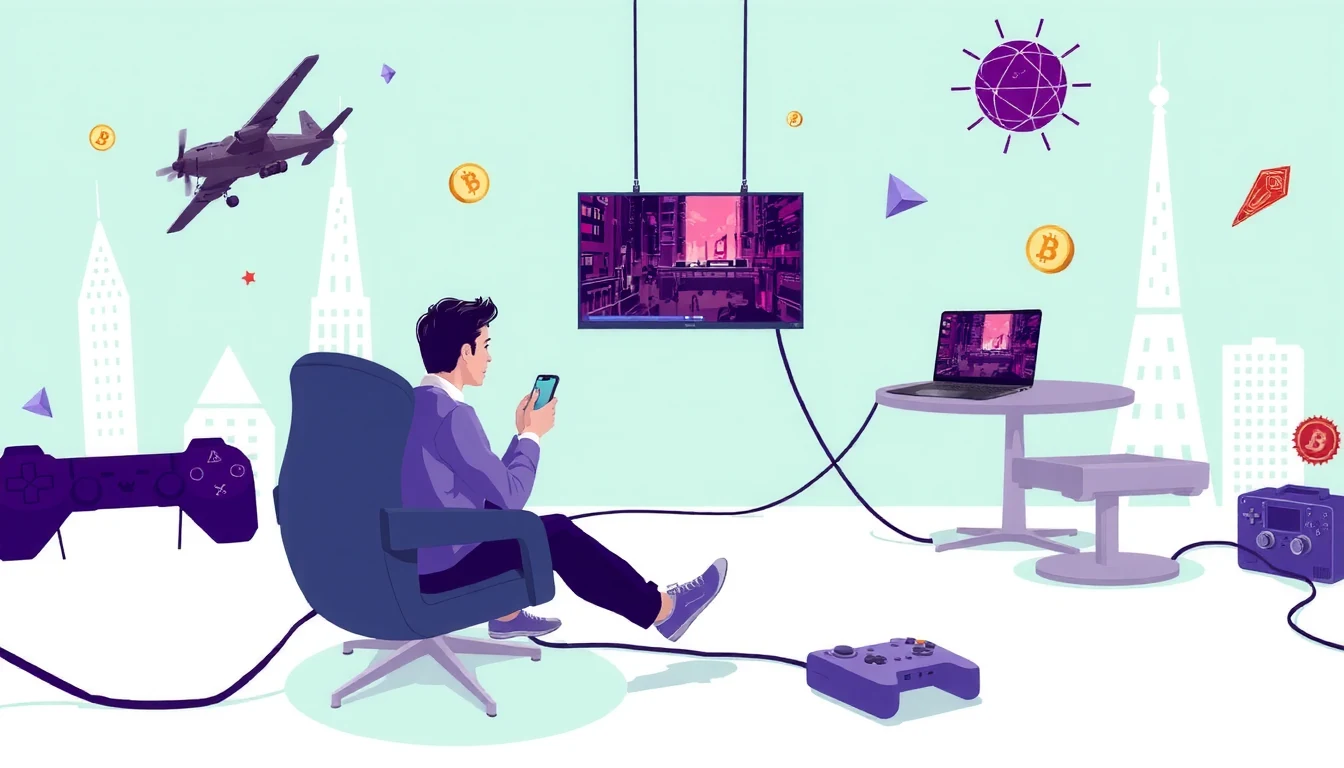
The gaming industry stands at a pivotal transformation. Web3 gaming represents more than a technological upgrade—it's a fundamental reimagining of how players interact with digital worlds, own virtual assets, and participate in game economies.
From Pixels to Ownership
Traditional gaming operated on a simple premise: players paid for access to content they never truly owned. Web3 gaming disrupts this model by giving players verifiable ownership of in-game assets through blockchain technology.

Non-fungible tokens (NFTs) enable unique digital items—characters, weapons, land, and collectibles—that players can truly own, trade, and transfer across platforms. This shift from licensed content to owned assets represents a paradigm change in digital property rights.
The Play-to-Earn Revolution
Perhaps the most disruptive element of Web3 gaming is the play-to-earn model. Players can earn cryptocurrency tokens and NFT rewards for their time, skill, and participation in game ecosystems.
Games like Axie Infinity demonstrated that players in developing economies could earn meaningful income through gameplay. While early implementations faced sustainability challenges, the concept has evolved. Modern Web3 games focus on balanced tokenomics where earning potential complements rather than dominates the gameplay experience.
Interoperability and Composability

Web3 gaming enables unprecedented interoperability. Assets earned in one game can potentially be used in another. Characters, items, and achievements become portable across virtual worlds.
This composability extends to game development. Developers can build on existing protocols, integrate with established marketplaces, and leverage shared infrastructure. The result is a more connected gaming ecosystem where innovation compounds.
Community Governance
Decentralized autonomous organizations (DAOs) are transforming how games are governed. Token holders can vote on game development decisions, treasury allocations, and ecosystem changes.

This community-driven approach aligns incentives between developers and players. Rather than extracting value from players through microtransactions, Web3 games aim to create sustainable economies where all participants benefit from the ecosystem's growth.
Challenges and Evolution
The Web3 gaming space faces real challenges. User experience barriers, environmental concerns around energy consumption, and regulatory uncertainty all present obstacles. Early play-to-earn models prioritized earning over enjoyment, creating unsustainable economies.
However, the industry is evolving. Second-generation Web3 games focus on gameplay first, with blockchain elements enhancing rather than defining the experience. Layer 2 solutions address scalability and cost concerns. Major gaming studios are exploring Web3 integrations.
The Road Ahead
Web3 gaming is still in its infancy. The technology enabling true digital ownership exists, but compelling experiences that leverage this technology sustainably are still emerging.
The potential is significant: players as stakeholders, open economies, interoperable virtual worlds, and new monetization models that reward participation rather than just spending. As the technology matures and user experience improves, Web3 gaming could redefine what it means to play.
TL;DR
Web3 gaming transforms players from consumers into owners through blockchain-verified digital assets. Play-to-earn models reward participation, while interoperability enables assets to work across games. Despite challenges around user experience and sustainable economics, the sector is evolving toward gameplay-first experiences with blockchain as an enhancement rather than the main feature.
Related Posts
-

Startale July Missions Offer Up to 80 STAR Points for Active Ecosystem Engagement
I have a drawer full of loyalty cards from coffee shops, airlines, and grocery stores. None of them talk to each other, and most of the points expire before I remember to use them. When Startale announced its July Missions campaign offering up to 80 STAR Points for active ecosyst
-
The Hidden Philosophy Behind Polkadot's Design: Products for People, Not Platforms
I have read a lot of blockchain whitepapers. Most of them open with technical abstractions: consensus mechanisms, throughput numbers, token economics. Very few begin with the question that actually matters: who is this for? Polkadot's philosophy page on polkadot.com answers that
-

Decentralization, Reloaded: Why Blockchain Still Matters in 2026
I deleted three accounts last month. Not because I wanted to, but because the platforms decided I had violated terms I hadn't read closely enough. No appeal process, no human review, just an algorithm and a permanent lockout. On May 18, 2026, Parity Technologies published a refle
-
Startale App Goes Live with 16 Mini Apps, Open Access, and Zero Waitlist for Users
I remember refreshing Startale's landing page twice a week in early 2026, waiting for the access button to change from "Join Waitlist" to something more inviting. The April 9 launch did not just remove a barrier—it replaced it with 16 mini applications that transform how users in