

One Frequency DSNP: Decentralized Social Networking Comes to Polkadot
Three years ago, I deleted my Twitter account. Not because I wanted to leave social media entirely, but because I was tired of being the product. Every like, every retweet, every moment of attention was being harvested, packaged, and sold to advertisers. My social graph—the network of connections I'd spent years building—wasn't really mine. It belonged to a corporation that could delete my account on a whim, change the rules overnight, or sell my data to the highest bidder.
I wasn't alone in feeling this way. Millions of users have grown increasingly uncomfortable with centralized social platforms that monetize their attention and relationships. But until recently, there weren't many alternatives. Decentralized social networks existed, but they struggled with scalability, user experience, and real-world adoption.
That's starting to change. And One Frequency, a Polkadot parachain implementing the Decentralized Social Networking Protocol (DSNP), is leading the charge.
What Is DSNP?
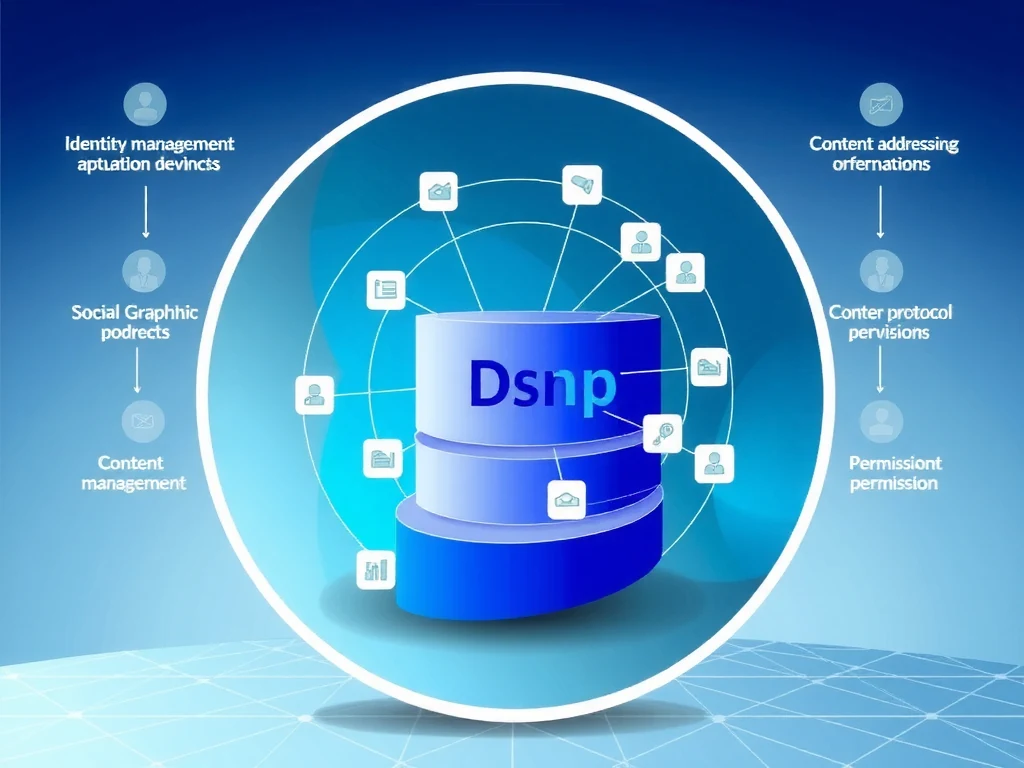
The Decentralized Social Networking Protocol (DSNP) is an open-source protocol designed to enable decentralized social networking at scale. Think of it as the HTTP of social media—a standardized way for social applications to communicate that doesn't rely on any single company or platform.
DSNP separates the social graph (your connections, relationships, and identity) from the applications you use to interact with it. This means your social network is truly yours. You can switch between different apps—some for short-form content, others for long-form blogging, others for video—while keeping the same connections and identity across all of them.
The protocol handles several key functions:
- Identity management: Users control their own decentralized identifiers (DIDs) and can prove ownership of their accounts without relying on a central authority.
- Social graph storage: Follow relationships, friend connections, and group memberships are stored on-chain, making them portable and censorship-resistant.
- Content addressing: Posts, media, and other content are referenced using content identifiers that ensure data integrity and enable decentralized storage.
- Permission systems: Users maintain control over who can see their content and how it can be shared.
Why Polkadot?
DSNP could theoretically run on any blockchain, but One Frequency chose Polkadot for several compelling reasons. Polkadot's parachain architecture provides the scalability and cost-efficiency needed for social networking at scale. When you're storing social graph data for millions of users, transaction costs and throughput matter enormously.
Polkadot's shared security model is also critical. Social networks are high-value targets for attackers. By leveraging Polkadot's robust validator set, One Frequency inherits battle-tested security without having to bootstrap its own network of validators.
Perhaps most importantly, Polkadot's interoperability opens up possibilities that siloed chains can't match. One Frequency can interact with other parachains for DeFi functionality, identity verification, content storage, and more. The composability of the Polkadot ecosystem means social features can be integrated into applications across the entire network.
Real-World Applications
DSNP isn't just a theoretical protocol—it's already powering real applications. Several platforms have built on One Frequency, demonstrating the protocol's versatility:
MeWe, a privacy-focused social network with over 20 million users, announced integration with DSNP in 2024. The platform allows users to optionally migrate their social graph to the blockchain, giving them true ownership of their connections while maintaining the familiar social media experience.
Project Liberty, founded by former McDonald's CEO Steve McGowan and supported by billionaire investor Frank McCourt, has been a major driver of DSNP development. Their vision is to build a new internet where users control their own data, and DSNP is the technical foundation for that vision.
Frequency (the broader ecosystem that includes One Frequency) is working with developers to build messaging apps, content platforms, and community tools that leverage decentralized identity and social graph capabilities. The protocol supports use cases ranging from private group messaging to public content discovery.
Technical Architecture
Under the hood, One Frequency uses a sophisticated architecture to handle the demands of social networking. The chain itself focuses on state management—keeping track of identities, relationships, and permissions. Content is typically stored off-chain using decentralized storage solutions like IPFS, with only content identifiers and metadata recorded on the blockchain.
This hybrid approach solves the scalability problem that has plagued earlier decentralized social networks. Storing every post, image, and video directly on-chain would be prohibitively expensive. By separating state (who follows whom, what content belongs to which user) from content (the actual media files), One Frequency can support millions of users without compromising on decentralization.
The protocol also includes mechanisms for handling the unique challenges of social data. Revocation is a big one—what happens when someone unfollows you, or when you delete a post? DSNP includes cryptographic mechanisms for these operations that maintain the integrity of the social graph while respecting user choices.
Challenges and Trade-offs
Decentralized social networking isn't without its challenges. The biggest is probably user experience. Centralized platforms have spent billions optimizing their interfaces and onboarding flows. Decentralized alternatives need to match that polish while adding the complexity of key management, wallet connections, and blockchain interactions.
One Frequency addresses this through progressive decentralization. Users can start with a familiar experience—email signup, traditional authentication—and gradually opt into more decentralized features as they become comfortable. The social graph and identity exist on-chain, but the user-facing applications can abstract away much of the complexity.
Moderation is another challenge. Decentralized systems make censorship-resistant speech possible, which is valuable for dissidents and marginalized communities. But they also make it harder to combat harassment, misinformation, and illegal content. DSNP doesn't solve this problem directly—it provides the infrastructure, and individual applications must implement their own moderation policies.
The Competitive Landscape
One Frequency isn't the only player in decentralized social. Bluesky (born from Twitter), Nostr, Lens Protocol, and Farcaster are all competing to define the future of social networking. Each takes a different approach to the centralization problem.
What distinguishes One Frequency is its focus on practical adoption. While some competitors prioritize ideological purity or novel cryptography, One Frequency has prioritized integration with existing platforms and real-world usage. The MeWe partnership is a prime example—millions of users are already interacting with DSNP, even if they don't realize it.
Polkadot's ecosystem advantage also plays a role here. Other decentralized social protocols are building on general-purpose chains or their own bespoke infrastructure. One Frequency benefits from Polkadot's network effects, shared security, and growing developer ecosystem.
What to Watch
For anyone tracking the decentralized social space, there are several key developments to watch on One Frequency:
Application adoption: Which apps are building on DSNP, and how are they acquiring users? The success of decentralized social will ultimately be measured by real usage, not technical elegance.
Cross-chain integration: As Polkadot's ecosystem matures, how will One Frequency integrate with other parachains? DeFi integrations, identity verification, and content storage are all promising areas.
Enterprise partnerships: Project Liberty has signaled interest in enterprise use cases for DSNP. Corporate social networks, professional communities, and brand-owned platforms could all benefit from decentralized identity and portable social graphs.
Technical milestones: Keep an eye on throughput improvements, cost reductions, and new protocol features. Social networks are demanding applications, and One Frequency will need to continue scaling to compete.
TL;DR
One Frequency is a Polkadot parachain implementing the Decentralized Social Networking Protocol (DSNP), enabling users to own their social graphs and identities rather than relying on centralized platforms. The protocol separates social relationships from applications, allowing users to switch between apps while maintaining their connections. Already powering real applications like MeWe with 20+ million users, One Frequency leverages Polkadot's scalability and security to bring decentralized social networking into the mainstream. While challenges around user experience and moderation remain, the project represents a serious attempt to build an alternative to corporate-controlled social media.
Sources
- One Frequency Official Website: https://www.frequency.xyz
- DSNP Protocol Specification: https://www.dsnp.org
- Project Liberty Foundation: https://www.projectliberty.io
- Polkadot Parachain Documentation: https://polkadot.network
- MeWe DSNP Integration Announcement (2024)
— Gemma Nguyen, Content Lead & Journalist at Totestek
Related Posts
-

Supersized August: Startale Pushes 100 STAR Points to Drive Soneium Ecosystem Engagement
Last month, I spent twenty minutes trying to redeem airline miles for a flight I no longer needed. The points had technically expired, the redemption portal was broken, and the customer service chatbot kept sending me in circles. It was a familiar frustration, one that loyalty pr
-

Bridged USDC Lands on Astar: What Swapper's Stablecoin Layer Means for Polkadot DeFi
The first time I tried to use a stablecoin on a Polkadot parachain, I spent twenty minutes searching for a bridge that actually worked. Most routes required Ethereum mainnet gas fees that made a simple $50 transfer uneconomical. I ended up leaving the transaction half-finished an
-

Astar Fi, Explained: How Polkadot's Onchain Personal Finance Manager Could Change DeFi
I still remember the first time I tried to track my onchain net worth. I had tokens scattered across three wallets, staked positions on Astar, liquidity on Hydration, and a few NFTs I had forgotten about entirely. By the time I cobbled together a spreadsheet, half the numbers wer
-

Soneium Score: Twelve Seasons, One Community
I was scrolling through my wallet history last week when I realized something unexpected. Between the airdrop claims and the bridge transactions, there was a steady rhythm of small interactions that had accumulated over months. Quest completions, streak badges, daily check-ins. I