

Unique Network Quartz Chain Transition Prepares NFT Infrastructure for Polkadot JAM Architecture
The blockchain infrastructure landscape is shifting beneath our feet. While most discussions focus on Ethereum L2s or Bitcoin ordinals, something significant is happening in the Polkadot ecosystem. Un...
The blockchain infrastructure landscape is shifting beneath our feet. While most discussions focus on Ethereum L2s or Bitcoin ordinals, something significant is happening in the Polkadot ecosystem. Unique Network's Quartz chain transition isn't just a technical upgrade—it's preparation for Polkadot's most ambitious architectural change since the network launched: the Join-Accumulate Machine, or JAM.
I first encountered the JAM concept during Polkadot developer discussions in late 2024. At the time, it felt theoretical—a future supercomputer design that might materialize years away. But Unique Network's announcement that Quartz is transitioning to prepare for JAM compatibility signals that this future is arriving sooner than expected.
Key Metrics at a Glance
| Aspect | Current Quartz | Post-JAM Transition |
|---|---|---|
| Architecture | Parachain | JAM-compatible |
| NFT Throughput | ~1,000 TPS | Projected 10x+ |
| Interoperability | XCM v3 | Native JAM protocols |
| State Management | Relay chain dependent | Accumulate-based |
| Migration Timeline | Ongoing | Completion 2026 |
Understanding the JAM Architecture
To appreciate why the Quartz transition matters, you need to understand what JAM proposes. The Join-Accumulate Machine is Gavin Wood's vision for a next-generation blockchain computer. Unlike the current parachain model where state validation happens on the relay chain, JAM introduces a more flexible execution environment.
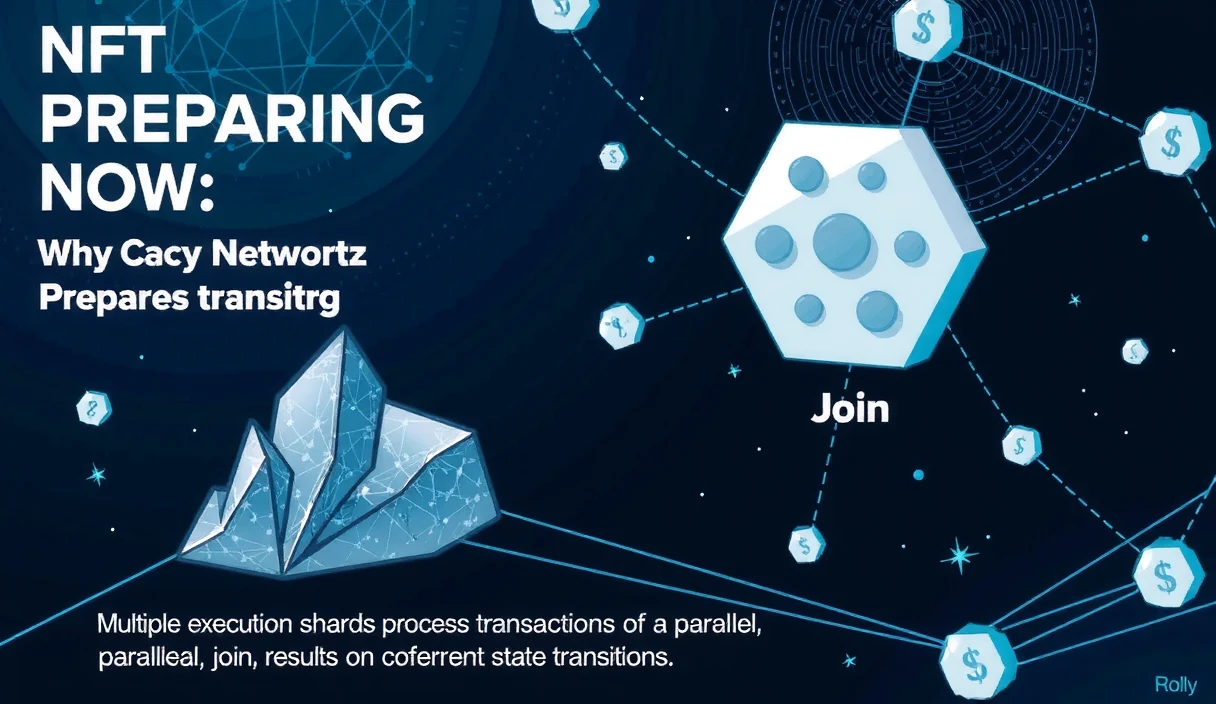
Join: Multiple execution shards process transactions in parallel, joining their results into coherent state transitions.
Accumulate: Rather than every node executing every transaction, JAM accumulates state changes through cryptographic proofs. This resembles Ethereum's rollups but native to the protocol layer.
Machine: The entire system operates as a general-purpose computer where different applications can request compute resources dynamically.
For NFT infrastructure, this matters enormously. Current NFT operations on most chains require full state replication—every node processes every transfer. JAM's accumulate model means NFT transfers could be verified through proofs rather than execution, dramatically increasing throughput while maintaining security.
Why Unique Network Is Preparing Now
Unique Network has positioned itself as Polkadot's specialized NFT infrastructure provider. Their Quartz parachain handles high-volume NFT operations that would congest general-purpose chains. The JAM transition represents both opportunity and necessity.
Opportunity: JAM promises native NFT operations at speeds approaching centralized databases. Unique's early preparation positions them to capture this performance improvement immediately upon JAM deployment.
Necessity: Parachain slots have opportunity costs. By transitioning to JAM compatibility, Unique potentially reduces relay chain dependency, lowering operational costs while improving performance.
The transition also addresses a growing competitive landscape. Ethereum L2s like Base and Optimism have captured significant NFT volume through lower fees. JAM offers Polkadot-native projects a path to compete on cost and speed without leaving the ecosystem.
The Technical Migration Path
Quartz's transition involves several technical components:
Runtime Modifications: The chain's execution logic must adapt to JAM's accumulate model. This includes modifying how state roots are calculated and how transactions are bundled for proof generation.
XCM Evolution: Current cross-chain messaging uses XCM v3. The JAM transition requires updating to new protocols that support the accumulate architecture while maintaining backward compatibility during the transition period.
State Migration: Existing NFTs and their metadata must migrate to the new architecture without loss. This requires careful coordination to ensure ongoing operations continue during the transition.
Validator Set Adjustments: JAM's security model differs from parachains. Unique must adapt their collator infrastructure to work with JAM's validation mechanisms.
Competitive Positioning
Unique Network's JAM preparation positions them strategically against several competitors:
Ethereum L2 NFT Platforms: Base, Optimism, and Zora have captured market share through low fees. JAM offers Polkadot-native projects similar cost structures without the centralization trade-offs of L2 sequencers.
Solana's Metaplex: Solana's NFT infrastructure offers high throughput with low costs. JAM potentially matches this performance while providing stronger interoperability guarantees through Polkadot's shared security.
Cross-Chain Bridges: Current NFT bridging requires trust assumptions. JAM's native interoperability reduces or eliminates these requirements for Polkadot ecosystem transfers.
Specialized NFT Chains: Projects like Immutable X focus exclusively on NFTs. Unique's JAM transition enables similar specialization while maintaining connection to Polkadot's broader ecosystem.
Implications for NFT Developers
For developers building on Unique Network, the JAM transition changes several assumptions:
Cost Predictability: JAM's resource model may differ from parachain slot auctions. Developers should monitor economic changes that could affect NFT minting and transfer costs.
Performance Characteristics: Higher throughput means applications can handle more complex operations—dynamic NFTs, real-time gaming integrations, high-frequency trading—without architectural constraints.
Cross-Chain Complexity: While JAM improves Polkadot ecosystem interoperability, it may introduce new complexity for external chain integrations during the transition period.
Tooling Requirements: Development tools must adapt to JAM's programming model. Unique's preparation includes SDK updates to abstract these changes.
The Broader Polkadot Ecosystem Impact
Unique's transition signals broader ecosystem shifts. If Quartz successfully migrates to JAM compatibility, other specialized parachains will likely follow. This creates momentum toward Polkadot's supercomputer vision.
The transition also affects DOT token economics. JAM reduces relay chain load, potentially affecting staking rewards and validator economics. These changes ripple through the entire ecosystem.
For the NFT sector specifically, JAM-native infrastructure could reverse Polkadot's relative underperformance in NFT markets. Ethereum and Solana currently dominate NFT volume. JAM offers a credible path for Polkadot to regain competitiveness.
Risk Considerations
No major architectural transition is without risks:
Migration Complexity: State transitions between architectures have historically caused issues in blockchain networks. Quartz's migration must manage this carefully.
Timing Uncertainty: JAM's mainnet deployment timeline remains flexible. Unique's preparation assumes timelines that could shift.
Competition Response: Ethereum L2s and Solana won't remain static. JAM's advantages may diminish if competitors improve concurrently.
Developer Adoption: Technical superiority doesn't guarantee usage. Unique must convince developers to build on their JAM infrastructure rather than alternatives.
Timeline and Next Steps
Unique Network has indicated the Quartz transition will complete through 2026, aligning with expected JAM mainnet deployment. The phased approach minimizes disruption while positioning for immediate advantage upon JAM activation.
For NFT projects currently on Quartz, no immediate action is required. Unique commits to maintaining backward compatibility during the transition. However, projects should monitor SDK updates and performance characteristics as the transition progresses.
The JAM future Unique is preparing for promises blockchain infrastructure that finally matches the scalability requirements of mainstream NFT adoption. Whether that promise materializes depends on both technical execution and market dynamics. But Unique's early preparation ensures they'll be ready if it does.
TL;DR
- What: Unique Network's Quartz chain is transitioning to prepare for Polkadot's JAM (Join-Accumulate Machine) architecture
- Why: JAM offers projected 10x+ NFT throughput improvements through native proof-based state transitions
- When: Transition ongoing through 2026, aligning with JAM mainnet deployment
- Impact: Positions Polkadot-native NFT infrastructure to compete with Ethereum L2s on cost and speed
- Risk: Migration complexity and timing uncertainty around JAM deployment schedule
Sources
- Unique Network Official Announcement (2026)
- Polkadot JAM Architecture Documentation (Technical specifications)
- Quartz Chain Explorer (On-chain metrics)
- Polkadot Roadmap Updates (Official timeline)
- NFT Infrastructure Comparison Analysis (Industry context)
Gemma Nguyen is Totestek's Blockchain Infrastructure Correspondent. She writes about protocol architecture, ecosystem transitions, and the infrastructure powering the decentralized web.
Related Posts
-

Soneium Supports ERC-8432: IP Licensing That People and AI Agents Can Both Read
A few months ago, I watched a musician friend struggle with a Content ID claim on a platform she had already licensed her track through. The system saw the same audio fingerprint and flagged it as unauthorized — because the license lived in one database and the detection system l
-
Bridged USDC Lands on Astar: What Swapper's Stablecoin Layer Means for Polkadot DeFi
The first time I tried to use a stablecoin on a Polkadot parachain, I spent twenty minutes searching for a bridge that actually worked. Most routes required Ethereum mainnet gas fees that made a simple $50 transfer uneconomical. I ended up leaving the transaction half-finished an
-

Astar Fi, Explained: How Polkadot's Onchain Personal Finance Manager Could Change DeFi
I still remember the first time I tried to track my onchain net worth. I had tokens scattered across three wallets, staked positions on Astar, liquidity on Hydration, and a few NFTs I had forgotten about entirely. By the time I cobbled together a spreadsheet, half the numbers wer
-

Soneium Score: Twelve Seasons, One Community
I was scrolling through my wallet history last week when I realized something unexpected. Between the airdrop claims and the bridge transactions, there was a steady rhythm of small interactions that had accumulated over months. Quest completions, streak badges, daily check-ins. I