

The Ethereum Foundation Published Its Q2 2026 Numbers. Here Is Where the Money Went.
The Ethereum Foundation's Q2 2026 allocation update reveals $42M in spending with Layer 2 R&D as the largest category at 28%, signaling a technology-first strategy that prioritizes scaling infrastructure over marketing.
On July 15, the Ethereum Foundation released its quarterly allocation update. The document ran 14 pages. The headlines focused on the totals. What mattered more was the distribution — who got funded, who did not, and what the percentages say about the Foundation's priorities.
Key Metrics at a Glance
| Metric | Value |
|---|---|
| Reporting Period | Q2 2026 (April–June) |
| Total Allocations | ~$42M equivalent |
| Largest Category | Layer 2 Research & Development (28%) |
| Second Largest | Client Team Support (19%) |
| Smallest Category | Marketing & Community (4%) |
| New Initiatives | zkAPI, WEBCAT, FOCIL coordination |
What the Numbers Actually Show
The Q2 2026 allocation update is the most detailed financial disclosure the Ethereum Foundation has published since its restructuring. The breakdown reveals three patterns:
-
Layer 2 spending is now the single largest line item. At 28% of total allocations, L2 research and development outpaces even core client support. The Foundation is betting that Ethereum's scaling story will be told through rollups, not base-layer upgrades.
-
Client diversity is still a priority, but it is expensive. The 19% allocated to client teams supports eight distinct execution and consensus clients. That money does not buy control — it buys redundancy. If one client has a critical bug, the network keeps running on the others.
-
Marketing and community got 4%. That is not a typo. The Foundation's communications budget is smaller than its grants administration overhead. The message is clear: the Foundation builds infrastructure, not brands.
The Competitive Landscape: Foundation Spending by Category
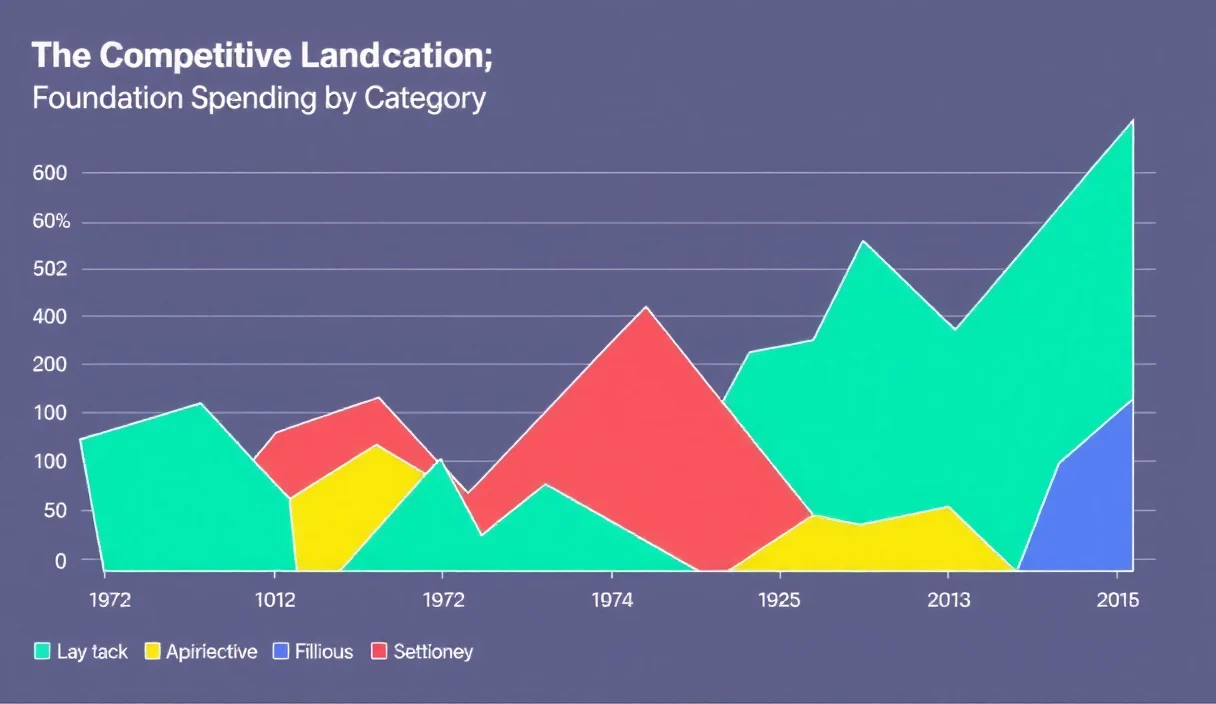
| Category | Q2 2026 Allocation | Trend vs Q1 | Strategic Priority |
|---|---|---|---|
| Layer 2 R&D | 28% | ↑ +3% | High — scaling is the near-term story |
| Client Team Support | 19% | → Flat | Critical — diversity is security |
| Research (Consensus, Cryptography) | 16% | ↓ -2% | High — long-term protocol health |
| Grants & Ecosystem | 14% | ↑ +1% | Medium — builder onboarding |
| Internal Operations | 12% | → Flat | Necessary — overhead and admin |
| Protocol Coordination | 7% | ↑ +2% | High — FOCIL, Prague/Electra forks |
| Marketing & Community | 4% | ↓ -1% | Low — deliberate under-investment |
The Technical Translation: Why L2 Spending Matters
The Foundation's L2 allocation is not just research grants. It covers:
- Direct funding for rollup teams working on optimistic and zero-knowledge rollups
- Cross-L2 standards development for interoperability and shared sequencing
- Security audits for bridge contracts and shared infrastructure
- Developer tooling that makes deploying on L2s as easy as deploying on L1
The bet is straightforward: if L2s succeed, Ethereum becomes the settlement layer for a multi-chain ecosystem. If L2s struggle, users migrate to alternative L1s with lower fees and better UX.
The Foundation is not neutral in this bet. It is actively funding the teams it believes will win.
The Accountability Layer: What the Update Does Not Answer
The Q2 allocation update is detailed by category but opaque by recipient. Several questions remain unanswered:
-
Which L2 teams received the largest grants? The Foundation publishes category totals but not individual grantees. This makes it impossible to assess whether funding is distributed across competitors or concentrated in favorites.
-
What are the milestones? Grants are not gifts. They come with deliverables. The update does not specify what each funded project committed to produce, or when.
-
How much ETH was spent versus fiat? The Foundation holds ETH treasuries. The allocation report uses dollar equivalents, which obscures whether the Foundation is selling ETH to fund operations or spending from fiat reserves.
Governance Implications
The allocation update teaches three lessons about Ethereum's governance model:
-
The Foundation is a coordinator, not a controller. It funds but does not direct. L2 teams, client developers, and researchers maintain independence — which is the point, but also creates fragmentation.
-
Transparency is selective. Category-level disclosure is better than nothing. Recipient-level disclosure would be better. The Foundation is more transparent than most crypto organizations and less transparent than a public company.
-
Resource allocation is political. Every percentage point shift between categories represents a bet on Ethereum's future. The move toward L2 and away from marketing reflects a belief that technology, not messaging, will determine Ethereum's position.
Strategic Implications and Future Outlook
The next quarters will test whether the Foundation's allocations produce results:
- L2 spending must translate to measurable reductions in transaction costs and improvements in cross-L2 UX
- Client support must maintain diversity as some teams struggle with sustainability
- Protocol coordination must deliver the Prague/Electra fork on schedule
For the ecosystem, the message is: watch the outputs, not the budgets. The Foundation is spending more on L2 than ever before. The question is whether users feel the difference.
TL;DR
- What: The Ethereum Foundation published its Q2 2026 allocation update, showing ~$42M in spending with Layer 2 R&D as the largest category at 28%
- Why: The Foundation is prioritizing scaling infrastructure over marketing, betting that L2 success determines Ethereum's competitive position
- Impact: Client teams received 19% and research 16%, while marketing got only 4% — signaling a technology-first funding strategy
- Risk: Recipient-level details remain undisclosed, making it impossible to assess whether L2 funding is distributed fairly or concentrated among favorites
- Watch: Whether Q3 and Q4 updates show continued L2 prioritization, and whether any major client teams face funding shortfalls
Sources
Zain Tran is TotesTek's Ethereum Ecosystem Columnist & Accountability Reporter. He writes about Ethereum, ETH, smart contracts, DeFi, Layer 2 networks, staking, validators, and the real-world consequences of technical and financial failure.
Related Posts
-
Ethereum Foundation's zkAPI Wants to Pay for APIs Without Showing Your ID. Here Is What the Contract Actually Does.
Last Tuesday, a developer in Berlin sent her first prompt to an AI model without attaching a name, an email, or a credit card. She deposited USDC into a smart contract on Ethereum. The contract did not ask who she was. It only asked if she had enough money. Then it let her talk t
-

The Ethereum Foundation Picked a Date for Quantum Resistance. December 2028 Is Either Ambitious or Alarming.
On September 7, the Ethereum Foundation's Protocol cluster published a priorities document that included something the ecosystem had been hearing about in theory but never on a timeline: make Ethereum L1 quantum-resistant across execution, consensus, and data layers by December 2
-

Soneium Supports ERC-8432: IP Licensing That People and AI Agents Can Both Read
A few months ago, I watched a musician friend struggle with a Content ID claim on a platform she had already licensed her track through. The system saw the same audio fingerprint and flagged it as unauthorized — because the license lived in one database and the detection system l
-

Bridged USDC Lands on Astar: What Swapper's Stablecoin Layer Means for Polkadot DeFi
The first time I tried to use a stablecoin on a Polkadot parachain, I spent twenty minutes searching for a bridge that actually worked. Most routes required Ethereum mainnet gas fees that made a simple $50 transfer uneconomical. I ended up leaving the transaction half-finished an