

Hyperbridge Launches HyperFX for Instant FX Settlement on Stablecoin Rails Starting with Naira
Hyperbridge introduces HyperFX with initial support for the Nigerian naira via cNGN stablecoin, enabling instant currency swaps in markets underserved by traditional correspondent banking.
Hyperbridge introduced HyperFX with initial support for the Nigerian naira, leveraging the cNGN stablecoin to enable instant currency swaps. This corridor-specific launch demonstrates how blockchain settlement can address real-world FX challenges in markets underserved by traditional correspondent banking.
I've followed digital currency adoption across African markets, where currency volatility, limited banking infrastructure, and expensive remittance corridors create genuine demand for alternative settlement mechanisms. The naira-focused launch targets specific pain points rather than pursuing generic FX infrastructure.
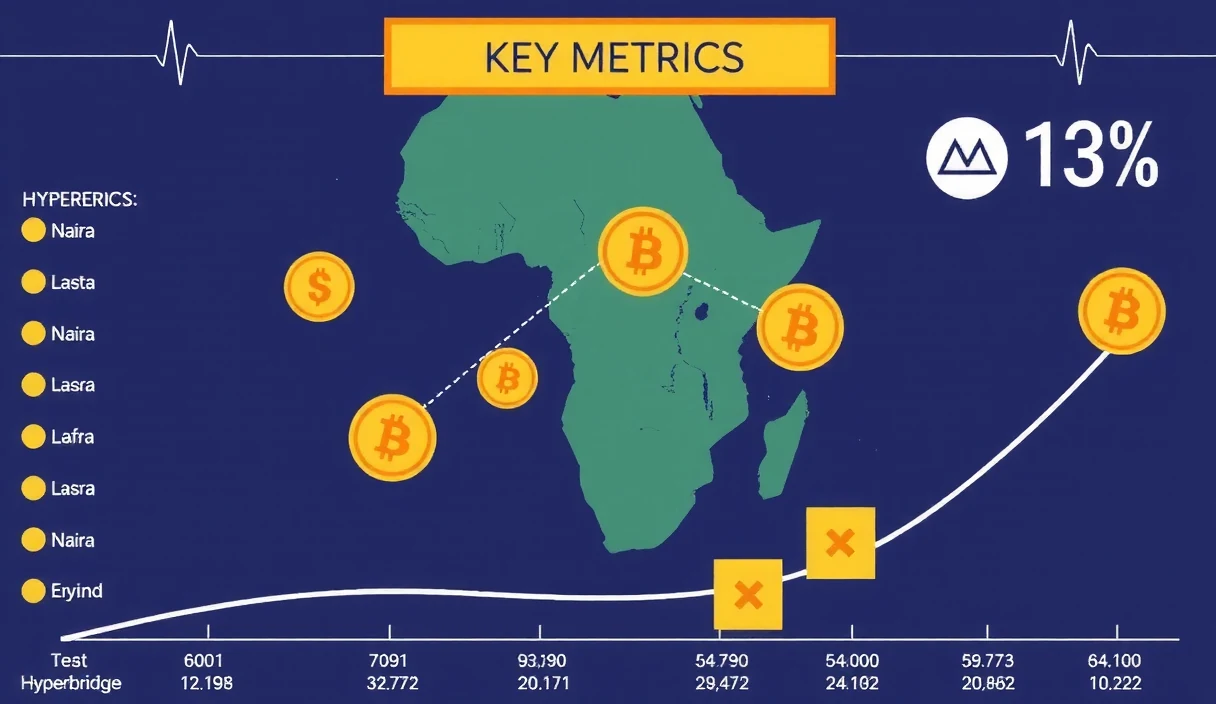
Key Metrics at a Glance
| Aspect | Traditional Naira FX | HyperFX with cNGN |
|---|---|---|
| Settlement Speed | 2-5 days | Minutes |
| Availability | Business hours | 24/7 |
| Correspondent Banks | Limited relationships | Direct stablecoin rails |
| Transparency | Delayed reporting | On-chain verification |
| Minimum Transfer | Often $10,000+ | Lower thresholds |
| Counterparty Risk | Concentrated | Distributed |
The Naira Corridor Opportunity
Nigeria represents a compelling market for blockchain FX settlement:
Currency Volatility: The naira has experienced significant exchange rate volatility, creating demand for rapid settlement to minimize exposure windows.
Remittance Volume: Nigeria receives among the highest remittance volumes in Africa—over $20 billion annually. Current settlement mechanisms extract substantial fees from these flows.
Limited Banking Infrastructure: Correspondent banking relationships for Nigerian institutions are limited compared to major currencies, creating settlement bottlenecks.
cNGN Stablecoin: The Central Bank of Nigeria-regulated cNGN stablecoin provides a regulated digital naira equivalent, enabling compliant on-chain settlement.
Technical Implementation
HyperFX's naira integration addresses specific corridor requirements:
cNGN Integration: The system directly integrates with cNGN issuance and redemption infrastructure, ensuring proper backing and regulatory compliance.
Liquidity Sourcing: Naira liquidity aggregates from local exchanges, OTC desks, and institutional providers familiar with Nigerian market dynamics.
Local Compliance: Settlement incorporates Nigerian regulatory requirements, including anti-money-laundering checks and transaction reporting.
Mobile-First Design: Recognizing Nigeria's mobile-first financial services landscape, the interface prioritizes mobile accessibility.
Use Cases
The naira corridor serves several specific use cases:
Diaspora Remittances: Nigerians abroad sending money home can settle instantly rather than waiting days for traditional transfers. This directly addresses one of Africa's most significant remittance corridors.
Import/Export Settlement: Nigerian businesses conducting international trade can settle FX transactions immediately, reducing working capital requirements and currency exposure.
Corporate Treasury: Multinationals operating in Nigeria can manage naira liquidity more efficiently through instant settlement rather than maintaining large precautionary balances.
Currency Arbitrage: Traders can exploit price discrepancies between onshore and offshore naira markets with immediate settlement, potentially improving price convergence.
Competitive Context
Nigerian FX settlement includes several alternatives:
vs. Traditional Banks: Nigerian banks offer FX services but face correspondent banking limitations, liquidity constraints, and operating hour restrictions.
vs. Fintech Transfer Services: Companies like Flutterwave and Chipper Cash offer digital transfers but typically still rely on underlying banking infrastructure for settlement.
vs. Informal Channels: Informal transfer networks (Hawala-style systems) offer speed but lack transparency, security, and regulatory compliance.
vs. Other Stablecoins: USDT and USDC circulate in Nigeria but require conversion to/from naira. cNGN-native settlement eliminates conversion friction.
Regulatory Environment
Nigeria presents a complex but evolving regulatory landscape:
Central Bank of Nigeria: The CBN has shown openness to regulated stablecoins while restricting unregulated cryptocurrency activity. cNGN operates within this regulatory framework.
SEC Nigeria: Securities regulations increasingly address digital assets. HyperFX's compliance architecture adapts to evolving requirements.
FX Controls: Nigeria maintains foreign exchange management policies. The system incorporates appropriate documentation and approval workflows.
International Standards: FATF guidelines and regional anti-money-laundering standards inform compliance architecture.

Challenges and Considerations
Naira-specific settlement faces particular challenges:
Liquidity Depth: Naira liquidity on blockchain remains limited compared to major currencies. Building sufficient depth for institutional-scale settlement takes time.
Regulatory Evolution: Nigerian digital asset regulation continues developing. Products must adapt as rules clarify.
Infrastructure Reliability: Internet connectivity and power stability affect settlement reliability. System design must accommodate infrastructure constraints.
Education Requirements: User adoption requires education about stablecoins, blockchain verification, and digital wallets. Onboarding processes must address knowledge gaps.
Broader African Context
The naira launch fits into continental financial trends:
AfCFTA Implications: The African Continental Free Trade Area increases cross-border trade volumes, expanding demand for efficient settlement infrastructure.
Mobile Money Integration: Africa leads global mobile money adoption. Blockchain settlement layers can integrate with existing mobile money infrastructure.
Currency Diversification: As African economies develop, demand grows for settlement in local currencies rather than exclusively USD or EUR.
Innovation Leadership: Nigeria frequently leads African fintech innovation. Success here creates templates for expansion across the continent.

TL;DR
- What: Hyperbridge HyperFX launches with Nigerian naira support via cNGN stablecoin
- How: Direct cNGN integration, local liquidity sourcing, mobile-first compliance architecture
- Edge: Targets specific corridor pain points—volatility, limited banking, expensive remittances
- Use Cases: Diaspora remittances, trade settlement, corporate treasury, currency arbitrage
- Context: Operates within CBN regulatory framework; positioned for AfCFTA expansion
Sources
- Hyperbridge Official Blog (HyperFX naira announcement) - PRIMARY SOURCE
- Central Bank of Nigeria (Regulatory context)
- Nigerian FX Market Analysis (Market data)
- African Remittance Statistics (Industry context)
- AfCFTA Implementation (Trade framework)
Gemma Nguyen is Totestek's African Fintech Correspondent. She writes about blockchain adoption, stablecoin innovation, and financial infrastructure development across emerging markets.
Related Posts
-
Hyperbridge Asset Restoration & Snapshot Announcement
I still remember the sinking feeling when I checked my portfolio in early July 2026 and saw the Hyperbridge retirement notice. Like many others who held vETH and vMANTA tokens bridged through Hyperbridge's infrastructure, I had assumed the interoperability layer was permanent inf
-

Hyperbridge Expands Verifiable Interoperability to Polkadot Hub Mainnet
I first encountered Hyperbridge at a developer workshop in late 2025, where the team demonstrated cryptographic proofs that bridged assets had actually moved between chains. The skepticism in the room was palpable: bridge hacks had stolen over $2.5 billion that year, and "trustle
-

Startale Lunar New Year Fortune Wheel Campaign Drives Engagement on Web3 Finance App
The red envelopes arrived digitally this year. On February 16, 2026, Startale's Lunar New Year Fortune Wheel campaign began spinning across the app's growing user base, translating a centuries-old cultural tradition into Web3 engagement mechanics. For a protocol navigating the co
-

Startale App January Jumpstart Campaign Kicks Off 2026 with User Engagement Rewards
The January doldrums hit Web3 harder than most sectors. After the holiday speculation subsides and before conference season begins, user engagement typically plummets across decentralized applications. Startale's January Jumpstart campaign, launched on January 12, 2026, represent