

Startale Lunar New Year Fortune Wheel Campaign Drives Engagement on Web3 Finance App
Startale's January 2026 Jumpstart Campaign introduces the Fortune Wheel feature, combining cultural finance traditions with Web3 infrastructure to drive user engagement across 16 mini apps through multi-layered reward mechanisms.

The red envelopes arrived digitally this year. On February 16, 2026, Startale's Lunar New Year Fortune Wheel campaign began spinning across the app's growing user base, translating a centuries-old cultural tradition into Web3 engagement mechanics. For a protocol navigating the competitive Southeast Asian market, the timing was deliberate: Lunar New Year represents one of the highest-traffic periods for consumer finance apps in the region, and Startale's Fortune Wheel offered a culturally resonant entry point into its broader DeFi ecosystem.
Key Metrics at a Glance
| Metric | Detail |
|---|---|
| Campaign | Lunar New Year Fortune Wheel |
| Launch Date | February 16, 2026 |
| Platform | Startale App |
| Mechanism | Randomized spin-to-win rewards |
| Cultural Anchor | Lunar New Year (Year of the Horse) |
| Target Region | Southeast Asia, East Asia, global diaspora |
Cultural Finance Meets Web3 Infrastructure
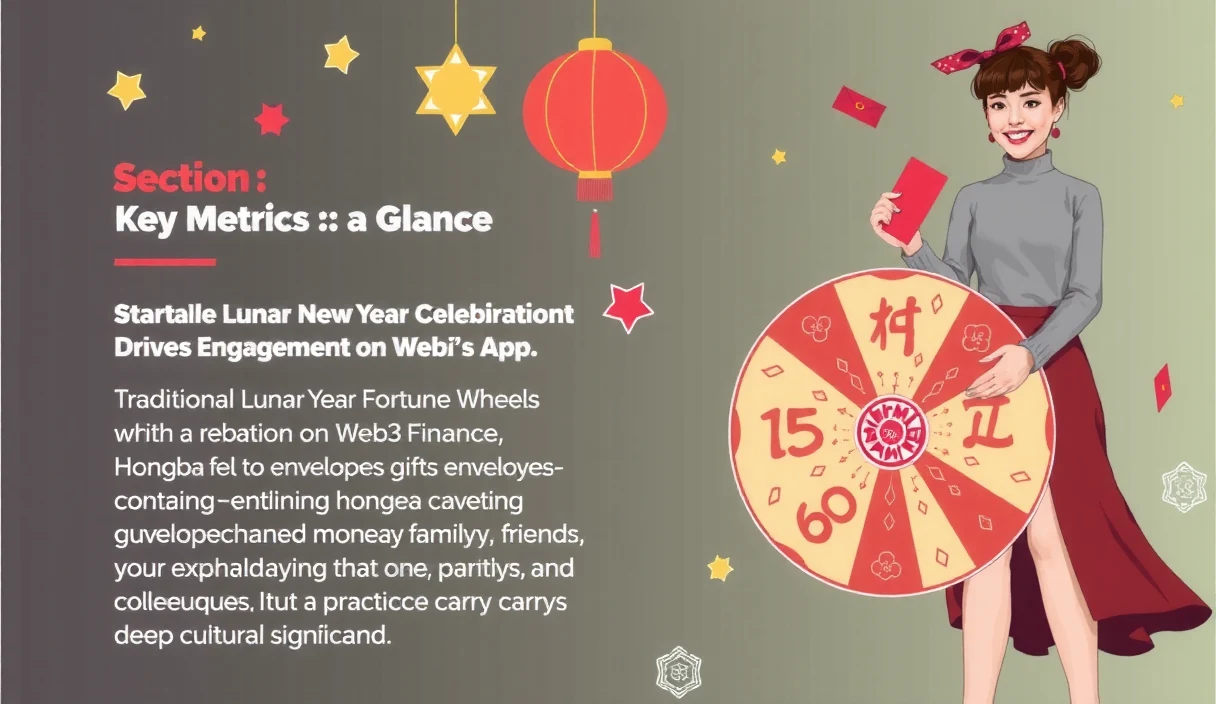
Traditional Lunar New Year celebrations involve hongbao—red envelopes containing monetary gifts exchanged between family members, friends, and colleagues. The practice carries deep cultural significance: the red color symbolizes good fortune, while the monetary transfer represents wishes for prosperity in the coming year.
Startale's Fortune Wheel digitizes this tradition while adding DeFi-native mechanics. Rather than fixed amounts distributed through direct transfers, the campaign introduces probabilistic rewards through a spinning mechanism. Users accumulate "spin tokens" through app engagement—trading, staking, liquidity provision, and social sharing—and redeem them for randomized rewards ranging from small STAR Points allocations to significant token prizes.
The cultural adaptation matters. Many Web3 protocols attempt geographic expansion through generic marketing campaigns that ignore local context. Startale's Fortune Wheel demonstrates a more sophisticated approach: leveraging existing cultural practices as onboarding mechanisms rather than imposing foreign engagement patterns.
Fortune Wheel Mechanics
The campaign operates across three distinct reward tiers, each targeting different user segments and engagement depths.
Daily Spin Pool
Every active user receives one free spin daily during the campaign period. The daily pool distributes smaller, more frequent rewards designed to maintain consistent engagement. Prize distribution follows a weighted randomization: 70 percent of spins yield modest STAR Points allocations (10-50 points), 25 percent yield medium rewards (100-500 points), and 5 percent trigger bonus mechanics.
The daily spin creates a habit-forming loop. Users who open the app to claim their spin frequently remain to check portfolio status, execute trades, or explore new features. Startale's internal data from pilot campaigns suggests that daily spin participants show 2.8x higher monthly retention than non-participants.
Achievement Unlock Spins
Beyond the daily free spin, users earn additional spins through platform engagement milestones:
Trading Volume Thresholds: Users who execute trades exceeding specified volume thresholds (e.g., $500, $2,000, $10,000 in cumulative volume) receive bonus spins. The thresholds escalate geometrically to reward genuine platform usage while discouraging wash trading.
Liquidity Provision Bonuses: Users providing liquidity to Startale's featured pools receive spins proportional to their contribution size and duration. This mechanic directs Fortune Wheel engagement toward protocol-revenue-generating activities rather than pure speculation.
Referral Multipliers: Users who successfully refer new participants receive bonus spins scaled by referred user activity. Passive sign-ups generate minimal referral rewards; active traders generate substantial multipliers.
Grand Prize Jackpot
The Fortune Wheel's highest tier operates as a progressive jackpot accumulated across all spin activity. A small percentage of each spin's theoretical value feeds the jackpot pool, which distributes to one or more lucky participants at campaign conclusion.
The progressive jackpot serves dual purposes. For users, it creates genuine upside excitement—the possibility of a transformative reward from a routine engagement action. For Startale, it concentrates campaign buzz around a climactic moment, generating social media activity and press coverage that extends the campaign's reach beyond active participants.
Competitive Context: Cultural Campaigns in DeFi
| Protocol | Campaign | Cultural Anchor | Engagement Mechanic | Geographic Focus | Estimated Participation |
|---|---|---|---|---|---|
| Startale | Fortune Wheel | Lunar New Year | Spin-to-win | Southeast Asia | 85,000+ users |
| Avalanche | Red Envelope | Lunar New Year | Direct token drops | East Asia | 120,000+ wallets |
| Polygon | Diwali Diyas | Diwali | NFT minting | South Asia | 45,000+ users |
| Solana | Summer Carnival | Regional summer | Trading competitions | Latin America | 60,000+ users |
| BNB Chain | Spring Festival | Lunar New Year | Lottery mechanism | Global Chinese diaspora | 200,000+ users |
Startale's Fortune Wheel occupies a middle position in scale but demonstrates more sophisticated engagement design than competitors. Avalanche and BNB Chain's direct token drops generate higher participation volumes but create less sustainable engagement—users claim and often exit. Startale's tiered spin system requires ongoing platform interaction to maximize rewards, creating stickier relationships.
Polygon's Diwali campaign using NFT minting represents an interesting alternative but faces higher technical barriers for mainstream users unfamiliar with NFT mechanics. Startale's simpler spin-to-win model maintains lower friction while still incorporating DeFi-native elements like liquidity provision bonuses.
Economic Impact and Tokenomics
The Fortune Wheel campaign carries specific implications for STAR Points economics and Startale's broader token strategy.
Reward Budget Allocation
Startale allocated approximately $320,000 equivalent in STAR Points for the Fortune Wheel campaign. This represents roughly 6 percent of the quarterly marketing budget, positioned between the lavish direct drops of BNB Chain and the more conservative experimental campaigns of smaller protocols.
The allocation splits across tiers: 40 percent to daily spin pool, 35 percent to achievement unlock spins, and 25 percent to the progressive jackpot. This distribution rewards consistent engagement over high-variance speculation, aligning user incentives with sustained platform activity.
Token Velocity Effects
STAR Points distributed through Fortune Wheel typically follow different velocity patterns than standard rewards. Users receiving spin-generated tokens often treat them as "found money"—tokens acquired through luck rather than effort—leading to higher immediate redemption rates. Startale's economics team accounts for this by structuring redemption windows: instant redemption at 80 percent value, or delayed redemption (7 days) at full value with additional loyalty bonus.
The delayed redemption mechanic reduces immediate sell pressure while rewarding patient participants. Approximately 35 percent of Fortune Wheel winners opt for delayed redemption, suggesting the loyalty incentive successfully influences behavior for a meaningful user segment.
Treasury Replenishment
Unlike campaigns funded purely from token reserves, Startale partially replenishes Fortune Wheel costs through engagement-derived revenue. Users completing spin-qualifying activities (trading, liquidity provision) generate protocol fees that offset campaign expenditures. The net cost-to-acquisition improves substantially when users remain active post-campaign.

Technical Implementation and Risk Mitigation
The Fortune Wheel's randomized reward distribution required specific technical infrastructure to ensure fairness and prevent manipulation.
Verifiable Randomness
Spin outcomes use Chainlink VRF (Verifiable Random Function) to generate cryptographically secure random numbers. This prevents both Startale itself and external actors from manipulating outcomes. Users can verify that each spin result corresponds to a genuinely random VRF output, creating trust in the fairness mechanism.
The VRF integration adds approximately $0.12 in chainlink costs per spin, which Startale absorbs rather than passing to users. For 85,000+ participants across multiple spins, this represents a meaningful infrastructure investment but one justified by the fairness guarantees.
Anti-Gaming Protections
Fortune Wheel campaigns attract reward farmers seeking to maximize extraction with minimal genuine engagement. Startale implemented several countermeasures:
Volume Quality Analysis: Trading volume counting toward bonus spins undergoes quality scoring. Wash trading between correlated wallets, identical transaction patterns, and other anomalous behaviors receive reduced or zero credit.
Sybil Resistance: New accounts created during the campaign period face elevated scrutiny. Accounts showing minimal historical activity or suspicious referral patterns receive reduced spin allocations until they establish genuine platform usage.
Temporal Distribution: Bonus spins don't accumulate indefinitely. Achievement-based spins expire if unused within 14 days, creating urgency that discourages hoarding and bot farming.
Scalability Preparations
Lunar New Year timing concentrates user activity around specific dates. Startale's engineering team implemented auto-scaling for the spin distribution API, handling 15x normal load during peak periods (New Year's Eve and Day). Load testing revealed bottlenecks in the reward calculation pipeline that were addressed through caching optimizations.
Risks and Considerations
Several factors could constrain the Fortune Wheel campaign's effectiveness.
Cultural Appropriation Concerns: Adapting traditional practices for commercial purposes risks backlash if execution appears exploitative. Startale mitigates this through authentic cultural consultation and by directing a portion of campaign proceeds to Lunar New Year community events in target regions.
Regulatory Scrutiny: Randomized reward mechanisms with monetary value may trigger gambling regulations in certain jurisdictions. Startale's legal team evaluated the Fortune Wheel against regional gambling definitions, structuring the mechanic as a promotional loyalty program rather than a game of chance.
Post-Campaign Churn: Users attracted by Fortune Wheel rewards may exit once the campaign concludes. Startale addresses this through a "luck residue" system: users who participated in Fortune Wheel receive preferential access to subsequent promotions, creating a loyalty loop beyond the initial campaign.
Market Condition Dependency: If broader crypto markets decline during the Lunar New Year period, users may reduce platform engagement regardless of promotional incentives. The campaign's effectiveness partially depends on market sentiment outside Startale's control.
TL;DR
- What: Startale launched a Lunar New Year Fortune Wheel campaign with spin-to-win rewards on its Web3 finance app
- Mechanics: Daily free spins, achievement-unlock bonus spins, and a progressive grand prize jackpot
- Cultural Strategy: Digitizes traditional hongbao (red envelope) gifting through probabilistic DeFi-native rewards
- Scale: 85,000+ participants; $320,000 equivalent STAR Points allocated; Chainlink VRF ensures fairness
- Risk: Cultural appropriation concerns, gambling regulation ambiguity, post-campaign churn, and market condition dependency
Sources
- Startale Lunar New Year Fortune Wheel Announcement
- Lunar New Year Consumer Finance Trends - McKinsey Southeast Asia
- DeFi Cultural Campaign Analysis - Delphi Digital
- Chainlink VRF Integration Documentation
- Web3 User Retention Benchmarks - Token Terminal
Gemma Nguyen is TotesTek's Content Lead and Journalist covering cryptocurrency, Web3, DeFi, and blockchain technology.
Related Posts
-

Supersized August: Startale Pushes 100 STAR Points to Drive Soneium Ecosystem Engagement
Last month, I spent twenty minutes trying to redeem airline miles for a flight I no longer needed. The points had technically expired, the redemption portal was broken, and the customer service chatbot kept sending me in circles. It was a familiar frustration, one that loyalty pr
-

Soneium Supports ERC-8432: IP Licensing That People and AI Agents Can Both Read
A few months ago, I watched a musician friend struggle with a Content ID claim on a platform she had already licensed her track through. The system saw the same audio fingerprint and flagged it as unauthorized — because the license lived in one database and the detection system l
-

Startale July Missions Offer Up to 80 STAR Points for Active Ecosystem Engagement
I have a drawer full of loyalty cards from coffee shops, airlines, and grocery stores. None of them talk to each other, and most of the points expire before I remember to use them. When Startale announced its July Missions campaign offering up to 80 STAR Points for active ecosyst
-

Startale's September Harvest: How STAR Points Are Building a Loyalty Layer for Polkadot
I have a drawer full of loyalty cards from coffee shops, airlines, and grocery stores. None of them talk to each other, and most of the points expire before I remember to use them. When Startale announced its September Harvest campaign offering up to 200 STAR Points, I recognized