

Optimism Collective Governance Forum Warns EVM DAOs Are Being Looted by Social Mercenaries
A governance post published on the Optimism Collective forum draws parallels between historical open cities and modern EVM DAOs, arguing that decentralized autonomous organizations built without adequate protective mechanisms are vulnerable to exploitation by social and governance manipulation.

A governance post published on the Optimism Collective forum on August 4, 2026, draws parallels between historical open cities and modern EVM DAOs, arguing that decentralized autonomous organizations built without adequate protective mechanisms are vulnerable to exploitation. The analysis warns that weaponry has shifted from physical muscle to social and governance manipulation, calling for structural defenses including walls, rules, and enforcement mechanisms to protect treasury assets and voter intentions.
I've watched DAO governance evolve from naive optimism to hard-won pragmatism. Early idealists believed open participation and transparent voting would create self-regulating communities. The Optimism forum post represents a maturing perspective—acknowledging that permissionless systems attract predators who exploit structural weaknesses faster than communities can patch them.
Key Metrics at a Glance
| Governance Dimension | Traditional Corporate | Unprotected DAO | Defended DAO |
|---|---|---|---|
| Decision Speed | Days | Hours | Days |
| Participation Rate | Board-only | 2-5% of token holders | 15-20% with incentives |
| Treasury Security | Legal contracts | Smart contracts | Smart + social contracts |
| Attack Surface | Insider threats | Unlimited public | Gated with verification |
| Recovery Options | Legal action | On-chain reversal | Multi-sig + governance |
| Average Proposal Pass Rate | N/A | 70%+ | 40-50% (more scrutiny) |
The Open Cities Analogy
The governance post uses medieval open cities as a framing device:
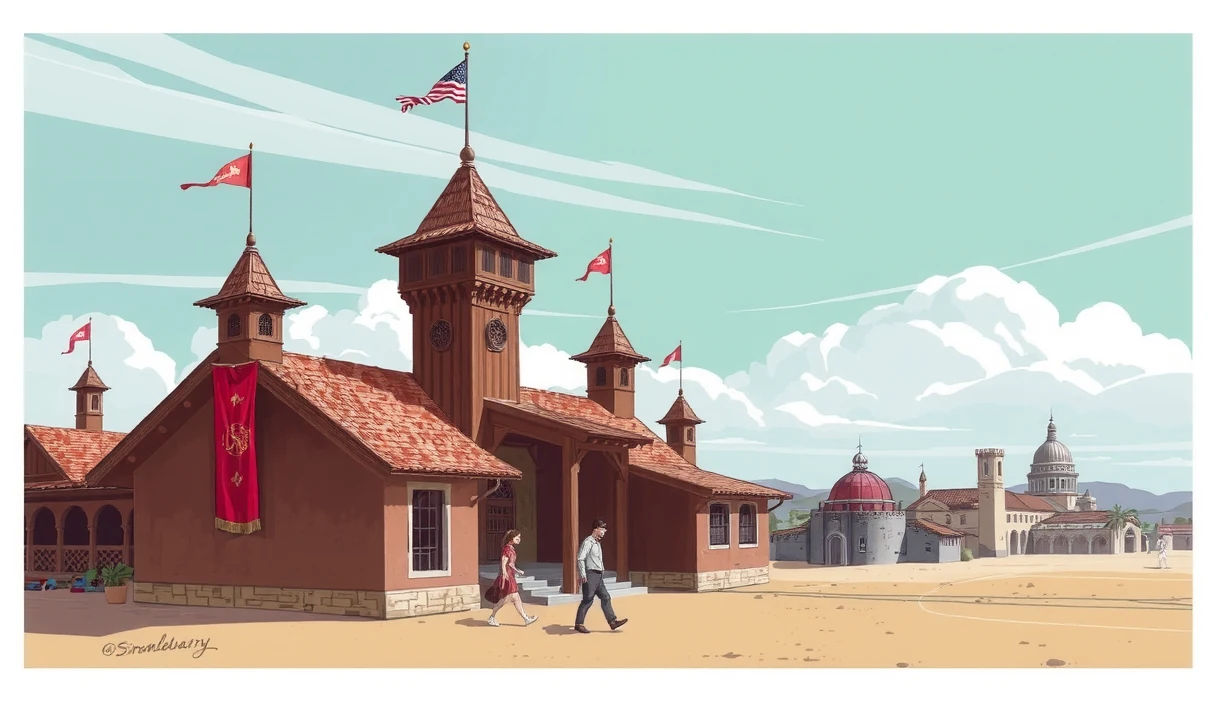
Historical Precedent: Cities without walls faced constant raids. Prosperity required defensive investment—gates, guards, and garrisons that consumed resources but preserved wealth. The post argues that EVM DAOs face analogous dynamics.
Modern Translation: "Social mercenaries" replace physical raiders. These actors identify DAOs with large treasuries and weak governance, then mobilize voting power through token accumulation, sybil accounts, or coordinated social campaigns.
Looting Mechanisms: Rather than direct theft, exploitation occurs through governance capture—passing proposals that redirect treasury funds to attacker-controlled wallets, grant programs, or "ecosystem development" initiatives.
The Tragedy: Open cities that invested in walls prospered; those that remained open were repeatedly pillaged until nothing remained. The post suggests DAOs face similar existential risk if they fail to develop protective governance infrastructure.

Social Mercenary Tactics
The post identifies specific exploitation patterns:
Grant Farming: Attackers create superficial projects designed to qualify for DAO grants. These "ecosystem contributions" extract treasury funds while delivering minimal genuine value. The attacker's sophistication lies in proposal writing that appears legitimate to casual voters.
Governance Attacks: Coordinated voting blocs acquire tokens specifically to pass self-serving proposals. Flash loan attacks, though partially mitigated, remain possible through multi-day token accumulation strategies.
Social Engineering: Discord and forum manipulation creates false consensus. Small groups of coordinated actors dominate public discourse, making their positions appear more popular than they are.
Proposal Fatigue: Constant low-quality proposals exhaust engaged voters, reducing participation rates. Lower turnout makes governance capture easier, as attackers need fewer votes to reach quorum.
Structural Defense Mechanisms
The post proposes several protective measures:
Participation Walls: Requiring verified identity or reputation for governance participation. This reduces sybil attacks while maintaining transparency through public voting records.
Proposal Thresholds: Higher barriers for treasury-related proposals, including mandatory review periods and specialized committee evaluation. Not all proposals deserve equal process.
Treasury Segmentation: Dividing assets across multiple contracts with different access controls. No single proposal can drain the entire treasury.
Enforcement Mechanisms: On-chain consequences for malicious proposals, including slashing or reputation damage. Making attacks costly rather than merely difficult.
Competitive Context
Different ecosystems approach DAO security differently:
vs. Traditional Corporate Governance: Companies have centuries of legal precedent protecting shareholders. DAOs operate in regulatory gray zones where legal recourse is uncertain and expensive.
vs. Bitcoin: Bitcoin's lack of on-chain governance eliminates governance attack surfaces but prevents coordinated development. The trade-off favors security over adaptability.
vs. Polkadot OpenGov: Polkadot's referenda system includes conviction voting and delegation, creating natural defense through economic commitment. However, complexity introduces its own vulnerabilities.
vs. Optimism's Own Structure: The Collective's bicameral governance (Token House + Citizens' House) provides checks and balances. The post's warnings suggest even these defenses require continuous reinforcement.
Ecosystem Implications
The governance post affects multiple stakeholders:
For Protocol Developers: Building governance mechanisms requires security-first design. Retrofitting protections onto deployed systems proves more difficult than incorporating them from genesis.
For Token Holders: Passive participation enables governance capture. The post implicitly argues that token holders must remain engaged or delegate to trusted representatives, not merely hold for speculation.
For Regulators: DAO exploitation creates justification for intervention. Self-regulating governance standards may prevent heavy-handed external regulation.
For Ecosystem Participants: Grant recipients face increased scrutiny. Legitimate projects must demonstrate clear value to pass enhanced review processes.

Risks and Considerations
Several tensions accompany governance defense:
Permissionlessness vs. Protection: The core DAO value proposition involves open participation. Excessive restrictions may alienate the communities these structures aim to serve.
Centralization Risk: Governance committees and verification requirements reintroduce centralization. The cure may resemble the traditional structures DAOs sought to replace.
False Positives: Enhanced scrutiny blocks legitimate proposals alongside malicious ones. Innovation requires risk-taking that defensive mechanisms may inadvertently prevent.
Economic Costs: Governance participation incentives, committee compensation, and security audits consume treasury resources. These costs must produce proportional security benefits.
TL;DR
- What: Optimism governance forum warns that EVM DAOs face exploitation by "social mercenaries"
- How: Grant farming, governance capture, social engineering, and proposal fatigue drain treasuries
- Edge: Historical open cities analogy reframes DAO security as existential infrastructure investment
- Defenses: Participation verification, proposal thresholds, treasury segmentation, enforcement mechanisms
- Context: Mature DAO ecosystems acknowledging that permissionless design requires protective architecture
Sources
- Optimism Collective Governance Forum (Primary governance post) - PRIMARY SOURCE
- DAO Governance Research (Academic analysis)
- Smart Contract Security (Technical defenses)
- Governance Attack Case Studies (Historical incidents)
- Decentralized Governance Standards (Participation tools)
Gemma Nguyen is Totestek's DAO Governance Correspondent. She writes about decentralized governance, treasury management, and the evolving architecture of community-owned protocols.
Related Posts
-

How Polkadot Proof of Personhood Works: Recognition Games and Ring-VRF Privacy
I have watched the same Twitter account post the same conspiracy theory under three different handles in the same thread. I have seen bot farms amplify political messages until the platform itself could not distinguish organic from artificial engagement. And I have watched develo
-

Polkadot Statement Store: How Decentralized Messaging Works Without a Blockchain
I sat through the Web3 Summit presentation in Berlin last month waiting for the usual blockchain pitch. Instead, Parity Technologies demoed something genuinely different: a messaging protocol that does not write anything to a blockchain, does not rely on a central server, and sti
-

Why Polkadot is Not Just Another Blockchain: Architecture, Security, and Interoperability
I have watched builders evaluate Layer 1 chains for years, and the conversation usually follows the same pattern. Transactions per second. Finality time. Token price. The assumption is that blockchains are essentially interchangeable, differentiated only by speed and cost. That a
-

The Hidden Philosophy Behind Polkadot's Design: Products for People, Not Platforms
I have read a lot of blockchain whitepapers. Most of them open with technical abstractions: consensus mechanisms, throughput numbers, token economics. Very few begin with the question that actually matters: who is this for? Polkadot's philosophy page on polkadot.com answers that