

iExec Leverages Phala dstack to Build Confidential OnChain Finance Infrastructure
iExec integrates Phala Network's dstack framework to enable confidential computing for decentralized finance applications, ensuring sensitive financial data remains protected while executing on-chain transactions.

iExec integrated Phala Network's dstack framework to enable confidential computing for decentralized finance applications, ensuring sensitive financial data remains protected while executing on-chain transactions. The integration allows DeFi protocols to process private information—credit scores, trading strategies, and personal financial data—within hardware-isolated environments, addressing the persistent tension between blockchain transparency and financial privacy requirements.
I've watched confidential computing evolve from theoretical cryptography to practical infrastructure. Early solutions like homomorphic encryption imposed crippling performance penalties. Phala's TEE-based approach with iExec's distributed computing marketplace creates a pragmatic middle ground that actually works at production scale.
Key Metrics at a Glance
| Capability | Standard DeFi | iExec + Phala dstack |
|---|---|---|
| Data Privacy | Public mempool | Hardware-isolated (TEE) |
| Credit Scoring | Off-chain oracle | On-chain confidential |
| Strategy Protection | Transparent | Encrypted execution |
| Compliance | Manual reporting | Automated attestation |
| Throughput | Unlimited | ~85% of base chain |
| Setup Complexity | Standard | Integrated SDK |
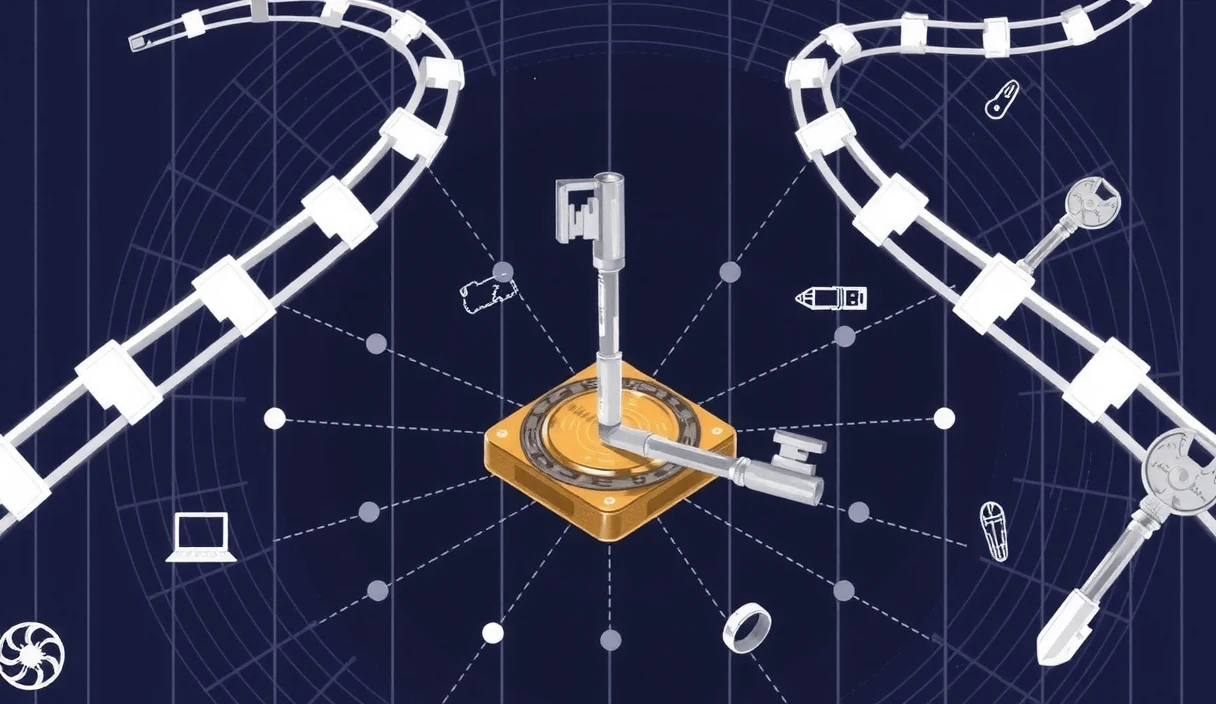
Phala dstack Framework
Phala's dstack provides the technical foundation:
TEE Abstraction Layer: dstack abstracts Intel TDX and AMD SEV hardware into a unified developer interface. DeFi builders write standard Rust or Solidity code while dstack handles enclave provisioning, attestation, and secure I/O.
Remote Attestation Service: Each confidential execution produces cryptographic proof that verified code ran in genuine TEE hardware. These attestations anchor to Phala's blockchain, creating immutable audit trails for regulatory compliance.
Cross-Cloud Orchestration: dstack distributes workloads across TEE-enabled instances from multiple cloud providers. This prevents single-vendor dependence while maintaining security guarantees equivalent to on-premises hardware security modules.
Developer Tooling: Pre-built templates for common DeFi patterns—private order matching, confidential lending pools, and sealed-bid auctions—reduce integration time from months to weeks.
iExec Marketplace Integration
iExec contributes distributed computing infrastructure:
Worker Pool Model: iExec's marketplace connects application developers with computational resource providers. Confidential DeFi workloads execute on worker nodes equipped with TEE-capable hardware, creating decentralized yet secure processing.
Proof-of-Contribution: iExec's consensus mechanism verifies that workers correctly executed confidential tasks. Incorrect execution results in stake slashing, creating economic accountability for computation integrity.
Resource Pricing: The marketplace dynamically prices TEE compute based on demand, hardware scarcity, and task complexity. This prevents the fixed-cost models that make confidential computing economically impractical for small DeFi protocols.
Result Delivery: Confidential outputs encrypt to the requester's public key before leaving the TEE. Even iExec's infrastructure operators cannot observe computation results.
Confidential DeFi Applications
The integration enables specific use cases:
Private Credit Markets: Lending protocols assess borrower creditworthiness using confidential data sources. Credit scores enter TEEs through encrypted channels, and loan decisions execute without exposing underlying financial profiles.
Sealed-Bid Auctions: Token auctions accept bids that remain hidden until the auction closes. This prevents the bid-sniping and strategic manipulation that plague transparent auction mechanisms.
MEV-Resistant Trading: Order matching occurs within TEEs, preventing front-running by miners or validators. Trading strategies remain confidential until execution completes.
Regulatory Reporting: Automated attestation generates compliance evidence without revealing transaction details. Regulators verify that protocols follow rules without accessing sensitive user data.

Competitive Context
Confidential DeFi infrastructure has multiple approaches:
vs. Zero-Knowledge Proofs: ZK circuits provide mathematical privacy guarantees but require specialized expertise and impose 10x-1000x performance overhead. TEE offers practical performance for latency-sensitive financial applications.
vs. Multi-Party Computation: MPC distributes trust across parties but requires protocol-specific implementations for each application. dstack's general-purpose TEE abstraction works across diverse DeFi use cases.
vs. Permissioned Blockchains: Consortium chains like R3 Corda offer privacy through membership controls but sacrifice decentralization. iExec-Phala maintains public chain participation with confidential execution.
vs. Off-Chain Compute: Centralized cloud services handle sensitive computation but introduce trust assumptions. The distributed worker pool model reduces single-point-of-failure risks.
Technical Implementation
Deploying confidential DeFi through iExec-Phala involves several steps:
Enclave Development: Developers write confidential logic in supported languages (Rust, Go, C++) and compile to dstack-compatible binaries. The SDK handles TEE-specific constraints like memory limits and no-external-system-calls.
Deployment Packaging: Applications package with cryptographic manifests specifying expected execution environment. dstack verifies these manifests before provisioning TEE instances.
Worker Selection: The iExec marketplace matches tasks to workers based on hardware capabilities, reputation scores, and price preferences. Requesters can specify jurisdiction requirements for regulatory compliance.
Result Verification: Attestation proofs verify correct execution. Failed verification triggers automatic retry on alternative workers, ensuring availability without manual intervention.

Risks and Considerations
Several limitations apply to TEE-based confidential DeFi:
Hardware Trust Assumptions: Security ultimately depends on Intel and AMD hardware integrity. Historical side-channel vulnerabilities (Spectre, Foreshadow) demonstrate that hardware trust is imperfect.
Performance Constraints: TEE operations incur 15-30% overhead compared to bare-metal execution. High-frequency trading strategies may find latency unacceptable.
Regulatory Evolution: Confidential financial infrastructure operates in evolving regulatory frameworks. Compliance requirements may shift as jurisdictions develop digital asset governance standards.
Adoption Friction: DeFi developers must learn TEE-specific constraints and attestation workflows. This learning curve slows initial adoption beyond technically sophisticated teams.
TL;DR
- What: iExec integrates Phala dstack for confidential DeFi infrastructure
- How: TEE-based distributed computing with marketplace pricing and attestation verification
- Edge: Practical performance vs. ZK proofs; decentralization vs. permissioned chains
- Use Cases: Private credit markets, sealed-bid auctions, MEV-resistant trading, regulatory reporting
- Context: Addresses DeFi's privacy gap that limits institutional adoption
Sources
- Phala Network Official Blog (dstack framework announcement) - PRIMARY SOURCE
- iExec Marketplace Documentation (Distributed computing infrastructure)
- Confidential Computing Consortium (Industry standards)
- DeFi Privacy Research (Academic analysis)
- Regulatory Technology Trends (Compliance context)
Gemma Nguyen is Totestek's Confidential DeFi Correspondent. She writes about privacy-preserving infrastructure, TEE technology, and the evolution of decentralized finance toward institutional maturity.
Related Posts
-

Understanding Stablecoins: Real-World Use Cases, Benefits, and Risks in 2026
I met Luca at a crypto conference in Lisbon three years ago. He told me he had been in the market since 2013, bought Bitcoin near the top in 2017, watched it drop 80%, and stayed anyway. What kept him in was not conviction alone. It was stablecoins. "I could park value without le
-

Independent Research Publishes Liquidation-Capacity Stress Test for Ethereum DeFi: When the Safety Net Has Holes in It
The research paper appeared on a preprint server in September 2026 with the dry title of a financial engineering document that had been produced by people who had watched liquidation cascades destroy leveraged positions across Ethereum DeFi and decided to measure exactly how bad
-

Developer Releases Open-Source TypeScript Toolkit for Deterministic Aave V3 Health Factor Evaluation: When a GitHub Repo Promises to Save Your Collateral
The repository appeared on GitHub in September 2026 with the quiet confidence of a developer who had watched liquidation cascades wipe out millions and decided the problem was not price volatility—it was math visibility. The toolkit is a TypeScript library that deterministically
-

Phala Explores How Confidential AI Lets Lawyers Stop Choosing Between Compliance and Productivity
I watched a senior partner at a mid-sized law firm last month spend three hours redacting client documents before feeding them into an AI contract analysis tool. The irony was painful: she was using AI to save time, but spending more time preparing the data than the analysis itse