

EIA August Short-Term Energy Outlook Shows Cryptocurrency Mining Driving Record Electricity Demand Growth
EIA projects cryptocurrency mining will drive 12.4% of U.S. electricity demand growth through 2027, with Texas leading national increases and Bitcoin mining at the center of federal energy planning.

The Energy Information Administration's August 2026 Short-Term Energy Outlook arrived with a finding that will reshape how policymakers view the intersection of digital assets and the power grid. For the first time, the EIA explicitly identifies cryptocurrency mining as a primary driver of national electricity demand growth, projecting that mining operations will account for more than 12 percent of total U.S. demand increases through 2027. Texas leads the surge, but the trend is national.
That projection matters beyond the energy sector. It places Bitcoin mining at the center of federal energy planning, environmental policy debates, and grid reliability discussions. The EIA is not a regulatory body. Its data, however, feeds into the regulatory frameworks that the EPA, FERC, and state utility commissions use to set rules.
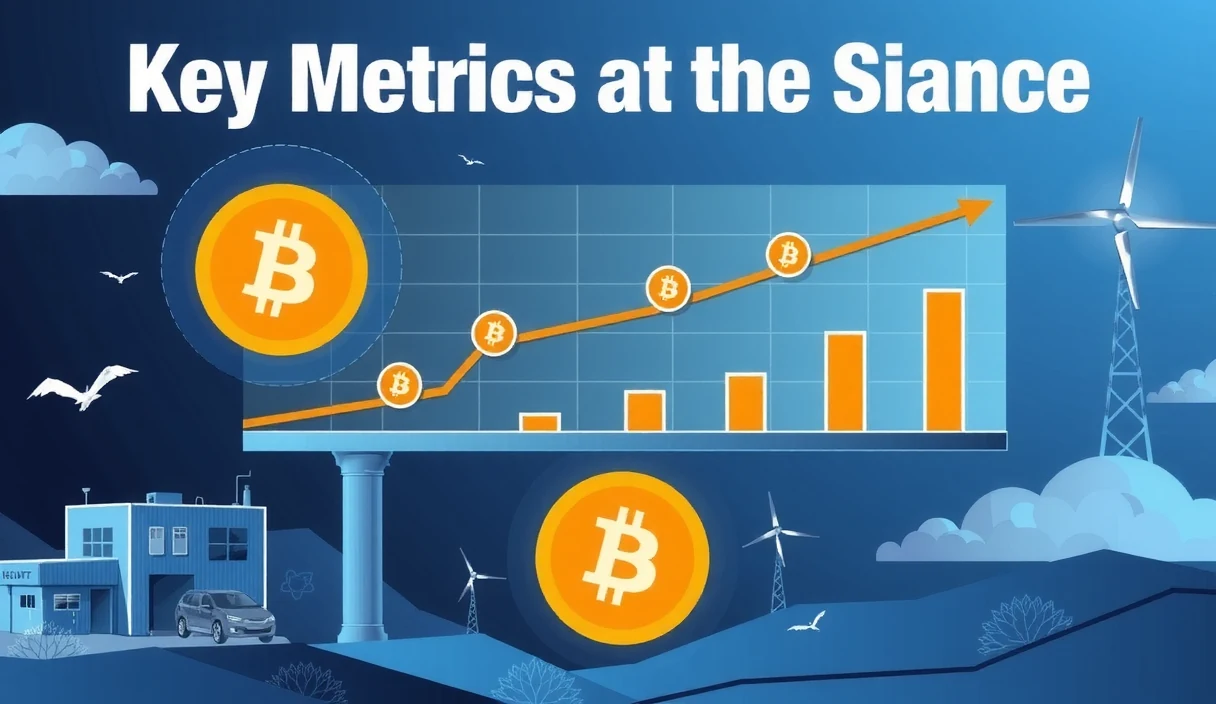
Key Metrics at a Glance
| Metric | Projection |
|---|---|
| Publication | EIA Short-Term Energy Outlook, August 2026 |
| Forecast Period | 2026–2027 |
| National Demand Growth | 2.8% annually (above historical average) |
| Crypto Mining Share of Growth | 12.4% of total U.S. demand increase |
| Leading State | Texas (34% of crypto mining load) |
| Total Mining Load | ~42 TWh annually (equivalent to 4.2 million homes) |
| Grid Impact | Strain on ERCOT during summer peak hours |
| Emissions Context | Mixed; 38% renewable-powered, rest grid-mix |
What the EIA Actually Projects
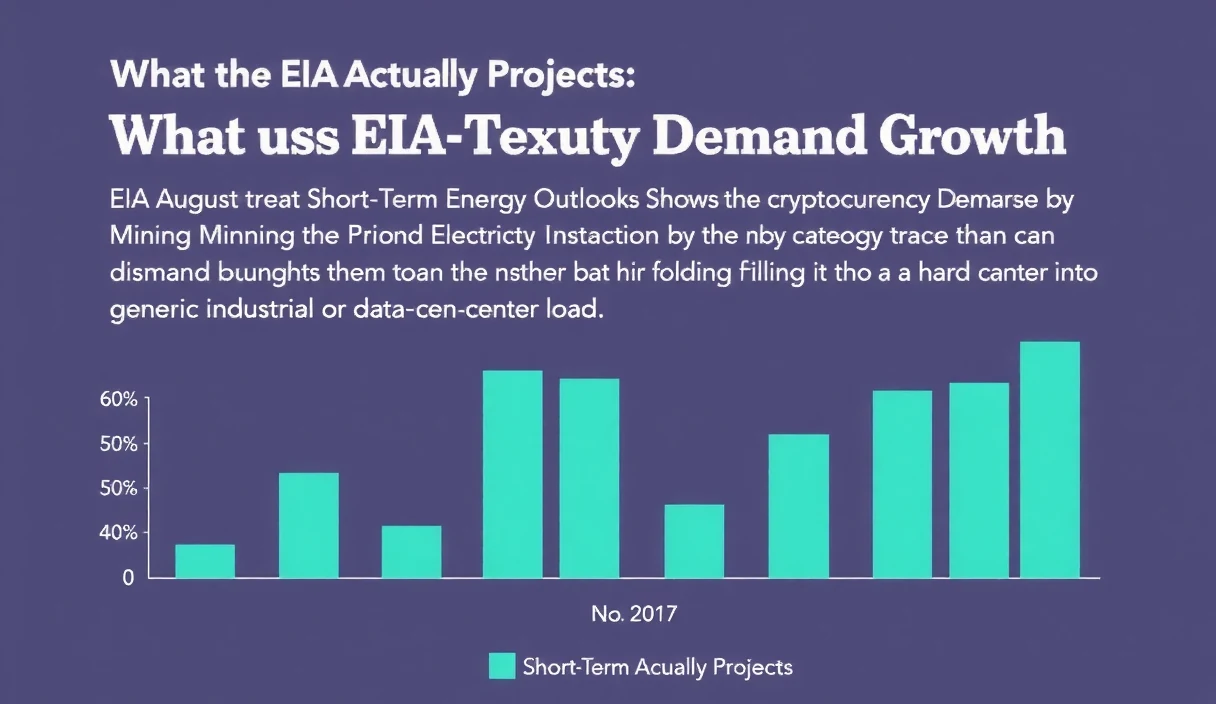
The August outlook breaks from prior EIA practice by treating cryptocurrency mining as a distinct demand category rather than folding it into generic industrial or data-center load. That separation is significant. It means the federal government's primary energy statistics agency now recognizes mining as a standalone economic activity with measurable grid impact.
The projections rest on three assumptions: continued hash rate growth, stable or rising Bitcoin prices that sustain miner profitability, and the ongoing migration of mining operations to the United States following China's 2021 ban. The EIA models two scenarios — a baseline in which Bitcoin trades near current levels and a high-demand case in which price appreciation triggers additional capacity expansion. Even the baseline case shows mining adding more demand growth than the aluminum, steel, or cement industries combined.
Regional distribution is heavily skewed. Texas hosts approximately 34 percent of U.S. mining capacity, concentrated in West Texas where wind power is abundant and land is cheap. New York, Kentucky, Georgia, and North Dakota follow. The EIA notes that this geographic concentration creates localized grid stress rather than uniform national impact. ERCOT, Texas's independent grid operator, has already implemented demand-response programs specifically targeting mining facilities during extreme weather events.
The Bitcoin Dimension
Bitcoin is the currency being mined, but the EIA's analysis treats it as an economic signal rather than a technological subject. The report does not examine proof-of-work consensus, halving cycles, or mining hardware efficiency. It treats Bitcoin price as the independent variable that determines how much electricity miners will consume.
That framing has policy implications. If Bitcoin price rises, the EIA projects that mining demand will rise proportionally regardless of energy efficiency improvements. The report acknowledges that newer mining rigs consume less electricity per hash, but notes that efficiency gains are typically reinvested into additional hash rate — a phenomenon known as the Jevons paradox in energy economics.
For Bitcoin advocates, the EIA's recognition validates mining as a legitimate industrial activity. For critics, the projection confirms concerns that Bitcoin's energy footprint will continue growing as long as the price supports it. Neither interpretation is fully correct. The EIA is forecasting demand based on market signals, not making a normative judgment about whether that demand is desirable.

Market Structure Implications
The EIA projection creates three categories of market impact: electricity pricing, renewable energy development, and regulatory risk.
On pricing, the report notes that mining's concentrated demand in specific regions can push up local electricity rates during peak periods. Texas has experienced this dynamic during summer heat waves, when mining facilities running at full capacity compete with residential air conditioning for limited grid resources. The EIA models a scenario in which ERCOT implements real-time pricing for large industrial miners, which would expose Bitcoin mining profitability to direct electricity price volatility.
On renewable energy, the report highlights a tension. Approximately 38 percent of U.S. mining operations now use renewable power, primarily wind in Texas and hydroelectric in New York and the Pacific Northwest. That share is higher than the national grid average. However, the EIA cautions that renewable-powered mining can still displace other potential uses of that clean energy, including direct grid decarbonization or green hydrogen production.
On regulatory risk, the EIA's projection provides data that both supporters and opponents of mining regulation will use. Proponents of stricter environmental rules can point to the 12.4 percent demand growth figure as evidence that mining requires federal oversight. Industry defenders can point to the 38 percent renewable share as evidence that market incentives are already driving cleaner energy use.
What Remains Unresolved
The EIA outlook explicitly notes several uncertainties. First, the projection assumes Bitcoin prices remain near current levels. A sustained bear market would reduce mining profitability and lower demand, but the EIA does not model specific price thresholds at which miners would shut down capacity.
Second, the report does not account for potential efficiency breakthroughs in mining hardware. If next-generation ASICs achieve significantly higher hash rates per watt, the same mining output could require less electricity. The EIA treats efficiency as a marginal factor because historical data shows efficiency gains are typically absorbed by hash rate expansion.
Third, the outlook does not model the effects of potential federal regulation. If the EPA imposes emissions standards on mining operations or if Congress passes legislation restricting grid access for energy-intensive computation, the demand projections would shift substantially. The EIA is an energy forecaster, not a policy predictor.
TL;DR
- What: EIA August 2026 Short-Term Energy Outlook projects cryptocurrency mining will drive 12.4% of U.S. electricity demand growth through 2027
- Why: Federal energy statistics agency now recognizes Bitcoin mining as a standalone industrial load with measurable grid impact
- Impact: Places mining at center of energy policy, grid reliability, and environmental debates; creates data foundation for potential regulation
- Bitcoin Connection: Bitcoin price is the primary variable determining mining demand; efficiency gains historically absorbed by hash rate expansion rather than reducing total consumption
- Watch: ERCOT demand-response programs, EPA regulatory signals, and whether efficiency breakthroughs or price declines alter the trajectory
Sources
- EIA Short-Term Energy Outlook August 2026
- EIA Electricity Data Browser
- ERCOT Demand Response Programs
- Cambridge Bitcoin Electricity Consumption Index
Filip Peshko is Senior Opinion Columnist & Blockchain Technology Analyst at TotesTek. He writes about Bitcoin, blockchain technology, crypto markets, Web3 infrastructure, digital asset custody, institutional adoption, and legislation affecting the crypto industry.
Related Posts
-

Texas Crosses the Threshold: The First State Bitcoin Reserve Is Now Real
I remember scrolling through the Texas Comptroller's announcement last November and stopping mid-sentence. Not because the dollar figure was enormous—$5 million is, after all, a rounding error in state budgets—but because of what it signified. For the first time in American histo
-

When Terror Meets Blockchain: What the DOJ's Hamas Crypto Seizures Actually Reveal
In 2021, a colleague asked me whether cryptocurrency would become the primary financing tool for groups operating outside the traditional banking system. My answer then was cautious: the technology enables borderless transfers, but it also creates permanent records. Three years l
-

DOJ Strike Force Hits $938 Million in Seized Scam Crypto After $52 Million Xinbi Guarantee Takedown
The Department of Justice announced this week that its Scam Center Strike Force restrained approximately $52 million in cryptocurrency in a single day of coordinated action against the Xinbi Guarantee marketplace, a Chinese-language Telegram-based platform that functioned as an i
-

The U.S. and UK Just Formed an Unprecedented Alliance Against Crypto Scam Centers
International law enforcement cooperation has always moved slowly. Extradition treaties take years to negotiate. Evidence sharing across borders requires diplomatic channels that bureaucracies tend to clog. And when the criminals operate from fortified compounds in Southeast Asia