

When Terror Meets Blockchain: What the DOJ's Hamas Crypto Seizures Actually Reveal
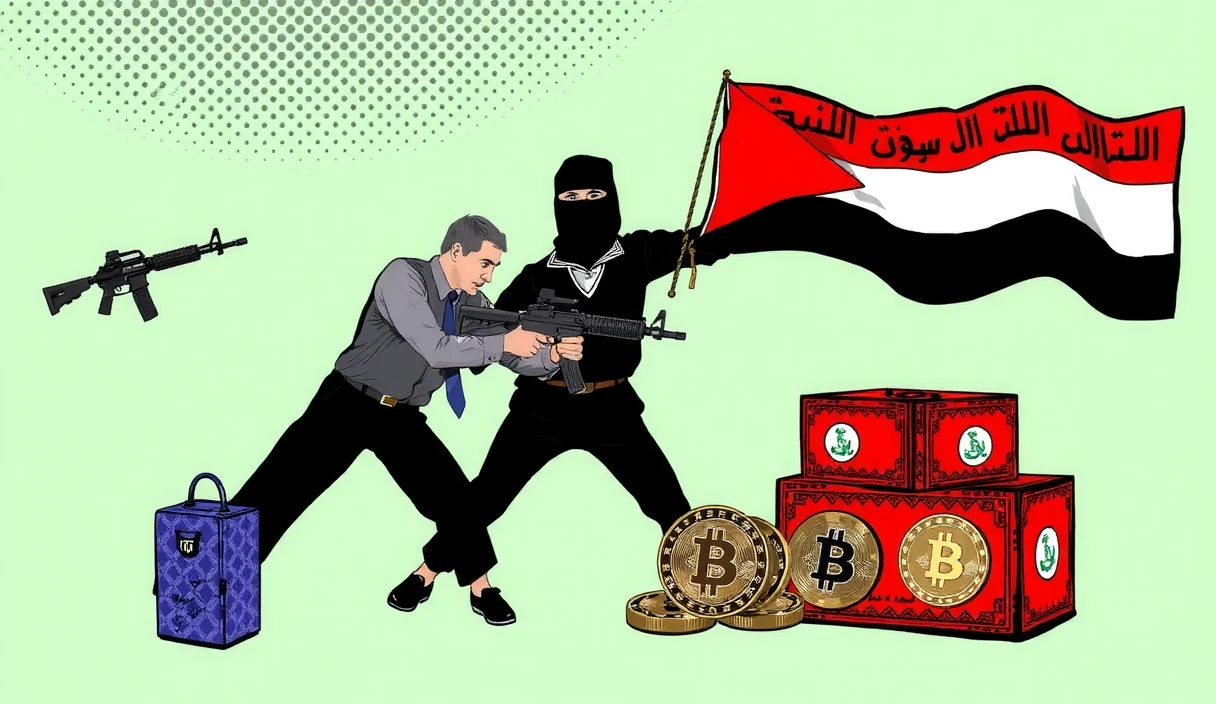
The FBI seized $560,000 in cryptocurrency and internet infrastructure from Hamas's Al Qassam Brigades through court-authorized operations in 2025, demonstrating advanced blockchain tracing capabilities and raising questions about the future of terrorist financing through digital assets.

In 2021, a colleague asked me whether cryptocurrency would become the primary financing tool for groups operating outside the traditional banking system. My answer then was cautious: the technology enables borderless transfers, but it also creates permanent records. Three years later, the Department of Justice is proving that prediction correct in ways both encouraging and unsettling. The FBI's seizure of $560,000 in cryptocurrency from Hamas, announced this month, represents more than an enforcement action. It is a test of whether blockchain tracing capabilities have matured enough to make digital assets a liability rather than an advantage for terrorist financing.
The Justice Department's announcement detailed a multi-phase operation targeting Hamas's Al Qassam Brigades, the military wing of the designated Foreign Terrorist Organization. Through court-authorized seizures executed between March and October 2025, the FBI confiscated cryptocurrency donations intended for the Brigades and took control of the domains and servers powering Hamas's main website, AlQassam.ps. The operation also enabled investigators to identify thousands of individuals who had contacted Hamas online attempting to donate through cryptocurrency and other means.
Key Metrics at a Glance
| Metric | Detail |
|---|---|
| Total Seized | ~$560,000 in cryptocurrency |
| Target | Hamas Al Qassam Brigades (military wing) |
| Seizure Dates | March 25, June 25, and October 10, 2025 |
| Agencies | DOJ, FBI, with human source intelligence |
| Infrastructure Seized | AlQassam.ps domain and associated servers |
| Identified Contacts | Thousands of potential donors traced |
| Fundraising Method | Rotating cryptocurrency donation addresses |
| Legal Basis | Court-authorized seizure warrants |
What the Seizures Actually Accomplished
The operational details matter more than the headline figure. Hamas was not using a single static wallet address. According to court documents, the group operated through a rotating set of cryptocurrency donation addresses provided through an encrypted communications platform group chat claiming association with Hamas. This address-rotation technique, designed to complicate tracing efforts, was ultimately defeated through a combination of human source intelligence and blockchain analysis.
The FBI also seized the underlying internet infrastructure, not merely the funds. Taking control of AlQassam.ps and its associated servers meant investigators could intercept new donation attempts in real time and gather intelligence on the donor network. This dual approach, financial and digital, reflects an evolution in how law enforcement treats cryptocurrency-enabled crime. The days of simply tracing funds to an exchange and freezing an account are giving way to more sophisticated operations that treat crypto financing networks as comprehensive intelligence targets.
The seizures raise a question that policymakers rarely address publicly: does each successful operation make future cryptocurrency fundraising more difficult for terrorist organizations, or does it merely push them toward more sophisticated privacy technologies? The evidence so far is mixed. While seizure announcements create temporary disruption, they also provide terrorist groups with operational lessons about which techniques fail.

The Cryptocurrency Tracing Challenge
The $560,000 figure, while significant in absolute terms, represents a fraction of what terrorist organizations require for sustained operations. The more important question is whether law enforcement can scale these capabilities. Each seizure required court-authorized warrants, human intelligence sources, and specialized blockchain tracing expertise. These are not resources that can be applied simultaneously to every cryptocurrency address associated with terrorist financing.
Blockchain analysis firms have developed increasingly sophisticated tools for identifying clustered addresses, tracing transactions through mixers, and linking on-chain activity to real-world identities. But these capabilities face fundamental constraints. Privacy-enhancing technologies, including privacy coins, decentralized exchanges, and cross-chain bridges, continue to evolve in response to enforcement pressure. The technology race between investigators and those seeking to conceal financial flows is ongoing, and its outcome is not predetermined.
For public policy, the relevant metric is not the dollar amount seized but the cost-effectiveness of cryptocurrency tracing relative to alternative counterterrorism financing strategies. Traditional financial surveillance through banks and money service businesses remains the primary method for interdicting terrorist funds. Cryptocurrency seizures supplement this system but do not replace it.
Comparing Terrorist Financing Cases
| Case | Agency | Amount | Target | Method | Year |
|---|---|---|---|---|---|
| Hamas Al Qassam | FBI/DOJ | $560K | Hamas military wing | Crypto + domain seizure | 2025 |
| ISIS Crypto | DOJ | ~$2M | ISIS affiliates | Multiple wallets | 2020 |
| Al-Qaeda Crypto | DOJ/Treasury | ~$500K | Al-Qaeda network | Bitcoin donations | 2020 |
| Hamas (prior) | DOJ/IRS | ~$1M | Hamas | Social media + crypto | 2019 |
| Russian Oligarchs | OFAC/DOJ | Billions | Various | Traditional + crypto | 2022-2024 |
This comparison reveals important patterns. First, cryptocurrency seizures against terrorist organizations have remained relatively small compared to state-level sanctions evasion cases. Second, Hamas has been targeted multiple times, suggesting either persistent vulnerability or persistent fundraising activity. Third, the methods are converging: each operation combines blockchain tracing with traditional intelligence and infrastructure disruption.
The smaller amounts in terrorist financing cases compared to sanctions evasion reflect structural differences. Sanctions evasion typically involves established financial networks moving large volumes through institutional channels. Terrorist financing, by contrast, often relies on dispersed individual donations through social media campaigns, resulting in smaller average transaction sizes but wider distribution.
The Policy Implications
The DOJ's announcement emphasizes that these seizures are designed to "reduce the capabilities of foreign terrorist organizations to receive donations and to create distrust in their communications with donors." This framing is significant. It suggests that the strategic goal is not merely to confiscate funds but to make cryptocurrency a less reliable fundraising channel for terrorist groups.
Whether this strategy succeeds depends on several factors. Terrorist organizations may shift to more private cryptocurrencies, use decentralized exchanges without know-your-customer requirements, or rely on informal peer-to-peer networks that avoid traceable platforms. Each of these alternatives has tradeoffs in accessibility, speed, and operational security.
From a civil liberties perspective, the identification of "thousands of individuals" who contacted Hamas online raises questions about how donor data is handled, shared across agencies, and used in subsequent investigations. Not everyone who contacts a terrorist organization's website is a knowing financier. Some may be researchers, journalists, or individuals who did not complete donations. The scope of data collection in these operations deserves scrutiny independent of the specific targets.
The Technology Race
The broader significance of the Hamas seizures lies in what they reveal about the state of cryptocurrency tracing technology. When Bitcoin first emerged, law enforcement struggled to understand how to trace pseudonymous transactions. Today, specialized units within the FBI and other agencies can execute multi-phase seizures involving address rotation, encrypted communications, and foreign-hosted infrastructure.
This capability gap has narrowed but not closed. Privacy advocates correctly note that blockchain tracing works best when targets make operational errors, use traceable exchanges, or fail to employ privacy-enhancing technologies. Sophisticated actors can still obscure cryptocurrency flows through techniques that challenge current analytical capabilities.
The policy challenge is to maintain effective counterterrorism financing tools without creating regulatory frameworks that drive all cryptocurrency activity toward completely untraceable systems. Overly broad surveillance requirements can accelerate the adoption of privacy technologies that ultimately make enforcement more difficult for everyone.

What to Watch
The Hamas case should be evaluated not as a single enforcement action but as part of a larger pattern. Several indicators will reveal whether cryptocurrency is becoming a more or less viable terrorist financing channel:
- Donation volume trends: Are total cryptocurrency donations to terrorist organizations increasing or decreasing?
- Technology adaptation: Are groups shifting to privacy coins, decentralized exchanges, or other harder-to-trace methods?
- Seizure frequency: Is law enforcement maintaining pace with terrorist financing adaptation?
- International coordination: Are foreign partners sharing blockchain intelligence and cooperating on seizures?
TL;DR
- What: The FBI seized $560,000 in cryptocurrency and internet infrastructure from Hamas's Al Qassam Brigades through court-authorized operations in 2025
- Why: Hamas was using rotating cryptocurrency donation addresses through encrypted communications to fundraise for its military wing
- Impact: The operation identified thousands of potential donors and demonstrated advanced blockchain tracing capabilities combined with infrastructure seizure
- Watch: Whether terrorist groups adapt to more private cryptocurrencies, and whether seizure operations can scale beyond high-profile cases
Sources
- U.S. Department of Justice - Hamas Terrorist Financing Seizures
- FBI Counterterrorism Division - Operational Briefing
- Treasury Department - Terrorist Financing Designations
- Chainalysis - Terrorist Financing and Cryptocurrency
- Elliptic - Blockchain Analysis and National Security
Filip Peshko is Senior Opinion Columnist & Blockchain Technology Analyst at TotesTek. He writes about Bitcoin, blockchain technology, crypto markets, Web3 infrastructure, digital asset custody, institutional adoption, and legislation affecting the crypto industry.
Related Posts
-

DOJ Strike Force Hits $938 Million in Seized Scam Crypto After $52 Million Xinbi Guarantee Takedown
The Department of Justice announced this week that its Scam Center Strike Force restrained approximately $52 million in cryptocurrency in a single day of coordinated action against the Xinbi Guarantee marketplace, a Chinese-language Telegram-based platform that functioned as an i
-

The U.S. and UK Just Formed an Unprecedented Alliance Against Crypto Scam Centers
International law enforcement cooperation has always moved slowly. Extradition treaties take years to negotiate. Evidence sharing across borders requires diplomatic channels that bureaucracies tend to clog. And when the criminals operate from fortified compounds in Southeast Asia
-

DOJ Seizes Fake Crypto Domain From Burma Scam Compound: A Small Victory in a Larger War
The email arrived last Thursday from a reader in San Diego who had lost $340,000 to what she thought was a cryptocurrency investment platform. She had been contacted through a dating app, moved to WhatsApp, and gradually convinced to deposit funds into a trading website that show
-

Chairman of Prince Group Indicted for Operating Cambodian Forced Labor Scam Compounds Engaged in Cryptocurrency Fraud
The Justice Department unsealed an indictment on September 10, 2026, charging the chairman of Prince Group with operating Cambodian forced labor scam compounds where individuals held against their will engaged in cryptocurrency investment fraud schemes. The indictment exposes the