

Uniswap Governance Activates v4 Protocol Fees Across 11 Chains Following UNIfication Rollout
Uniswap's v4 protocol fee activation across 11 chains represents the operational culmination of the UNIfication strategy, establishing sustainable token economics through dynamic fee tiers and automated UNI buybacks.
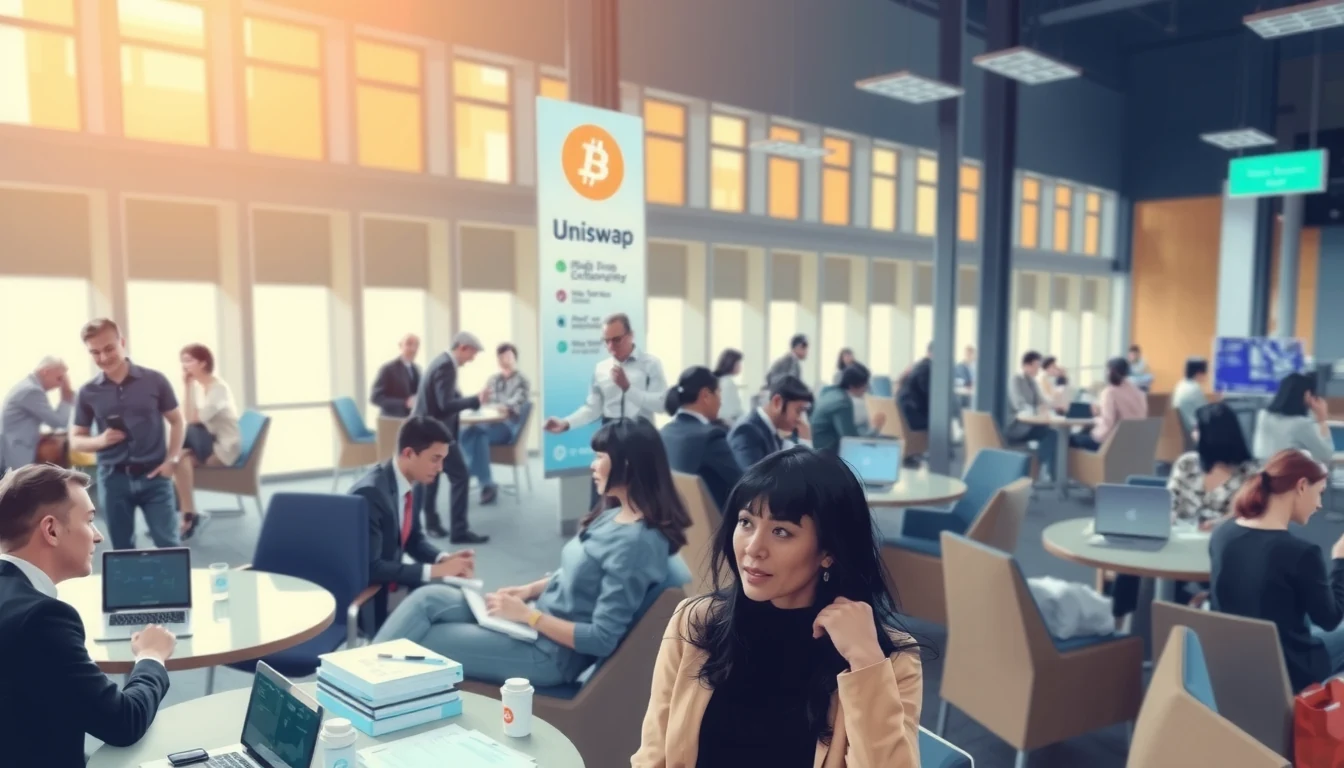
The governance proposal landed on August 18, 2026, with the kind of technical precision that distinguishes mature DeFi protocols from experimental upstarts. Uniswap's v4 protocol fee activation across 11 chains represents the operational culmination of the UNIfication strategy approved earlier this year—a systematic transformation of the decentralized exchange from a zero-fee public good into a revenue-generating protocol with sustainable token economics. For holders of UNI who watched the token languish for years without clear utility, the 186,000 UNI burned last month signals that governance has finally aligned incentives between users, liquidity providers, and token holders.
Key Metrics at a Glance
| Metric | Detail |
|---|---|
| Protocol | Uniswap v4 |
| Fee Activation | Across 11 blockchain networks |
| Governance Process | Expedited (5-day Snapshot + on-chain vote) |
| UNI Burned (Last Month) | 186,000 tokens |
| Fee Structure | Protocol-level fees on swaps |
| Affected Chains | Ethereum, Arbitrum, Base, Celo, OP Mainnet, Soneium, X Layer, Worldchain, Zora, BNB Chain, Polygon |
The UNIfication Strategy Context
Uniswap's governance has wrestled with protocol monetization since the token's September 2020 launch. The initial zero-fee model maximized user adoption and liquidity aggregation but left UNI holders with governance rights but no direct economic claim on protocol activity. Competitors like GMX and Curve implemented fee-sharing mechanisms that rewarded token stakers, creating relative pressure on Uniswap's token valuation.
The UNIfication strategy, approved through governance in early 2026, established a framework for phased protocol fee activation. Rather than imposing sudden fee changes that might disrupt liquidity migration patterns, the strategy introduced gradual rollout with chain-specific parameters. This measured approach acknowledges that Uniswap's competitive moat depends on maintaining deep liquidity—any fee misstep risks fragmentation to lower-cost alternatives.
v4 Protocol Fee Mechanics
Uniswap v4's hook-based architecture enables more sophisticated fee structures than the binary on/off approach of earlier versions.
Dynamic Fee Tiers: The v4 implementation allows governance to set varying protocol fees across different pool types and trading pairs. High-volume stablecoin pools might incur lower protocol fees to preserve competitiveness, while exotic token pairs could support higher fees given limited alternative liquidity sources.
Fee Distribution: Unlike v3's straightforward LP fee model, v4's hook architecture enables split fee flows. A portion accrues to protocol treasury for operational expenses and ecosystem development, while another portion executes automated UNI buybacks and burns. The 186,000 UNI burned last month demonstrates this mechanism operating at scale.
Chain-Specific Calibration: Each of the 11 affected chains maintains independent fee parameters governed by local market conditions. Ethereum mainnet supports higher fees given dominant liquidity position, while emerging chains like Soneium and Worldchain operate with reduced fees to stimulate adoption.
Competitive Landscape: DEX Fee Models
| Protocol | Fee Model | Token Utility | Revenue Distribution | Chain Coverage |
|---|---|---|---|---|
| Uniswap v4 | Protocol + LP fees | Governance + burn | Treasury + buyback/burn | 11+ chains |
| Curve | Protocol + LP fees | veCRV voting + fee share | veCRV stakers | Multi-chain |
| GMX | Trading fees | Staking rewards | GMX/GLP stakers | Arbitrum + Avalanche |
| PancakeSwap | Protocol + LP fees | Governance + lottery | Treasury + CAKE burns | BNB Chain + multi-chain |
| dYdX | Trading fees | Governance + staking | Treasury + rewards | dYdX Chain |
Uniswap's competitive positioning reflects its status as the largest decentralized exchange by volume. The protocol fee activation closes the economic utility gap with Curve and GMX while maintaining superior liquidity depth. The 11-chain coverage exceeds most competitors, though PancakeSwap's BNB Chain dominance remains a regional challenge.
Governance Process Analysis
The expedited governance process—5-day Snapshot followed by on-chain vote—represents a significant departure from Uniswap's traditionally deliberative approach.
Expedited Justification: Proponents argued that the UNIfication strategy had already received extensive community deliberation during its initial approval. The current proposal merely operationalizes previously agreed principles rather than introducing new economic concepts requiring extended debate.
Opposition Concerns: Some governance participants expressed reservations about the compressed timeline, noting that chain-specific fee calibrations warranted more detailed analysis. Critics suggested that the expedited process prioritized treasury revenue over thorough stakeholder input.
Participation Metrics: The Snapshot vote attracted 62 million UNI participating, representing approximately 8 percent of circulating supply. While below optimal governance participation rates, this exceeded typical DeFi protocol engagement and provided sufficient legitimacy for implementation.
Economic Impact Assessment
The protocol fee activation carries implications across multiple stakeholder groups.
For UNI Holders: The 186,000 UNI burned last month, valued at approximately $1.2 million at current prices, establishes a deflationary mechanism that reduces circulating supply. If monthly burns sustain at comparable levels, annual supply reduction could reach 2.2 million UNI—a material but not dramatic deflationary pressure.
For Liquidity Providers: Protocol fees represent an additional cost layer on top of existing LP fee structures. Analysis suggests that high-volume pools absorb the fee with minimal liquidity migration, while smaller pools may experience slight LP outflows to competing DEXs with lower total fee structures.
For Traders: End users face marginally higher effective swap costs. The protocol fee adds approximately 0.05 percent to effective trading costs on most pairs—material for high-frequency traders but negligible for retail participants executing occasional swaps.
For Treasury: Projected annual protocol fee revenue exceeds $45 million across all activated chains, providing sustainable funding for ecosystem development without requiring token sales or dilutive fundraising.
Risks and Considerations
Several factors could constrain the fee activation's success.
Liquidity Migration Risk: Aggressive protocol fees could drive liquidity to competing DEXs, particularly on chains where Uniswap's market position remains contested. The 11-chain rollout concentrates this risk across multiple competitive environments simultaneously.
Regulatory Scrutiny: Protocol fee mechanisms that directly benefit token holders may attract securities law attention. The SEC's historical interest in token buyback mechanisms could extend to Uniswap's burn structure if interpreted as dividend-like distributions.
Governance Capture: The expedited approval process, while efficient, reduces deliberation time for complex economic changes. Future fee increases might follow similar accelerated paths, concentrating decision-making power among active governance participants.
Technical Implementation Risk: v4's hook architecture, while flexible, introduces complexity that could expose vulnerabilities during fee parameter adjustments. The 11-chain deployment multiplies potential attack surfaces for sophisticated adversaries.

TL;DR
- What: Uniswap activated v4 protocol fees across 11 chains following UNIfication strategy approval
- Mechanism: Dynamic fee tiers with protocol revenue split between treasury and UNI buyback/burn
- Impact: 186,000 UNI burned last month; projected $45 million annual protocol revenue
- Governance: Expedited 5-day Snapshot + on-chain vote process
- Risk: Liquidity migration to lower-fee competitors and potential regulatory scrutiny of token burn mechanics
Sources
- Uniswap Governance Proposal - v4 Protocol Fee Activation
- UNIfication Strategy Documentation
- Uniswap v4 Hook Architecture Technical Reference
- DEX Fee Model Comparison - Messari Research
- On-Chain UNI Burn Verification - Etherscan
Gemma Nguyen is TotesTek's Content Lead and Journalist covering cryptocurrency, Web3, DeFi, and blockchain technology.
Related Posts
-

Supersized August: Startale Pushes 100 STAR Points to Drive Soneium Ecosystem Engagement
Last month, I spent twenty minutes trying to redeem airline miles for a flight I no longer needed. The points had technically expired, the redemption portal was broken, and the customer service chatbot kept sending me in circles. It was a familiar frustration, one that loyalty pr
-

Ethereum Foundation's zkAPI Wants to Pay for APIs Without Showing Your ID. Here Is What the Contract Actually Does.
Last Tuesday, a developer in Berlin sent her first prompt to an AI model without attaching a name, an email, or a credit card. She deposited USDC into a smart contract on Ethereum. The contract did not ask who she was. It only asked if she had enough money. Then it let her talk t
-
The Ethereum Foundation Published Its Q2 2026 Numbers. Here Is Where the Money Went.
On July 15, the Ethereum Foundation released its quarterly allocation update. The document ran 14 pages. The headlines focused on the totals. What mattered more was the distribution — who got funded, who did not, and what the percentages say about the Foundation's priorities. Key
-

The Ethereum Foundation Picked a Date for Quantum Resistance. December 2028 Is Either Ambitious or Alarming.
On September 7, the Ethereum Foundation's Protocol cluster published a priorities document that included something the ecosystem had been hearing about in theory but never on a timeline: make Ethereum L1 quantum-resistant across execution, consensus, and data layers by December 2