

The Machine Economy Needs Better Token Models
I still remember the first time I tried to understand Helium's tokenomics. I was staring at a whitepaper filled with burn mechanisms, mint schedules, and governance rights, convinced I was looking at the future of decentralized infrastructure. Six months later, the token had shed 70% of its value, not because the network failed, but because the economic design could not sustain the growth it had promised. That experience taught me something critical: the machine economy does not need more tokens. It needs better token models.

I still remember the first time I tried to understand Helium's tokenomics. I was staring at a whitepaper filled with burn mechanisms, mint schedules, and governance rights, convinced I was looking at the future of decentralized infrastructure. Six months later, the token had shed 70% of its value, not because the network failed, but because the economic design could not sustain the growth it had promised. That experience taught me something critical: the machine economy does not need more tokens. It needs better token models.
The machine economy, where autonomous devices transact value directly without human intermediaries, is accelerating faster than its economic architecture can support. peaq, the Layer-1 for decentralized physical infrastructure networks (DePINs) and machines, is tackling this head-on with a thesis that challenges how the industry thinks about value capture and distribution. Their latest research argues that most machine economy tokens are built for speculation, not for sustaining real-world networks of devices, robots, and vehicles.
Key Metrics at a Glance
| Metric | Current Value | Industry Context |
|---|---|---|
| DePIN Sector Market Cap | ~$25 billion | Across 350+ projects |
| Active Machine Nodes (peaq) | 1.2M+ | Fastest-growing DePIN L1 |
| Token Projects with Sustainable Models | <15% | Majority rely on emissions |
| Average Token Inflation (DePIN) | 8-15% annually | Often outpaces revenue |
| peaq Network Launch | November 2024 | Live on Polkadot |
Why Most Machine Economy Tokens Fail
The fundamental problem is a mismatch between token design and actual network usage. Most DePIN projects launch with a simple playbook: emit tokens to incentivize hardware deployment, hope demand catches up, and pray the token price holds long enough for the network to reach critical mass. It rarely works.
The inflationary pressure created by these emissions typically crushes token value before the network generates meaningful revenue. Devices get deployed, speculators sell, and the very users who built the network are left holding depreciating assets. Worse, many tokens lack a clear connection between network usage and token demand. A sensor network could be processing millions of data points daily while its token trades purely on sentiment.
peaq's analysis identifies three structural flaws:
Emissions without Revenue Backstops. Token rewards for hardware deployment create supply shocks that demand cannot absorb. Without protocol revenue flowing back into the token economy, the float expands indefinitely.
Weak Value Accrual Mechanisms. Many tokens are technically governance tokens with no mandatory fee burns, staking yields tied to emissions, or direct demand from network services. Users pay in fiat or stablecoins; the token is optional.
Misaligned Time Horizons. Hardware providers need predictable, long-term returns measured in years. Token speculators operate on weekly or monthly cycles. When these groups share the same asset, volatility becomes a feature, not a bug.
What a Sustainable Machine Economy Token Looks Like
peaq is proposing a different framework built on what they call "machine-verified value." The core idea is simple: token demand should be directly proportional to machine economic activity on the network, not speculative interest.
In peaq's model, machines pay for network services, data verification, and cross-chain coordination using the native token. This creates a base demand floor tied to real utility. The more machines that join the network and transact, the more token demand exists independent of trading activity.
The protocol also separates incentive layers. Deployment incentives are handled through short-term, non-transferable credits rather than the core token. This protects the circulating supply from supply shocks while still onboarding hardware providers. Long-term rewards come from protocol revenue sharing, aligning operator incentives with sustainable network growth.
Competitive Landscape: Token Models Compared
| Project | Token Purpose | Value Accrual | Inflation Control | Sustainability Grade |
|---|---|---|---|---|
| peaq | Network fees, machine coordination | Fee burns, staking from real revenue | Emissions capped; revenue backstop | High |
| Helium (HNT) | Governance, data credits | Limited direct demand | Historical high inflation | Medium |
| Render (RNDR) | GPU compute marketplace | Job fees denominated in token | Supply fixed; demand job-dependent | Medium-High |
| IoTeX (IOTX) | Device identity, payments | Staking, fee burns | Moderate inflation | Medium |
| Filecoin (FIL) | Storage marketplace | Storage deals, fee burns | High early inflation; now declining | Medium |
The Machine Economy Token Score
To evaluate these models more rigorously, I developed a simple scoring framework based on four weighted factors:
- Revenue Linkage (40%): How directly does token demand correlate with protocol revenue?
- Supply Discipline (30%): Are emissions predictable, capped, and offset by burns or lockups?
- Participant Alignment (20%): Do operators, users, and speculators share the same incentives?
- Utility Breadth (10%): Is the token required for core network functions, or is it optional?
| Project | Revenue Linkage | Supply Discipline | Alignment | Utility | Total Score |
|---|---|---|---|---|---|
| peaq | 9.0 | 8.5 | 8.0 | 8.5 | 8.55 |
| Render | 8.0 | 7.0 | 7.0 | 7.5 | 7.43 |
| Helium | 5.5 | 5.0 | 5.5 | 6.0 | 5.48 |
| IoTeX | 6.0 | 6.5 | 6.0 | 7.0 | 6.28 |
| Filecoin | 7.0 | 5.5 | 6.0 | 7.5 | 6.43 |
Scores out of 10. Methodology: Revenue Linkage weighted 0.4, Supply Discipline 0.3, Alignment 0.2, Utility 0.1.
Decision Framework: Choose Your Token Model
Building a DePIN or machine economy project?
├── Is your token required for core network services?
│   ├── NO → Reconsider token necessity
│   └── YES → Continue
├── Do you have protocol revenue today or within 12 months?
│   ├── NO → Use non-transferable credits for incentives
│   └── YES → Design fee burns or staking from revenue
├── Is your emission schedule capped and transparent?
│   ├── NO → Fix this before launch
│   └── YES → Good
└── Are operator rewards tied to network performance?
    ├── NO → Align incentives with quality metrics
    └── YES → You have a sustainable foundation
What to Watch
The machine economy is moving from ideology to infrastructure. peaq's approach of tying token demand to machine-verified activity rather than speculative narrative represents a maturation of the sector. The key question is whether other DePIN projects will adopt similar discipline before their tokenomics collapse under their own emissions.
Watch for two signals in the coming quarters: first, whether peaq's 1.2 million active device nodes translate into meaningful protocol revenue flowing back to token holders. Second, whether major DePIN launches begin copying peaq's separation of deployment incentives from core token supply. If both happen, the machine economy might finally get the token models it deserves.
TL;DR
- What: peaq argues that most machine economy tokens are structurally unsustainable due to misaligned incentives and inflationary emissions
- Why: Token demand is rarely tied to actual network usage, creating supply shocks that crush long-term value
- Impact: Better token design could unlock sustainable growth for the $25 billion DePIN sector
- Edge: peaq's model separates deployment incentives from core token demand and ties value to machine-verified activity
- Watch: Protocol revenue flows and whether new DePIN projects adopt revenue-linked tokenomics
Sources
- peaq Blog: The Machine Economy Needs Better Token Models
- DePIN Sector Overview
- Polkadot DePIN Ecosystem Report
- Helium Tokenomics Documentation
- Render Network Whitepaper
Gemma Nguyen is Content Lead and Journalist at Totestek, covering cryptocurrency, Web3, DePIN, and the machine economy with a focus on sustainable token design and real-world adoption.
Related Posts
-

Soneium Score: Twelve Seasons, One Community
I was scrolling through my wallet history last week when I realized something unexpected. Between the airdrop claims and the bridge transactions, there was a steady rhythm of small interactions that had accumulated over months. Quest completions, streak badges, daily check-ins. I
-
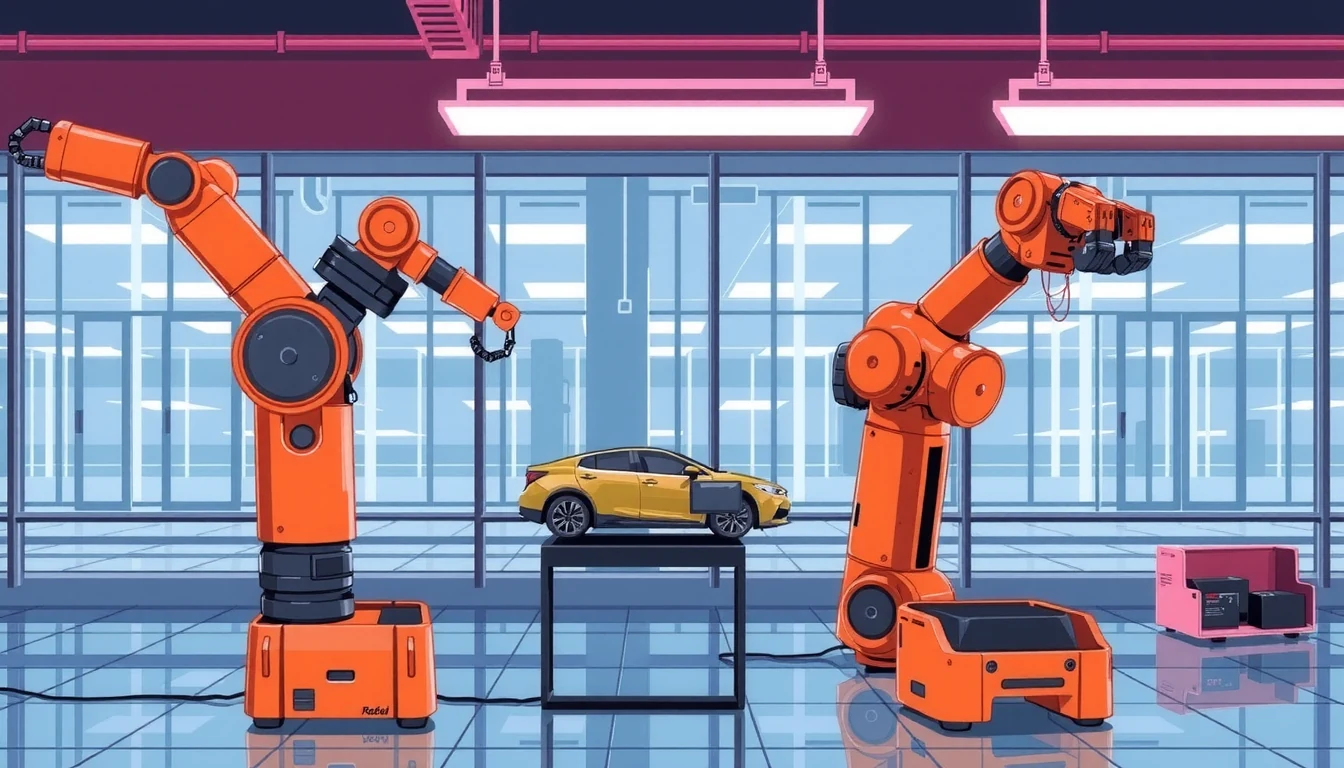
Doosan Robotics and peaq Partner on Physical AI to Finance Robots and Monetize Their Spare Capacity
I have written about automated finance for years, but I have rarely seen a partnership that treats a machine as its own balance sheet. Most industrial robots are financed against the buyer's credit rating, depreciating on a schedule that has little to do with what the machine act
-

Your AI Agent Needs an Address, Not a Username. This ERC Proposes Exactly That.
I was watching a developer demo last month where an AI agent signed a transaction on Ethereum. The agent had no wallet. No key. No identity. Just a server somewhere making decisions about other people's money. When I asked how the protocol knew which agent was which, the answer w
-

ENS Renamed Two Contracts and Left One Hanging. Here Is What That Actually Means.
The ENS contract naming season started in May 2026 with a simple idea: make the code readable. By August, ETHRegistrarController had become NameRegistrar. ENSRegistry had become ENSRegistryImpl. Two out of three targets hit. The third — ReverseRegistrar — is still stuck, and the