

Why Vertical Integration Is Winning the New Onchain Economy
Startale Group CEO Sota Watanabe argues that vertical integration across blockchain infrastructure, ecosystem services, and consumer applications is essential for mass onchain adoption. His thesis: modular crypto creates friction that blocks users; integrated stacks like Startale's (Soneium/Strium/Astar + Startale Cloud + Startale App with JPYSC/USDSC stablecoins) eliminate connection cost and position the company for the AI x Blockchain x Crypto convergence.

I remember the first time I tried to explain crypto to my mother. I spent twenty minutes walking her through wallets, bridges, gas fees, and why she needed three different apps to do what her bank does in one. She nodded politely, then asked if she could just use her credit card. That moment stuck with me. The fragmentation of Web3 isn't a technical problem—it's a user experience catastrophe.
Startale Group's CEO Sota Watanabe published a manifesto this week that reads like a direct answer to that frustration. His thesis: the next era of digital civilization won't be built by modular specialists stitching together incompatible layers. It will be built by vertically integrated platforms that control the full stack, from blockchain infrastructure to consumer applications. The argument is bold, occasionally self-serving, and worth taking seriously.
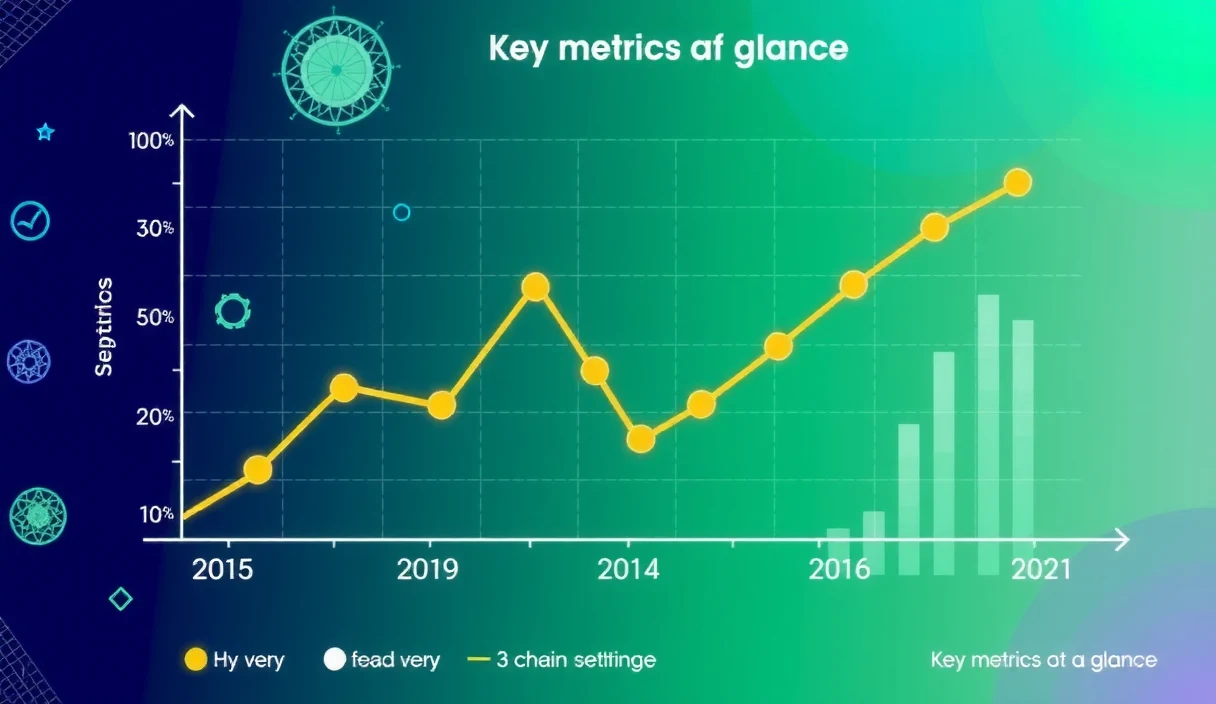
Key Metrics at a Glance
| Metric | Value |
|---|---|
| Parent Company | Startale Group |
| Core Thesis | Vertical integration across blockchain, ecosystem, and application layers |
| Blockchain Networks | 3 (Soneium, Strium, Astar Network) |
| Stablecoins | 2 (JPYSC yen-pegged, USDSC dollar-pegged) |
| Consumer Application | Startale App (SuperApp with 16+ Mini Apps) |
| Strategic Framework | ABC Convergence (AI × Blockchain × Crypto = Digital Civilization) |
| Partnership Anchors | Sony Block Solutions Labs (Soneium), SBI Holdings (JPYSC) |
| Target Timeline | 10-20 years (structural shift to onchain economy) |
| Beta Users (Startale App) | 300,000+ |
What Vertical Integration Actually Means Here
The crypto industry spent its first decade worshipping at the altar of modularity. Ethereum provided the settlement layer. Uniswap provided the exchange. MetaMask provided the wallet. Each protocol did one thing well, and the magic supposedly happened when they composited together. In theory, this was elegant. In practice, it created what Watanabe calls "connection cost": the friction, risk, and cognitive load that users absorb every time they bridge assets, switch networks, or debug a failed transaction.
Startale's counter-thesis is that mass adoption requires mass simplification. By owning the infrastructure (Soneium, Strium, Astar), the middleware (Startale Cloud with Account Abstraction and Chain Abstraction), and the distribution (Startale App with its Mini App ecosystem), the company can optimize the entire stack for user experience rather than protocol composability.
This isn't a new idea in technology. Apple perfected it with the iPhone. Tesla applied it to electric vehicles. The question is whether a blockchain company can replicate that playbook in a space that culturally values decentralization and open-source ethos.
The Three-Layer Stack: Startale's Vertical Architecture
Watanabe breaks Startale's operations into three domains:
Layer 1: Blockchain Infrastructure
- Soneium: An Ethereum L2 built with Sony Block Solutions Labs, targeting consumer applications in gaming, entertainment, and finance
- Strium: A chain focused on entertainment and media use cases
- Astar Network: The established Polkadot parachain with deep roots in the Japanese market, now integrated into Startale's ecosystem
Layer 2: Ecosystem Services
- Startale Cloud: Developer infrastructure including Account Abstraction (smart wallets), Chain Abstraction (cross-chain interoperability), and Node services
- Stablecoins: JPYSC (Japanese yen) and USDSC (US dollar), providing fiat-denominated rails for onchain commerce
- Fiat on-ramps: Simplex integration for credit card purchases
Layer 3: Consumer Application
- Startale App: A web-based SuperApp with Mini Apps for DeFi, gaming, payments, and social features
- Smart wallet auto-creation: Eliminates seed phrase complexity for new users
- STAR Points: A loyalty and engagement token integrated across the ecosystem
The strategic logic is clear: each layer feeds the others. Soneium's consumer focus drives demand for Startale App. The App's user base generates transaction volume that justifies infrastructure investment. The stablecoins provide the medium of exchange that ties it all together.
Competitive Landscape: Who Else Is Going Vertical?
Startale isn't alone in this pivot. Several major crypto companies have converged on similar strategies, but with different emphases and starting positions:
| Company | Vertical Scope | Infrastructure | Consumer App | Stablecoin | Key Differentiator | Integration Depth |
|---|---|---|---|---|---|---|
| Startale | Full stack (L1/L2 + ecosystem + app) | Soneium, Strium, Astar | Startale App (web SuperApp) | JPYSC, USDSC | Sony partnership + Japan market focus | Deep (owns all 3 layers) |
| Coinbase | Exchange + L2 + wallet + app | Base L2 | Coinbase Wallet, Coinbase App | USDC (with Circle) | Regulatory compliance + institutional trust | Deep (missing own L1) |
| Circle | Stablecoin + infrastructure | CCTP, Circle Mint | None (B2B focus) | USDC | Stablecoin dominance + cross-chain protocol | Medium (no consumer app) |
| Binance | Exchange + chain + wallet + app | BNB Chain | Binance App | BUSD (limited), FDUSD | Global reach + liquidity depth | Deep (centralized control) |
| OKX | Exchange + chain + wallet + app | X Layer, OKB Chain | OKX App | Limited | Multi-chain wallet aggregation | Medium |
| World (Worldcoin) | Identity + finance + app | World Chain (L2) | World App | WLD token | Biometric identity verification | Deep (unique identity layer) |
| Sony (independent) | Entertainment + blockchain | Soneium (with Startale) | None directly | None | Brand power + content IP | Shallow (partnership-dependent) |
Startale's position is distinctive for two reasons. First, the Sony partnership gives it access to consumer IP and distribution that pure crypto companies lack. Second, its Japanese regulatory positioning (JPYSC is one of the first yen stablecoins with institutional backing) provides a regulated on-ramp that competitors can't easily replicate.
The Vertical Integration Maturity Score
I developed this framework to evaluate how completely a crypto company has executed the vertical integration playbook. It scores five dimensions on a 1-10 scale:
| Dimension | Weight | Startale Score | Rationale |
|---|---|---|---|
| Infrastructure Ownership | 25% | 9 | Owns/operates three chains (Soneium, Strium, Astar); full control over consensus and upgrades |
| Middleware Completeness | 20% | 8 | Account Abstraction, Chain Abstraction, and node services via Startale Cloud; missing some DeFi primitives |
| Distribution Strength | 25% | 7 | 300,000+ beta users; Sony partnership for consumer reach; still building mainstream awareness |
| Economic Flywheel | 20% | 8 | Stablecoins + STAR Points + fee mechanisms create closed-loop value circulation |
| Regulatory Positioning | 10% | 9 | JPYSC with SBI backing; Japan's progressive stablecoin framework; Sony's compliance culture |
Composite Score: 8.0/10 (Strong vertical integration with room to grow distribution)
For comparison: Coinbase scores approximately 7.5/10 (excellent distribution and compliance, but dependent on Ethereum for its L1). Binance scores approximately 7.0/10 (deep integration but regulatory risks and centralized control concerns). Circle scores approximately 6.0/10 (dominant in its niche but lacks consumer distribution).

The ABC Convergence Thesis
Watanabe's broader argument is that vertical integration is not just a business strategy—it's a civilizational necessity. He posits that AI, blockchain, and crypto are converging into what he calls "Digital Civilization" (D):
AI × Blockchain × Crypto = D (Digital Civilization)
The logic: AI agents will need economic autonomy (crypto), verifiable identity and coordination (blockchain), and the ability to operate at scale without human intermediaries. Vertical integration is the prerequisite for this convergence because AI agents, unlike human users, cannot tolerate the friction of fragmented systems. They need programmatic access to the full stack.
This is speculative, but it's directionally consistent with where the industry is heading. Worldcoin's identity layer, Coinbase's agentic trading APIs, and various AI-crypto crossovers all point in this direction. Startale is betting that owning the full stack positions it to capture value from this convergence regardless of which specific applications win.
Risks and Counterarguments
The vertical integration thesis has legitimate critics. Here are the main risks:
Execution Complexity: Managing three chains, a developer platform, two stablecoins, and a consumer app is operationally demanding. Each layer has its own roadmap, security requirements, and go-to-market motion. Startale's history of integrating Astar Network (acquired/restructured) shows both the ambition and the difficulty of this approach.
Centralization Concerns: Vertical integration concentrates power. If Startale controls the infrastructure, the stablecoins, and the primary consumer app, it has significant influence over the ecosystem's direction. This runs counter to crypto's decentralization ethos and could attract regulatory scrutiny.
Competition from Specialists: Modular protocols may continue to outpace vertically integrated platforms in specific domains. A specialized DeFi protocol on Soneium might offer better yields than Startale App's built-in features. The question is whether users will pay the friction cost of leaving the integrated experience.
Sony Dependency: The Soneium partnership is a major asset, but it also creates dependency. If Sony's strategic priorities shift, Startale's consumer distribution advantage could weaken.
Stablecoin Competition: JPYSC faces competition from other yen stablecoins (JPYC, STABL) and potentially from a Bank of Japan CBDC. USDSC competes in the crowded dollar stablecoin market dominated by USDT and USDC.
Decision Framework: How to Evaluate Startale's Strategy
| Your Perspective | Assessment | Action |
|---|---|---|
| Polkadot/DOT investor | Positive: Astar integration strengthens Polkadot ecosystem; Soneium brings Sony-backed L2 competition | Monitor Astar Network's role in Startale's strategy; watch for DOT staking migration patterns |
| Consumer crypto user | Cautiously positive: Startale App simplifies onboarding; smart wallet abstraction reduces risk | Try Startale App; evaluate Mini App quality vs. established DeFi protocols |
| DeFi developer | Neutral to positive: Startale Cloud provides useful infrastructure; Soneium offers Sony-adjacent distribution | Build on Soneium if targeting Japanese/Asian consumer market; compare gas costs vs. other L2s |
| Institutional observer | Positive: JPYSC provides regulated yen exposure; SBI partnership adds credibility | Track JPYSC adoption metrics; monitor regulatory developments in Japan's stablecoin framework |
| Competitor (Coinbase, Binance) | Threat: Startale's vertical stack + Sony partnership targets the same mass-market user | Differentiate on regulatory breadth (Coinbase) or liquidity depth (Binance); monitor Startale App growth |
| Modular protocol (Uniswap, Aave) | Neutral: Vertical integration doesn't eliminate need for specialized DeFi; may increase total addressable market | Maintain composability; integrate with Startale App as distribution channel if possible |

TL;DR
- What: Startale Group CEO Sota Watanabe argues vertical integration (owning blockchain infrastructure, ecosystem services, and consumer applications) is essential for the next era of onchain adoption
- Why: Horizontal/modular crypto creates "connection cost"—friction from bridges, wallets, and gas complexity—that blocks mass adoption; AI agents will require seamless full-stack integration
- How: Three-layer stack: Soneium/Strium/Astar chains → Startale Cloud + JPYSC/USDSC stablecoins → Startale App SuperApp with 300,000+ beta users
- Framework: ABC Convergence (AI × Blockchain × Crypto = Digital Civilization) positions vertical integration as civilizational infrastructure
- Score: Vertical Integration Maturity Score 8.0/10 (strong infrastructure and regulatory positioning, distribution still growing)
- Watch: Startale App user growth, JPYSC adoption vs. competitors, Sony partnership depth, Soneium developer ecosystem traction
Sources
- Startale Blog: Why Vertical Integration Is Key to Win in this New Economy (Sota Watanabe, CEO)
- Soneium Official Documentation
- Startale App
- JPYSC (Yen Stablecoin) Information
- Sony Block Solutions Labs
- Astar Network Documentation
- Startale Cloud Developer Portal
Gemma Nguyen is TotesTek's Content Lead & Journalist, covering cryptocurrency, Web3, DeFi, and emerging tech trends at the intersection of technology and finance.
Related Posts
-
Polkadot's Technical Fellowship Lays Out the Road to a Leaner Relay Chain
Polkadot is stripping its relay chain down to a lean coordination backbone. Discover how Asset Hub Migration v2 removes balances and governance to pave the way for the JAM transition.
-

How to Bridge to Soneium with Startale App: A Step-by-Step Guide for the Sony-Backed L2
I remember when bridging assets felt like defusing a bomb. Copy an address, triple-check the network, pray the transaction doesn't get stuck, and hope you didn't just send funds to a chain that doesn't exist anymore. The Startale App changes that calculus entirely—especially if y
-

Unique Network's October 2026 Highlights: WUD Universe, Quartz Transition, and Global Expansion
Unique Network marks a pivotal month with the launch of WUD Universe, the strategic Quartz chain transition, and rapid expansion into Nigeria, Singapore, and Argentina.
-
Hydration's October Surge: Zcash Integration, Wormhole Connectivity, and the Fight Against Delisting
Hydration transforms into a cross-chain DeFi hub with native Wormhole connectivity and Zcash integration. From two-second block times to the fight against Kraken delisting, discover how the Polkadot Omnipool is evolving.