

Kansas Introduces Strategic Bitcoin Reserve Bill in 2026 State-Level Digital Asset Wave
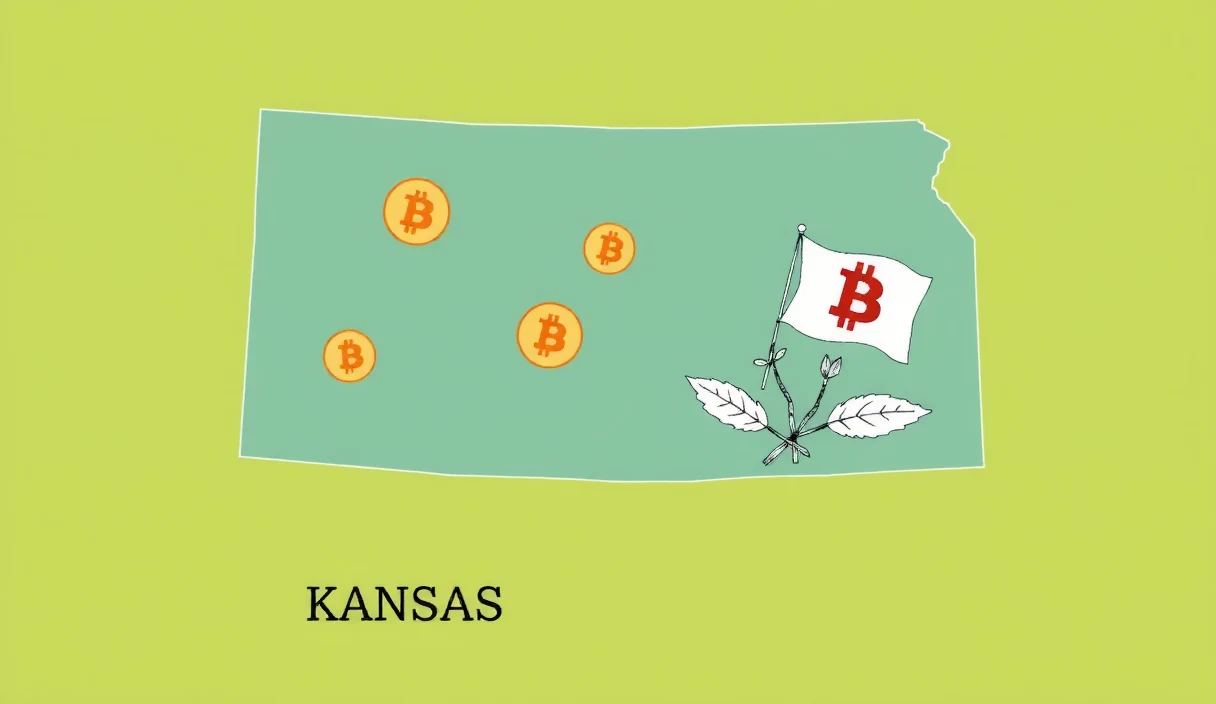
Kansas lawmakers have introduced 2026 legislation to create a state strategic Bitcoin reserve, extending the multi-state movement that began with New Hampshire, Arizona, and Texas. The bill would let the state treasurer allocate a capped share of public funds to Bitcoin with custody and reporting guardrails.

I was driving through Topeka last winter when a local banker told me, "We're tired of watching Texas and New Hampshire make headlines while we sit on the sidelines." That sentiment is now law in waiting. Kansas lawmakers have introduced 2026 legislation to create a state strategic Bitcoin reserve, letting the treasurer allocate a capped share of public funds to BTC with custody and reporting guardrails. It is the thirteenth state to enter the wave — and it arrives at a moment when the federal government has just published its own SBR custody framework, which changes the stakes from "should states do this?" to "how will state and federal reserves coexist?"
Kansas is a useful case study precisely because it is not an obvious crypto state. It has no Wyoming-style regulatory hub branding and no Texas energy narrative. What it has is a straightforward fiscal-conservatism argument: if Bitcoin is a legitimate long-term store of value, a capped allocation is a prudent diversification of public funds, and the guardrails — qualified custody, mark-to-market disclosure — are what make the politics survivable.
Key Metrics at a Glance
| Metric | Value | Why it matters |
|---|---|---|
| State | Kansas | 2026 SBR bill introduced |
| Asset | Bitcoin (BTC) | Strategic reserve framing |
| Allocation | Capped share of public funds | Bounded exposure |
| Custody | State treasurer + qualified custodian | Operational control point |
| Reporting | Valuation + disclosure requirements | Accountability trail |
| State wave | 13+ states with SBR bills 2025–2026 | National trend |
| Federal backdrop | Treasury SBR custody framework issued late 2026 | Coordination question now live |
| Key risk | BTC drawdown hitting public accounts | Guardrails decide political survival |
What the Kansas Bill Actually Does
The bill has three components. First, it authorizes the treasurer to invest a capped percentage of designated public funds in Bitcoin. Second, it specifies custody — qualified custodians, security controls, and attestations. Third, it requires reporting — periodic valuation and risk disclosure to the legislature and the public.
That combination is the modern template. The earliest SBR bills (New Hampshire HB 302, Texas SB 21) were mostly allocation language; the 2026 cohort increasingly writes custody and disclosure rules into the bill itself. Kansas follows that stricter pattern.
The 2026 State Wave, Compared
| State | Status | Allocation | Custody | Notable angle |
|---|---|---|---|---|
| New Hampshire | Enacted 2025 (HB 302) | Up to 5% | Treasurer / qualified custodian | First mover |
| Texas | Enacted 2025 (SB 21) | Reserve outside general fund | Comptroller-controlled | Energy-state branding |
| Arizona | Advanced (HB 2324) | Seized-asset funding | Treasurer custody | Forfeiture-funded |
| Wyoming | Advanced | Treasury allocation | SPDI / state custody | Regulatory hub |
| Utah | Advanced 2026 | Capped | Qualified custodian + disclosure | Digital-asset pairing |
| Oklahoma / Missouri / Ohio / NC / Pennsylvania / Kentucky | Introduced–advanced 2026 | Capped | Treasurer + custodian | 2026 cohort |
| Kansas | Introduced 2026 | Capped public funds | Treasurer + custody/reporting rules | Heartland, guardrails-first |
| Federal (Treasury SBR) | Framework issued late 2026 | Executive-ordered reserve | Federal designated custodian | Sets the benchmark |
Kansas's position is telling: a mid-sized, fiscally conservative state entering late but with strict guardrails. That is the profile most likely to make SBRs politically durable.
Federal vs. State: The Coordination Problem Nobody Has Solved Yet
The Treasury's late-2026 SBR custody framework now exists alongside 13+ state frameworks. Nobody has written the rulebook for how they interact — whether state reserves can use the same federal custodians, how double-counting is prevented in national statistics, or whether states will deliberately diverge to assert monetary autonomy. Kansas's bill implicitly assumes state-level authority is sufficient, which is exactly the assumption the federal framework now complicates.
The better test is accountability. Whether held at the federal or state level, a Bitcoin reserve that cannot produce an audited custody chain and mark-to-market disclosures is a scandal waiting for a 50% drawdown. Kansas's reporting language is therefore as important as its allocation cap.

Scenario Analysis: Where the Kansas Bill Goes
| Scenario | Probability | Outcome | Signal to watch |
|---|---|---|---|
| Passes with guardrails intact | 45% | SBR enacted; treasurer may allocate within cap under federal-aligned custody rules | Committee + floor votes; treasurer rulemaking |
| Watered down to study/reporting only | 30% | Allocation authority stripped; task force created instead | Amendment votes removing the cap |
| Stalls in committee | 25% | Dies in 2026 session; carried into 2027 | Committee agenda; no floor vote |
The Bigger Picture: A Critical Mass of States Is Making Bitcoin a Normal Public Asset
Thirteen states now have SBR bills, and the federal government has its own reserve framework. At some point, the question stops being "will governments hold Bitcoin?" and becomes "how will they account for it, custody it, and disclose it?" Kansas's bill is one more brick in that wall — boring, capped, and audited, which is exactly what makes it durable.
The hard truth for Bitcoin supporters is that legitimacy arrives with oversight. A state treasury holding BTC will answer to auditors, voters, and markets in ways a private holder never does. That is not a betrayal of self-custody; it is the price of making Bitcoin a public-institution norm.

TL;DR
- What: Kansas introduced a 2026 bill to create a strategic Bitcoin reserve, authorizing the treasurer to allocate capped public funds to BTC with custody and reporting guardrails.
- Why: It is the 13th+ state in the 2025–2026 SBR wave, arriving just after the Treasury published its own federal SBR custody framework — raising live questions about federal/state coordination.
- Impact: Reinforces the trend of states treating Bitcoin as a normal, auditable public asset; if a critical mass passes, pressure builds for federal accounting and custody standards.
- Watch: Committee and floor votes, whether the allocation cap survives amendments, treasurer custody rulemaking, and how Kansas interacts with the federal SBR framework.
Sources
- Kansas Legislature - Bills and Legislation
- Kansas Legislature - 2026 Session Bill Search
- NCSL - Cryptocurrency and Digital Assets 2026 Legislation Tracker
- Kansas State Treasurer - Investment Policies
- U.S. Department of the Treasury - SBR Management and Custody Framework
- GASB - Crypto Asset Accounting Standards
- Reuters - State Strategic Bitcoin Reserve Bills 2026
Filip Peshko is TotesTek's Ethereum Ecosystem Columnist & Accountability Reporter at TotesTek. He writes about Bitcoin, blockchain technology, crypto markets, Web3 infrastructure, digital asset custody, institutional adoption, and legislation affecting the crypto industry.
Related Posts
-

Treasury OFAC Designates Bitcoin Mixer in November 2026 Sanctions Action on Illicit Finance
Treasury OFAC has designated a Bitcoin mixing service for facilitating illicit finance, signaling a shift toward routine sanctions for crypto privacy tools. Discover how this move impacts coin provenance and the risk of tainted assets.
-

Treasury Outlines Strategic Bitcoin Reserve Management and Custody Framework in Late 2026
The U.S. Treasury has unveiled a comprehensive framework for the Strategic Bitcoin Reserve, detailing how the federal government will handle custody, valuation, and public disclosure of BTC holdings.
-
Kentucky Introduces Strategic Bitcoin Reserve Bill in 2026 State-Level Digital Asset Push
Kentucky joins a growing wave of states introducing legislation to establish a strategic Bitcoin reserve. The proposed 2026 bill focuses on strict custody and reporting guardrails to ensure public accountability.
-

Utah Advances Digital Asset and Strategic Bitcoin Reserve Legislation in 2026
Utah is advancing 2026 legislation to establish a strategic Bitcoin reserve paired with strict digital asset custody rules. Discover how the state is creating a governable template for public Bitcoin holdings.