

Kentucky Introduces Strategic Bitcoin Reserve Bill in 2026 State-Level Digital Asset Push
Kentucky lawmakers have introduced legislation in 2026 to establish a state strategic Bitcoin reserve, adding to the multi-state wave that began with New Hampshire, Arizona, and Texas. The bill would authorize the state treasurer to allocate a capped portion of public funds to Bitcoin as a strategic reserve asset, with custody and reporting requirements.
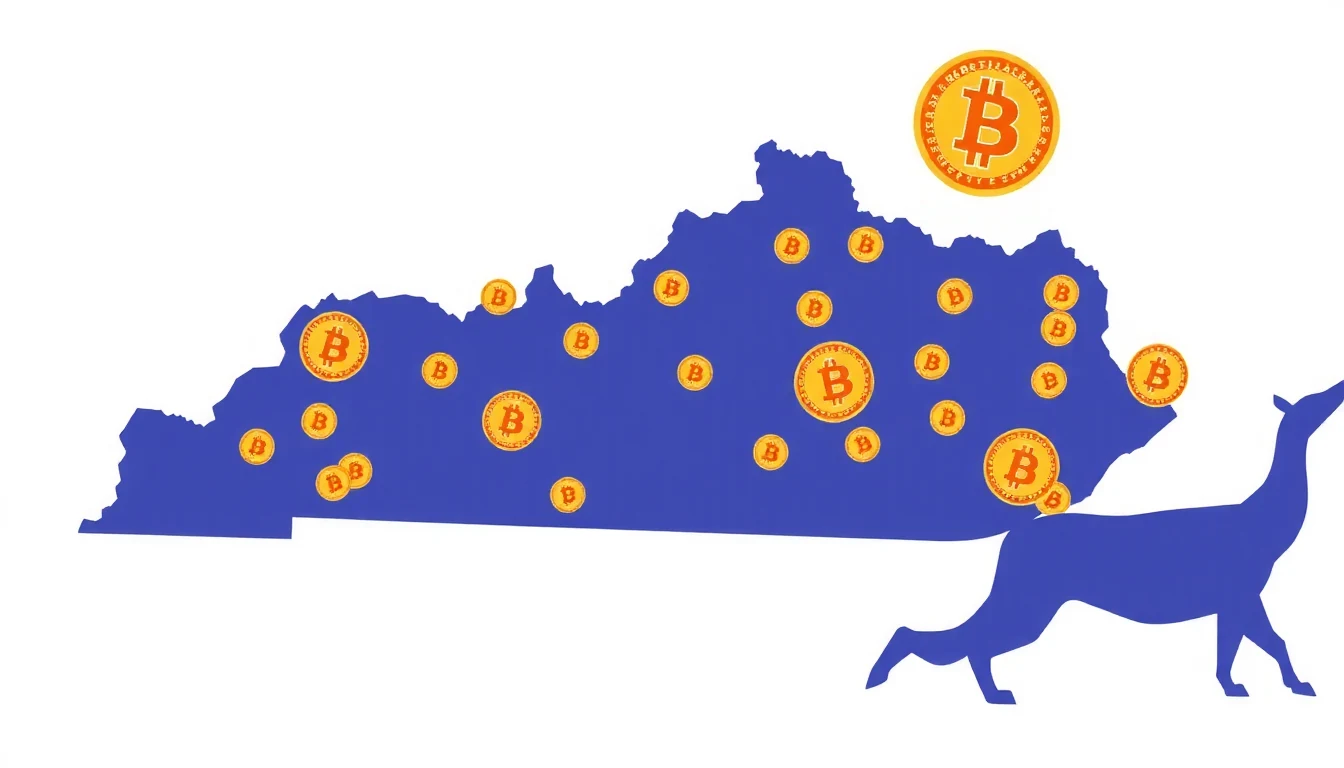
I was in a Frankfort coffee shop in January when a county clerk told me, "We don't need the federal government to tell us what sound money is — we just need permission to hold it." That frustration is exactly what Kentucky's 2026 strategic Bitcoin reserve bill tries to address. The legislation would let the state treasurer allocate a capped portion of public funds to Bitcoin as a strategic reserve asset, with custody and reporting requirements attached. It is less a bet on price and more a statement about who should control the units a government holds.
Kentucky enters the wave late but not timidly. New Hampshire, Arizona, and Texas set the template in 2025; Wyoming, Oklahoma, Missouri, Ohio, North Carolina, Pennsylvania, and Utah followed in 2026. What makes Kentucky worth watching is the framing: the bill pairs reserve authorization with explicit custody and disclosure language, which is the part most early bills skipped. The larger question is whether a dozen state reserves can coexist with a federal government that has not yet decided how to treat Bitcoin on a sovereign balance sheet.
Key Metrics at a Glance
| Metric | Value | Why it matters |
|---|---|---|
| State | Kentucky | 2026 SBR bill introduced |
| Asset | Bitcoin (BTC) | Strategic reserve framing |
| Allocation | Capped share of public funds | Keeps exposure bounded |
| Custody | State treasurer + qualified custodian | Operational control point |
| Reporting | Valuation + disclosure requirements | Accountability trail |
| 2025–2026 wave | 12+ states with SBR bills | National policy trend |
| Federal status | No federal SBR enacted | States are filling the vacuum |
| Main risk | BTC volatility drawdown in public accounts | Guardrails decide survival |
What the Kentucky Bill Actually Does
The bill has three moving parts. First, it authorizes the treasurer to invest a capped percentage of designated funds in Bitcoin. Second, it specifies custody — qualified custodians, security controls, and attestations rather than ad-hoc key management. Third, it requires reporting — regular valuation, performance, and risk disclosure to the legislature and the public.
That combination matters because the early political fight was about whether states may hold Bitcoin; the operational fight is about whether they can do it without creating a custody scandal. Kentucky's bill tries to answer both at once.

The 2026 State Wave, Compared
| State | Status | Allocation | Custody | Notable angle |
|---|---|---|---|---|
| New Hampshire | Enacted 2025 (HB 302) | Up to 5% | Treasurer / qualified custodian | First mover |
| Texas | Enacted 2025 (SB 21) | Strategic reserve outside general fund | Comptroller-controlled | Energy-state branding |
| Arizona | Advanced (HB 2324) | Seized-asset funding | Treasurer custody | Forfeiture-funded model |
| Wyoming | Advanced | Treasury allocation | SPDI / state custody | Regulatory hub strategy |
| Oklahoma | Introduced 2026 | Up to 5% cap | Treasurer + custodian | Energy + fiscal conservatism |
| Missouri | Introduced 2026 | Capped | State treasurer | Midwest expansion |
| Ohio | Committee 2026 | 5–10% TBD | Treasurer custody | Banking opposition |
| North Carolina | Advanced 2026 | Capped | Qualified custodian | Veto threat pending |
| Pennsylvania | Introduced 2026 | Capped | Treasurer custody | Pension-liability debate |
| Utah | Advanced 2026 | Capped | Qualified custodian + disclosure | Digital-asset pairing |
| Kentucky | Introduced 2026 | Capped public funds | Treasurer + custody/reporting rules | Late-cohort, guardrails-first |
Kentucky's position in the pack is deliberate: it is not trying to be first, it is trying to be defensible.
Why the Custody Fight Decides Everything
"Not your keys, not your coins" is easy to say and hard to operationalize at sovereign scale. A state treasury cannot run a multisig wallet out of a senator's drawer. Kentucky's requirement of qualified custodians and reporting means the state accepts a trade: some counterparty risk in exchange for auditability, insurance, and a clean chain of control.
The better test is accountability. If the treasurer can show an audited custody chain and mark-to-market disclosures, the reserve is governable. If not, a 50% drawdown becomes a political weapon. That is why the reporting language is as important as the allocation cap.

Scenario Analysis: Where Kentucky's Bill Goes
| Scenario | Probability | Outcome | Signal to watch |
|---|---|---|---|
| Passes with guardrails intact | 45% | SBR enacted with custody/reporting rules; treasurer may allocate within cap | Floor votes; treasurer rulemaking |
| Weakened to study-only | 30% | Bill becomes a task force or reporting requirement without allocation authority | Amendment votes stripping the cap |
| Stalls in committee | 25% | Dies in 2026; carried into 2027 | Committee agenda; no floor vote |
The Bigger Picture: States Are Writing Monetary Policy by Default
There is still no federal strategic Bitcoin reserve. In that vacuum, a dozen state treasurers are becoming the de facto issuers of digital-asset policy. Kentucky's bill is not just about one state buying BTC; it is about whether a critical mass of states can make Bitcoin a normal line item in public finance — audited, disclosed, and boring in the best possible way.
The hard truth for Bitcoin supporters is that legitimacy arrives with oversight. A state holding Bitcoin will answer to auditors, voters, and markets in ways a private holder never does. That is not a weakness of the reserve idea. It is the price of making self-custody a public-institution norm.

TL;DR
- What: Kentucky introduced a 2026 bill to create a strategic Bitcoin reserve, authorizing the treasurer to allocate capped public funds to BTC with custody and reporting rules.
- Why: It joins the 12+ state SBR wave (NH, TX, AZ first; WY, OK, MO, OH, NC, PA, UT in 2026), but with guardrails written into the bill rather than deferred.
- Impact: If a critical mass of states enacts SBR frameworks, pressure builds for federal clarity on sovereign Bitcoin custody and accounting.
- Watch: Committee and floor votes, whether the allocation cap survives amendments, treasurer custody rulemaking, and how Kentucky marks BTC on state financial statements.
Sources
- Kentucky Legislature - Bills and Legislation
- Kentucky Legislature - 2026 Session Bill Search
- NCSL - Cryptocurrency and Digital Assets 2026 Legislation Tracker
- Kentucky State Treasurer - Investment Policies
- GASB - Crypto Asset Accounting Standards
- Reuters - State Strategic Bitcoin Reserve Bills 2026
Filip Peshko is TotesTek's Ethereum Ecosystem Columnist & Accountability Reporter at TotesTek. He writes about Bitcoin, blockchain technology, crypto markets, Web3 infrastructure, digital asset custody, institutional adoption, and legislation affecting the crypto industry.
Related Posts
-

Utah Advances Digital Asset and Strategic Bitcoin Reserve Legislation in 2026
Utah is advancing 2026 legislation to establish a strategic Bitcoin reserve paired with strict digital asset custody rules. Discover how the state is creating a governable template for public Bitcoin holdings.
-

FinCEN Advances 2026 Rulemaking on Convertible Virtual Currency Reporting and Unhosted Wallets
FinCEN's 2026 rulemaking targets the intersection of Bitcoin and the banking system. Discover how new reporting obligations for unhosted wallets could change how you move assets between exchanges and self-custody.
-

UK Financial Conduct Authority Updates Cryptoasset Regulatory Framework Guidance for October 2026
The FCA has issued critical updates to its cryptoasset regulatory framework for October 2026. From tightened registration standards to strict financial promotion rules, find out how these changes impact Bitcoin firms operating in the UK.
-

Hong Kong SFC Updates Virtual Asset Regulatory Framework Guidance in October 2026
Hong Kong's SFC has updated its virtual asset regulatory framework to tighten licensing and investor protection. Discover how these changes aim to secure the city's position as Asia's most credible regulated crypto hub.