

FinCEN Advances 2026 Rulemaking on Convertible Virtual Currency Reporting and Unhosted Wallets
The Financial Crimes Enforcement Network (FinCEN) is advancing 2026 rulemaking and guidance on convertible virtual currency (CVC) transactions, including reporting obligations that touch Bitcoin transfers involving unhosted/self-hosted wallets. The policy tightens AML/CFT recordkeeping and the travel rule perimeter for Bitcoin transactions routed through covered financial institutions.

I still remember the conference room in Arlington where a compliance officer told me, "The rule isn't about banning self-custody — it's about making sure the institution on either side can see who is moving value." He was describing the direction the travel rule had already taken. FinCEN's 2026 rulemaking on convertible virtual currency (CVC) takes that idea further: it proposes reporting and recordkeeping obligations that reach Bitcoin transfers involving unhosted wallets when a covered financial institution is on one side of the flow. For Bitcoin users, the practical question is no longer whether self-custody is legal. It is how much information a bank or exchange must collect, retain, and transmit before your BTC moves.
FinCEN is not writing a new statute in a vacuum. It is extending existing Bank Secrecy Act machinery — the travel rule, suspicious activity reporting, and recordkeeping rules — into the specific context of convertible virtual currency. The proposal's significance is that Bitcoin, the largest CVC by market value and network effects, is explicitly inside the frame. Unhosted wallets are not treated as contraband, but transactions between hosted and unhosted addresses become a compliance event that institutions must document and, in some cases, report.
Key Metrics at a Glance
| Metric | Value | Why it matters |
|---|---|---|
| Regulator | FinCEN (Treasury) | Owns BSA/AML rulemaking for covered financial institutions |
| Core instrument | 2026 CVC rulemaking + wallet guidance | Updates travel-rule/recordkeeping perimeter for crypto flows |
| Asset explicitly in scope | Bitcoin (BTC) | Largest CVC; highest-volume institutional flows |
| Key concept | Unhosted / self-hosted wallet | Address not held by a covered financial institution |
| Travel rule threshold | Existing BSA thresholds apply by analogy | Recordkeeping and transmission duties for covered transfers |
| Affected actors | Banks, exchanges, money transmitters, some VASPs | They must collect counterparty information for transactions above thresholds |
| Direct user effect | More KYC questions, wallet screening, delayed withdrawals | Especially for large or unusual transfers to private wallets |
| Compliance risk if ignored | AML/CFT violations, fines, de-risking | Institutions may block or refuse transactions rather than risk liability |
| Bitcoin network effect | None at protocol level | The BTC chain still settles; the rules sit at the fiat on/off ramps |
What the 2026 Proposal Actually Changes
The cleanest way to see the proposal is to separate three layers that are often conflated.
First, Bitcoin the protocol is untouched. Miners still validate blocks, nodes still relay transactions, and self-custody still works cryptographically. FinCEN cannot order the Bitcoin network to require identity. What it can do is regulate the institutions that connect Bitcoin to the banking system.
Second, covered institutions face expanded duties. When a customer sends BTC from an exchange to a private wallet, or receives BTC from a private wallet above the relevant threshold, the institution may need to obtain and transmit counterparty information, keep records, and screen the wallet address against sanctions and risk lists. That is the travel rule logic applied to CVC.
Third, unhosted wallets become a category institutions must classify. FinCEN's guidance is aimed at giving banks tools to distinguish exchange wallets from self-hosted wallets and to apply risk-based controls. The practical result is not a ban on private wallets; it is a higher friction zone around them.

Why Bitcoin Is the Center of Gravity
Bitcoin matters here because it is the CVC most likely to be moved between hosted and unhosted environments for real economic reasons: treasury allocation, OTC settlement, inheritance planning, cold-storage security, and cross-border remittance. Institutions cannot ignore BTC flows, and users cannot assume that a large transfer to a Ledger or multisig wallet will be treated like an internal transfer between two exchange accounts.
That matters for market structure. If exchanges face liability for transmitting value to an unhosted wallet without sufficient counterparty information, they will either require additional verification, impose withdrawal limits, or de-risk by refusing certain transfers. The result is a tiered system: easy movement inside regulated platforms, slower and more documented movement between regulated and self-custodial environments.
Global Comparison: Who Is Already Doing This?
| Jurisdiction | Framework | Treatment of Bitcoin | Unhosted-wallet posture | Practical effect |
|---|---|---|---|---|
| United States | BSA + FinCEN travel rule; 2026 CVC proposal | CVC; covered institutions must keep records | Risk-based screening and recordkeeping for hosted/unhosted flows | More KYC at ramps, possible withdrawal friction |
| European Union | MiCA + Travel Rule Regulation | Crypto-asset; CASPs must transmit originator/beneficiary data | Unhosted wallets require risk assessment and verification for transactions above thresholds | Compliance burden shifts to licensed CASPs |
| United Kingdom | FCA registration + travel rule | Cryptoasset; registered firms must comply | Wallet screening and risk-based controls for transfers | Firms de-risk repetitive self-custody withdrawals |
| Singapore | MAS Payment Services Act | Digital payment token | Licensed DPT providers apply travel rule; unhosted wallets flagged when counterparty is private | Institutional gatekeeping at exchanges |
| Switzerland | FINMA AML Ordinance | Crypto assets | Travel rule applies; self-hosted wallets require proof of control for transfers above thresholds | Proof-of-ownership checks for self-custody |
| Japan | FIEA + JVCEA | Crypto asset | Travel rule for exchanges; unhosted wallet counterparty verification | Exchanges verify wallet ownership for large transfers |
| Canada | PCMLTFA + FINTRAC guidance | Virtual currency | Travel rule applies to reporting entities; unhosted wallets treated as higher risk | Monitoring + records for CVC transfers |
The pattern is consistent: jurisdictions differ in labels, but most now treat transfers involving self-hosted wallets as a compliance event requiring risk assessment. FinCEN's 2026 approach fits that global direction while keeping the focus on covered financial institutions rather than directly criminalizing wallet software.
Scenario Analysis: Three Plausible Futures
| Scenario | Probability | What happens | Impact on Bitcoin users |
|---|---|---|---|
| Institutional Compliance Layer | 55% | Exchanges implement wallet screening, travel-rule transmission, and tiered withdrawal limits; large self-custody withdrawals require proof of control | More paperwork, but self-custody remains possible |
| De-Risking at the Ramps | 30% | Some banks/exchanges restrict transfers to unhosted wallets or cap amounts; users route through more compliant intermediaries | Custody shifts back toward institutions; peer-to-peer flows migrate to lower-friction venues |
| Litigation and Narrowing | 15% | Courts or agencies narrow the rule after challenges over privacy, overbreadth, or statutory authority; implementation slows | Short-term legal uncertainty; compliance costs remain during litigation |
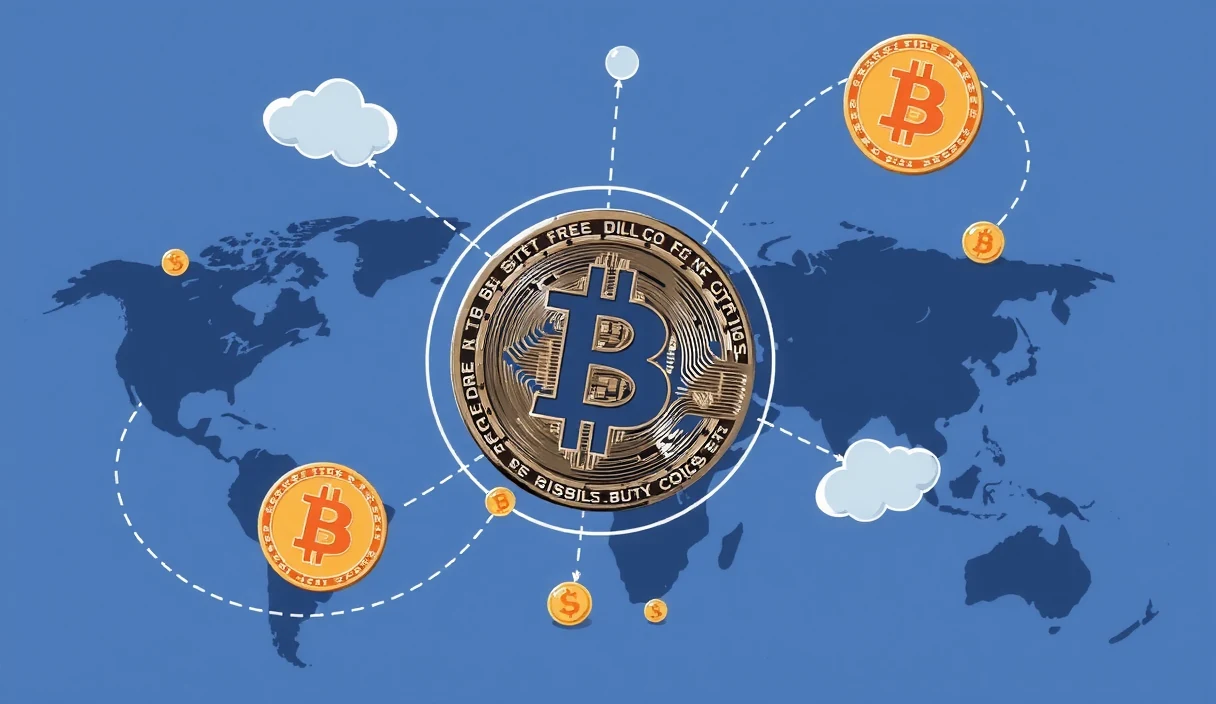
The Real Stakes: Surveillance at the Edges, Not on the Chain
The hard truth is that this rule does not make Bitcoin less verifiable. It makes the boundary between Bitcoin and the banking system more legible to regulators. That is precisely why self-custody advocates should care: the scarce asset remains bearer-like on-chain, but the ramps become permissioned checkpoints.
For ordinary users, the distinction is not academic. A retiree moving BTC to cold storage, a business paying a supplier in BTC, and a traveler using Bitcoin abroad may all face different documentation burdens depending on amount, counterparty, and wallet type. The better test is not "Can I still hold my keys?" but "What must an institution know before it will let my Bitcoin through?"
What To Watch
- Final rule text and effective date: whether unhosted-wallet recordkeeping is categorical or threshold-based.
- Exchange policy changes: withdrawal limits, proof-of-ownership requirements, sanctions screening of destination addresses.
- Court challenges: privacy, First Amendment, and Administrative Procedure Act arguments against compelled transmission of counterparty data.
- International fragmentation: if the US is stricter than peers, flows migrate to jurisdictions with lighter unhosted-wallet rules.
- Institutional response: whether large custodians create "verified self-custody" programs that satisfy FinCEN without forcing users back onto exchanges.

TL;DR
- What: FinCEN is advancing 2026 rulemaking on convertible virtual currency reporting that reaches Bitcoin transfers involving unhosted/self-hosted wallets.
- Why: It extends BSA travel-rule and recordkeeping logic to CVC flows, making hosted-to-unhosted BTC transfers a compliance event for covered institutions.
- Impact: Exchanges and banks will likely require more counterparty data, wallet screening, proof of control, or withdrawal limits for large self-custody transfers — but Bitcoin the protocol is not banned or changed.
- Watch: Final rule thresholds, exchange de-risking policies, litigation over compelled data transmission, and whether compliant "verified self-custody" channels emerge.
Sources
- FinCEN - Application of FinCEN's Regulations to Persons Administering, Exchanging, or Using Virtual Currency
- FinCEN - FinCEN Proposes New Regulation to Enhance Transparency in Convertible Virtual Currency Transactions
- Federal Register - Recordkeeping and Travel Rule Regulations for CVC
- FATF - Travel Rule for Virtual Assets
- U.S. Treasury - National Money Laundering Risk Assessment
- Coin Center - Comments on FinCEN CVC Rulemaking
Filip Peshko is TotesTek's Ethereum Ecosystem Columnist & Accountability Reporter at TotesTek. He writes about Bitcoin, blockchain technology, crypto markets, Web3 infrastructure, digital asset custody, institutional adoption, and legislation affecting the crypto industry.
Related Posts
-
Kentucky Introduces Strategic Bitcoin Reserve Bill in 2026 State-Level Digital Asset Push
Kentucky joins a growing wave of states introducing legislation to establish a strategic Bitcoin reserve. The proposed 2026 bill focuses on strict custody and reporting guardrails to ensure public accountability.
-

Utah Advances Digital Asset and Strategic Bitcoin Reserve Legislation in 2026
Utah is advancing 2026 legislation to establish a strategic Bitcoin reserve paired with strict digital asset custody rules. Discover how the state is creating a governable template for public Bitcoin holdings.
-

UK Financial Conduct Authority Updates Cryptoasset Regulatory Framework Guidance for October 2026
The FCA has issued critical updates to its cryptoasset regulatory framework for October 2026. From tightened registration standards to strict financial promotion rules, find out how these changes impact Bitcoin firms operating in the UK.
-

Hong Kong SFC Updates Virtual Asset Regulatory Framework Guidance in October 2026
Hong Kong's SFC has updated its virtual asset regulatory framework to tighten licensing and investor protection. Discover how these changes aim to secure the city's position as Asia's most credible regulated crypto hub.