

How Kusama's Last Validator-Set Reduction Affected Decentralization and Coretime Use, According to New 2026 Data
Two 2026 reports on the Polkadot Forum quantify the impact of Kusama's latest validator-set reduction: operator-size composition was not negatively affected, and the surplus of assigned-but-not-producing coretime cores has collapsed from a 2-3x excess over producing cores from late 2024 to late 2025 down to roughly 10-20 percent. The reports measure decentralization with a Nakamoto coefficient and Gini-based size-class analysis, while flagging that part of the Gini improvement is an artifact of integer seats.

I like proposals that come with their own homework. When the Polkadot Forum began debating shrinking Kusama's active validator set, the response that caught my eye was not another opinion thread - it was a pair of data reports with methodology attached, posted on October 2026 under the title "Decentralization and coretime metrics for set reductions" (topic 19223). They answer the two questions every set-reduction debate actually turns on: how do you define decentralization, and how do you count the cores Kusama really needs? The short version: the last reduction did not hurt decentralization, and Kusama is using far fewer cores than it used to assign.
Key Metrics at a Glance
| Metric | Detail |
|---|---|
| Subject | Decentralization and coretime reports supporting Kusama validator-set reduction (forum topic 19223, 2026) |
| Decentralization measures | Nakamoto coefficient (operators to coerce to break BFT) plus Gini coefficient and operator size-class distribution |
| Operator clustering heuristic | L0 conservative, L1 pragmatic, L2 "staking cabals"; onchain coverage 90.4% (L1) and 98.1% (L2) |
| Key decentralization finding | Relative operator-size composition was not negatively impacted by the last set reduction |
| Gini caveat | Improvement is partly an artifact of integer seats; largest operators roughly retain their relative seat share |
| Coretime finding | Assigned-but-not-producing cores were a 2-3x surplus of producing cores from ~Nov 2024 to ~Oct 2025; now down to ~10-20% |
| Peak producing cores | Kusama 47 cores in a day (Mar 2026, monthly mean 43.2); Polkadot peaks 57 (Mar 2026) and 49.8 monthly mean (Jun 2025) |
| On-demand core use | 98% utilization concentrated in a Mar/Apr 2026 flurry; otherwise underused |
| Reports | hambro.ch/kusama/set-reductions/decentralization/ and /coretime/ |
Why "decentralized enough" needs a number, not a feeling
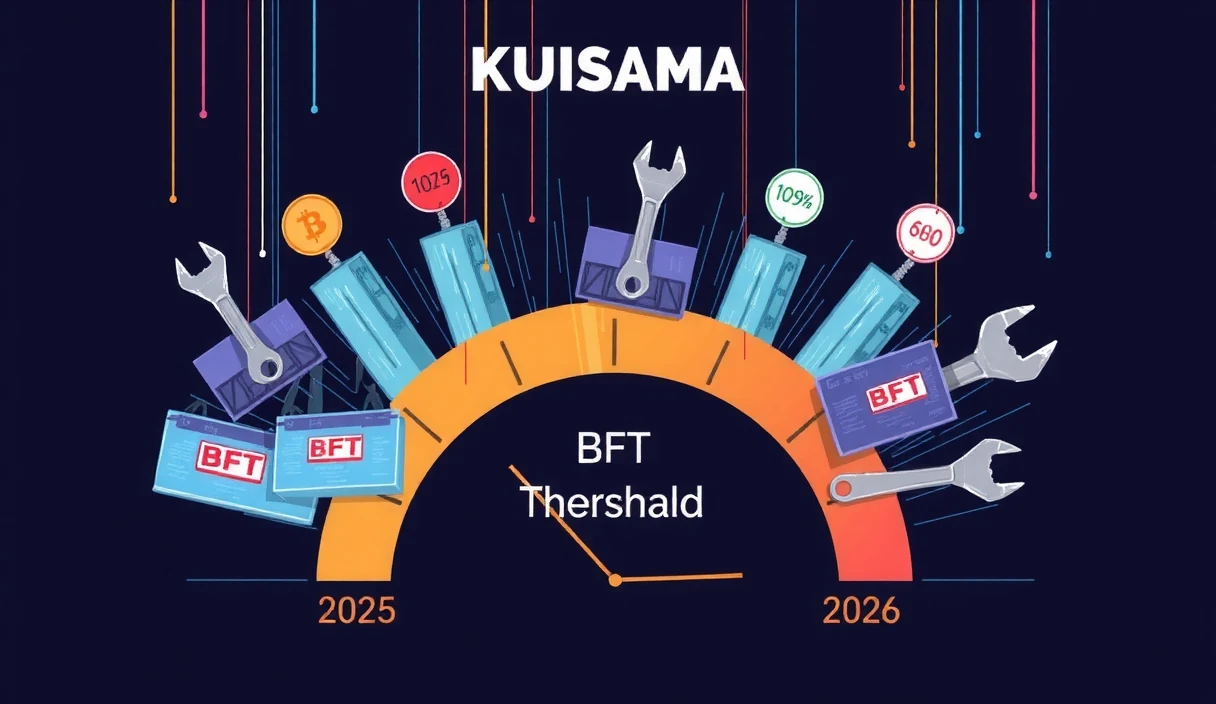
The report's framing is worth stealing for any chain: decentralization is "the number of operators I have to whack with a wrench or bribe to break BFT" (the Nakamoto coefficient) combined with how power is distributed from smallest to largest operators (Gini, plus size-class bands). The author makes size bands scale-free by default - under 1%, 1-5%, and over 5% of seats - because absolute bands (1 / 2-5 / 6-25 / 26+ nodes) flatter the picture once the set shrinks: the large classes simply disappear at low set sizes.

The harder methodological problem is identifying which validators are really one operator. Most stashes have no on-chain identity, so the report layers heuristics: identity, shared payee accounts, proxy keys, and closed nominator sets backing the same validator group. You pick how aggressive to be - L0, L1, or L2 - and the on-chain coverage is high enough (90.4% at L1, 98.1% at L2) that the choice changes confidence, not direction.
What the data actually showed after the last reduction
The headline finding is quietly good news for reduction advocates: the relative composition of operator sizes was not negatively impacted by the last set reduction, and further reductions are not expected to change that. But the honest caveat matters as much as the headline: the Gini coefficient improving should be read with a pinch of salt. Seats are integers, so compressing the range of operator sizes mechanically shrinks the gap between smallest and largest, and the Gini falls with it. The largest players roughly retain their relative share of seats. Equality improved; concentration at the very top did not move.
Coretime: the unused-cores surplus has collapsed
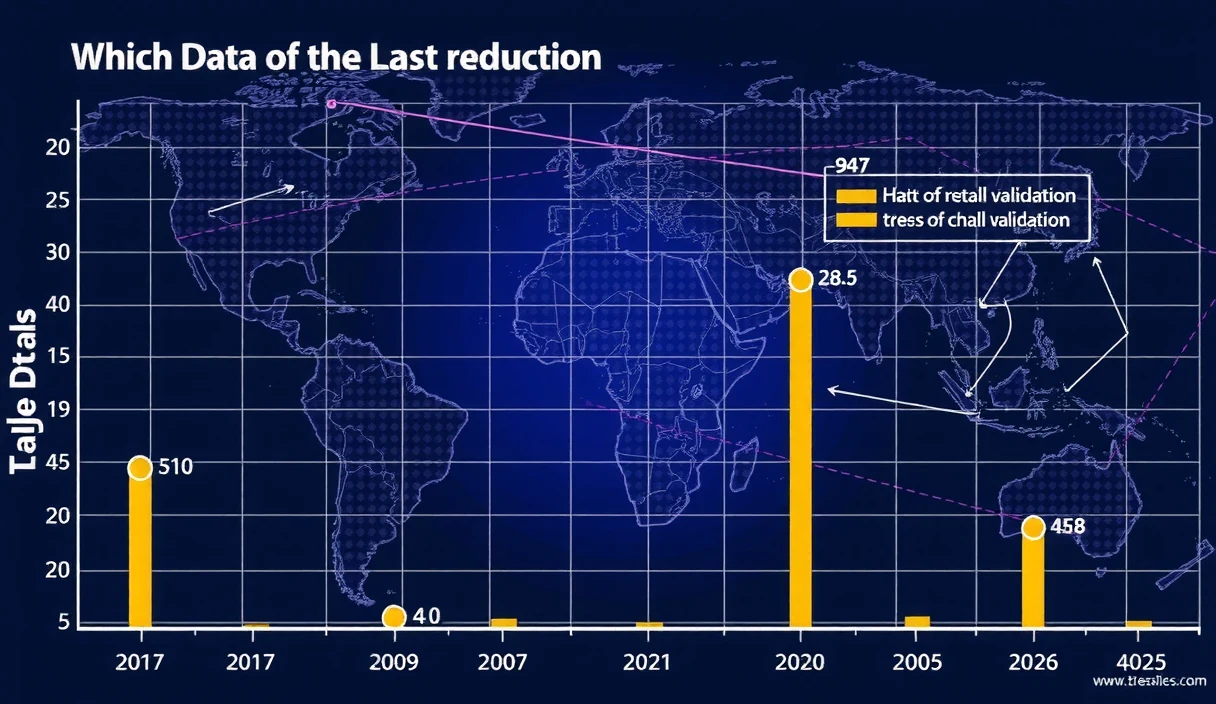
On coretime, the report counts a producing core as one that included a block within the 24-hour window - an upper bound on real demand. From roughly November 2024 to October 2025, Kusama had a massive surplus of assigned-but-not-producing cores, about two to three times the producing count, driven by the Spammening, placeholder parachains, and coretime negotiation purchases. Since then the surplus has tightened to roughly 10-20%. Peak daily producing cores on Kusama were 47 in March 2026 with a 43.2 monthly mean; Polkadot peaked at 57 in March 2026. On-demand cores are still underused - 98% of that demand came from a single March/April 2026 flurry.
How to read these reports
| Question | Best metric here | Caveat |
|---|---|---|
| Can a small group break consensus? | Nakamoto coefficient (operators to coerce) | Depends on clustering heuristic depth |
| Is power getting more equal? | Gini + size-class distribution | Integer-seat artifact flatters small sets |
| Is the largest operator share growing? | Top size class (>5% of seats) share | The number Gini hides |
| How many cores do we really need? | Producing cores per day | Upper bound; ignores block weight |
| Are we over-assigning coretime? | Assigned minus producing surplus | Now ~10-20%, was 2-3x |
The methodology is the story here: definitions chosen up front, heuristics you can toggle, coverage numbers disclosed, and an explicit admission that mistakes are the author's own. That is what makes a set-reduction debate evidence-based rather than vibes-based.
TL;DR
- What: New 2026 reports quantify Kusama's validator-set reduction: decentralization metrics and coretime usage (forum topic 19223).
- Why: The last reduction did not harm operator-size composition, and the assigned-but-not-producing coretime surplus has collapsed from 2-3x to about 10-20%.
- Caveat: Gini improvement is partly an integer-seat artifact; largest operators keep their relative share, so watch the Nakamoto coefficient and top size class, not just Gini.
- Watch: Further reductions (600 to 500 to 400 to 320) and whether peak producing cores (47 on Kusama, 57 on Polkadot in March 2026) stay within the shrunken set's capacity.
Sources
- Polkadot Forum: Decentralization and coretime metrics for set reductions, topic 19223 (2026)
- Decentralization report
- Coretime report
Gemma Nguyen is TotesTek's Content Lead & Journalist, covering cryptocurrency, Web3, DeFi, blockchain technology, and emerging tech trends.
Related Posts
-

Polkadot Draft Proposal Would Recalibrate Validator Rewards as the Active Set Shrinks Toward 320 and Metanodes Roll Out
Polkadot is proposing a strategic recalibration of validator rewards as the active set shrinks from 600 to 320. The plan balances reduced protocol spend with the rollout of new Metanode duties for Asset Hub and People Chain.
-

ENS DAO Stewards Program Formalizes Delegated Authority for Protocol Operations
The ENS DAO has formalized its Stewards program and constitution, codifying how operational authority is delegated. While token holders retain major decision power, elected stewards now manage daily operations and fund reallocation.
-

ENS DAO Adopts Formal Constitution Defining Governance Powers and Amendment Rules
The ENS DAO has released a formal constitution to codify governance powers and treasury rules. From strict amendment thresholds to the role of the Security Council, discover how these new binding rules protect the Ethereum Name Service.
-

ENSv2 Overview Lays Out Next-Generation Architecture for Ethereum Name Service
ENSv2 introduces a massive architectural rewrite for the Ethereum Name Service, moving from a flat registry to a tokenized, hierarchical system. Discover how per-account resolvers and stablecoin fees will redefine Ethereum's naming layer.