

peaqOS Turns LG Robots Into Autonomous Economic Actors on the Blockchain
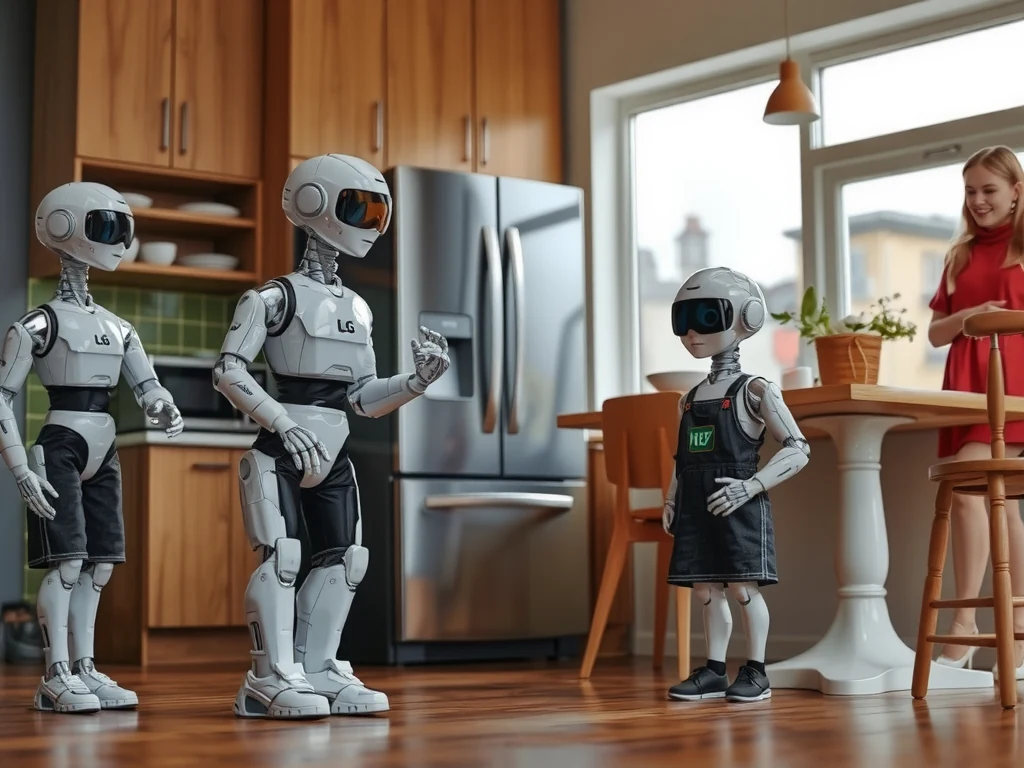
When your robot vacuum can earn its own crypto and pay for its own charging station, the line between physical machines and digital economies starts to blur.
That is exactly what is happening with peaqOS, the blockchain operating system from peaq that is now powering LG's latest robotics experiments. The Seoul-based electronics giant is exploring how its service and delivery robots can become truly autonomous—not just in navigation, but in economic activity.
From Smart to Self-Sovereign
We have had smart devices for years. Your phone knows your location. Your thermostat learns your schedule. But these devices are essentially digital serfs—they operate on platforms owned by corporations, generating value that flows upward and outward.
peaqOS changes the equation by giving machines their own blockchain identities, wallets, and the ability to transact autonomously. Think of it as a digital nervous system for the machine economy, built on Polkadot's Substrate framework.
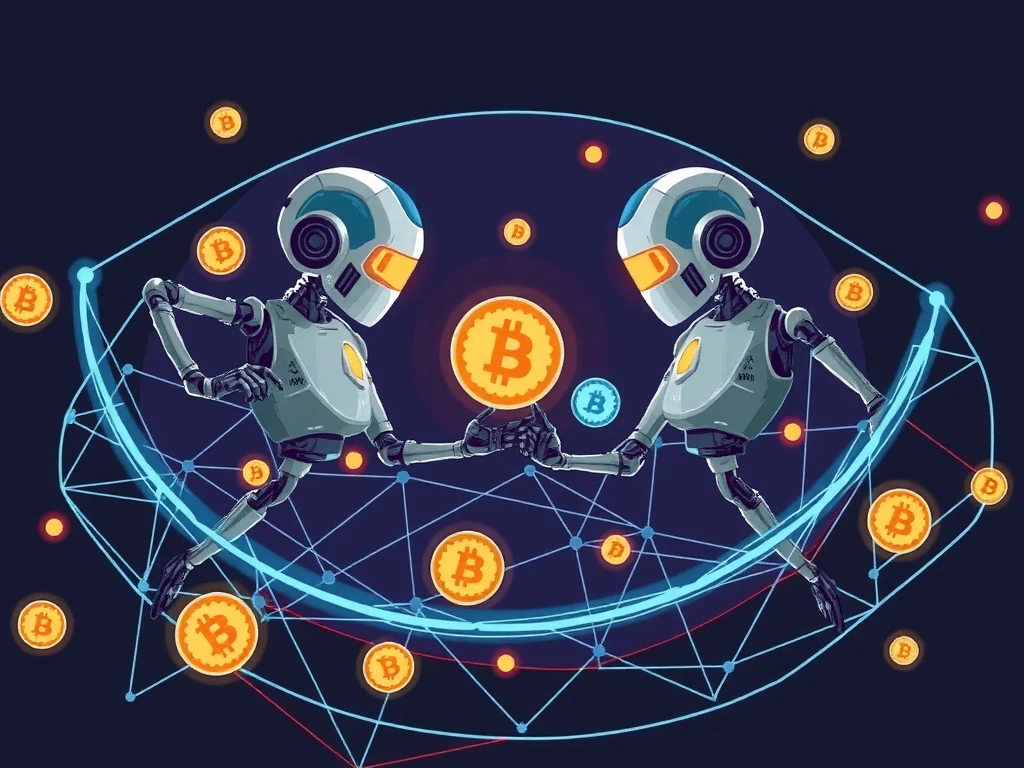
The vision is machines that can discover, negotiate, and pay for services without human intermediaries, explains Till Wendler, co-founder of peaq. A delivery robot that identifies the cheapest charging station, pays for electricity, and continues its route—all automatically.
LG's DePIN Experiment
LG is not just testing peaqOS in a lab. The company's CLOi service robots—already deployed in airports, hospitals, and retail spaces—are becoming the proving ground for decentralized physical infrastructure networks (DePIN) at enterprise scale.
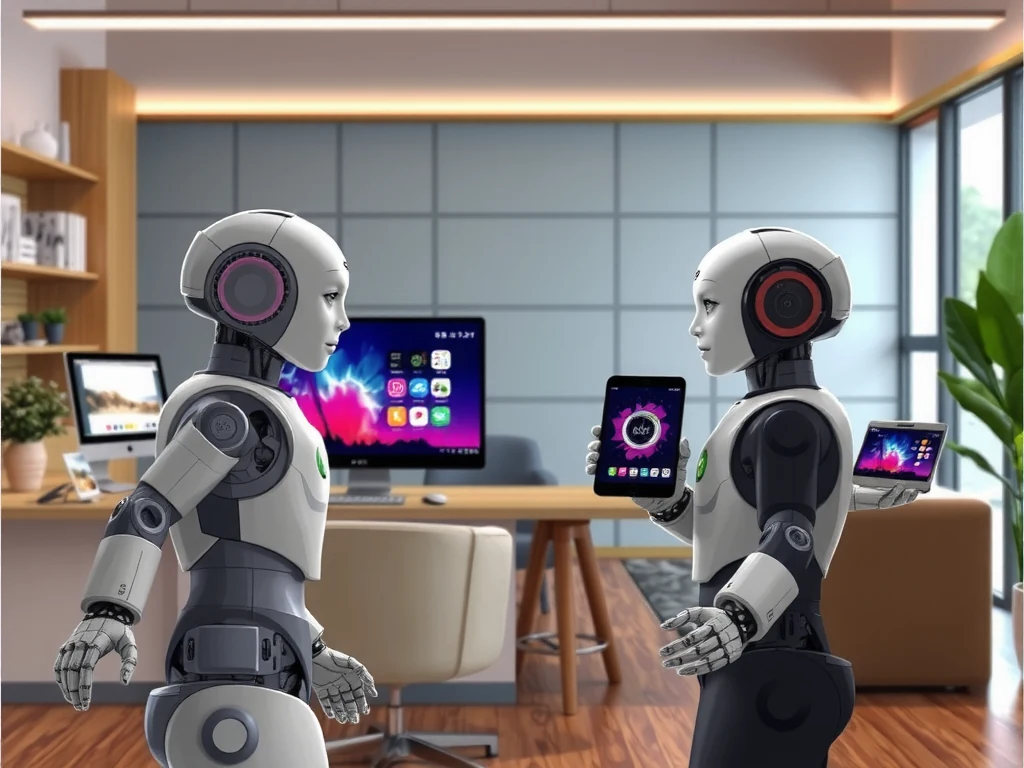
The collaboration focuses on three key capabilities:
- Self-Sovereign Machine Identity: Each robot has a unique blockchain identity that persists across different environments and service providers
- Machine Wallets: Built-in cryptocurrency wallets enabling robots to hold and transfer value
- Service Discovery: Automated matching between robots needing services and providers offering them
For LG, this represents an evolution from selling hardware to participating in machine-to-machine (M2M) economies. For peaq, it is validation that their infrastructure can handle real-world enterprise workloads.
The DePIN Opportunity
Decentralized Physical Infrastructure Networks represent one of the more practical applications of blockchain technology. Rather than speculative trading, DePIN projects focus on coordinating real-world resources—compute power, storage, energy, wireless coverage—through token incentives.
peaqOS sits at the intersection of several converging trends:
- The proliferation of autonomous machines requiring coordination
- Enterprise demand for blockchain solutions with tangible ROI
- Polkadot's ecosystem maturing beyond DeFi into real-world infrastructure
The partnership also positions peaq favorably within South Korea's aggressive Web3 strategy. The country has established a dedicated Metaverse and Web3 ministry and is actively funding blockchain infrastructure projects.
What Comes Next
LG's pilot with peaqOS is expected to expand from initial service robots to include delivery vehicles, warehouse automation, and potentially smart home devices. The timeline suggests commercial deployments could begin as early as Q3 2026.
The implications extend beyond convenience. If machines can autonomously participate in economic activity, we are looking at a fundamental shift in how physical infrastructure gets funded, maintained, and optimized. Charging networks, maintenance services, and logistics coordination could all be mediated by smart contracts rather than corporate procurement departments.
TL;DR
- peaqOS is a blockchain operating system enabling machines to have identities, wallets, and autonomous economic capabilities
- LG is piloting peaqOS on its CLOi service robots, testing machine-to-machine transactions in commercial environments
- DePIN (Decentralized Physical Infrastructure Networks) allows machines to discover, negotiate, and pay for services automatically
- Built on Polkadot, peaqOS leverages Substrate's scalability for enterprise-grade machine economies
- South Korea is emerging as a key market for enterprise Web3 adoption, with government support for blockchain infrastructure
Sources
- peaq Network Official Documentation
- LG CLOi Robot Platform
- DePIN Industry Report 2026 - Messari Research
- South Korea's Web3 Strategy - KISA
Related Posts
-
Doosan Robotics and peaq Partner on Physical AI to Finance Robots and Monetize Their Spare Capacity
I have written about automated finance for years, but I have rarely seen a partnership that treats a machine as its own balance sheet. Most industrial robots are financed against the buyer's credit rating, depreciating on a schedule that has little to do with what the machine act
-

The Machine Economy Needs Better Token Models
I still remember the first time I tried to understand Helium's tokenomics. I was staring at a whitepaper filled with burn mechanisms, mint schedules, and governance rights, convinced I was looking at the future of decentralized infrastructure. Six months later, the token had shed
-
peaq Upgrades Tokenomics with peaq Economics 2.0 to Set Machines Free
The machine economy has always faced a fundamental coordination problem. Billions of devices generate data, execute tasks, and create value, yet the economic infrastructure connecting them remains fragmented. When peaq published Economics 2.0 on July 30, 2026, it wasn't merely ad
-
Doosan Robotics and peaq Partner on Physical AI to Finance Robots and Monetize Their Spare Capacity
I have written about automated finance for years, but I have rarely seen a partnership that treats a machine as its own balance sheet. Most industrial robots are financed against the buyer's credit rating, depreciating on a schedule that has little to do with what the machine act