

Acurast Surpasses 750 Million On-Chain Transactions with 250,000+ Active Devices
Three years ago, I watched a presentation at a Web3 conference that seemed almost too ambitious to be real. A team was proposing to turn smartphones into decentralized oracle nodes—using the computing power we all carry in our pockets to validate blockchain data. The skeptic in me dismissed it as another crypto pipedream. Last week, that same project announced it had processed over 750 million on-chain transactions. I had to reconsider my assumptions.
Acurast, the decentralized mobile oracle network built on Polkadot, achieved what many thought impossible: demonstrating that consumer-grade mobile devices could power production-grade blockchain infrastructure at massive scale. With more than 250,000 active devices globally and a transaction milestone that rivals centralized alternatives, Acurast is forcing the industry to rethink what's possible with decentralized physical infrastructure networks—DePINs for short.
What Acurast Actually Does
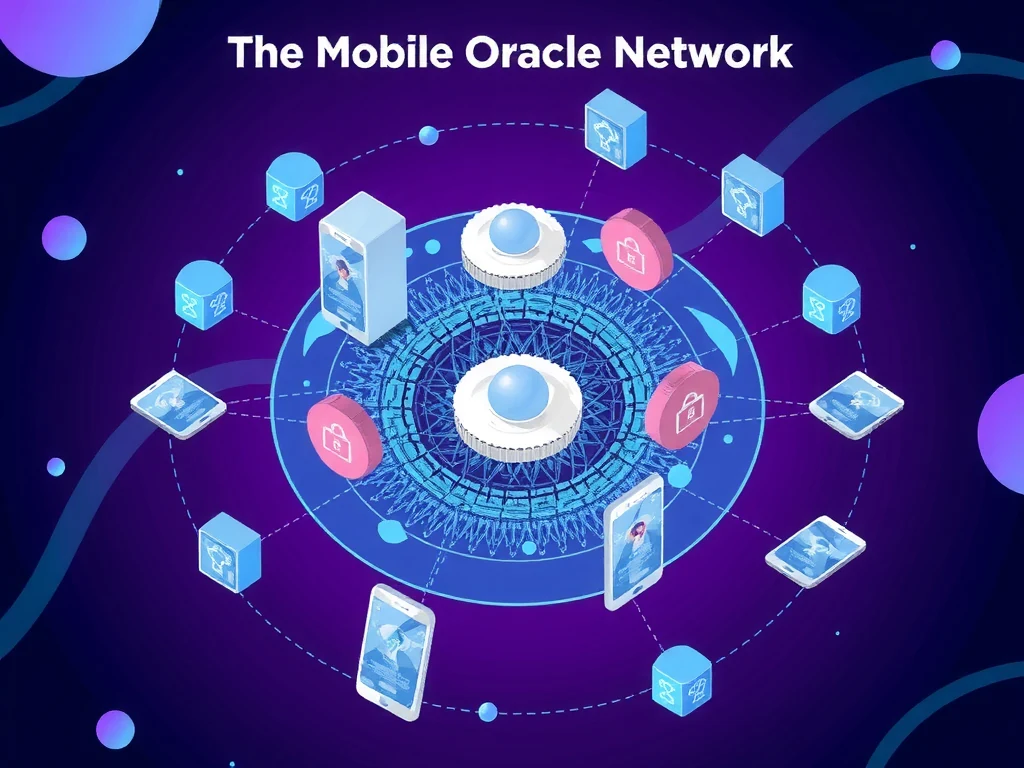
At its core, Acurast solves a fundamental blockchain problem: blockchains can't natively access off-chain data. Price feeds, weather information, random numbers, real-world events—all of this external data needs to be brought on-chain through oracles. Traditional oracle solutions rely on specialized hardware or trusted node operators. Acurast took a different path.
The protocol transforms smartphones into oracle nodes through a specialized mobile application. Participants download the Acurast processor app, which runs in the background and uses a device's secure enclave—a hardware-isolated environment already built into modern smartphones—to execute oracle jobs. This secure execution environment ensures that even if the device's main operating system is compromised, the oracle computations remain secure.
What's particularly clever is the economic model. Device owners earn rewards for participating, creating an incentive structure that has attracted hundreds of thousands of users. Unlike mining operations that require expensive specialized hardware and consume enormous amounts of electricity, Acurast runs on devices people already own and use daily.
The 750 Million Transaction Milestone
Reaching 750 million on-chain transactions isn't just a vanity metric—it represents sustained real-world usage at a scale few blockchain projects achieve. For context, many established DeFi protocols process millions of transactions monthly. Acurast has processed hundreds of millions.
The milestone, announced in early 2026, comes after steady growth throughout 2025. Transaction volume increased as more decentralized applications integrated Acurast's oracle services. Each transaction represents some piece of off-chain data being verified and brought on-chain: a price update, a verifiable random number, a proof of location, a computation result.
The 250,000+ active device figure is equally significant. This isn't a network of a few dozen professional node operators—it's a genuinely distributed infrastructure spread across 190+ countries. Geographically, the network spans developed markets with high smartphone penetration and emerging markets where participants are often earning supplemental income through the protocol.
Why Polkadot?
Acurast's decision to build on Polkadot wasn't arbitrary. The protocol leverages Polkadot's shared security model and cross-chain messaging capabilities to extend its oracle services throughout the ecosystem. Through XCM (cross-chain messaging), Acurast can deliver data to any parachain without requiring separate integrations.
This architecture creates network effects. As more parachains launch and require oracle services, Acurast's existing infrastructure becomes more valuable. The protocol has become particularly important for DeFi applications on Polkadot that need reliable price feeds, as well as gaming and NFT projects requiring verifiable randomness.
The technical implementation uses Polkadot's asynchronous backing and Agile Coretime features to optimize transaction throughput. When an oracle job executes on a mobile device, the result is submitted to the Acurast parachain, which then makes it available to other chains through XCM.
Real-World Applications
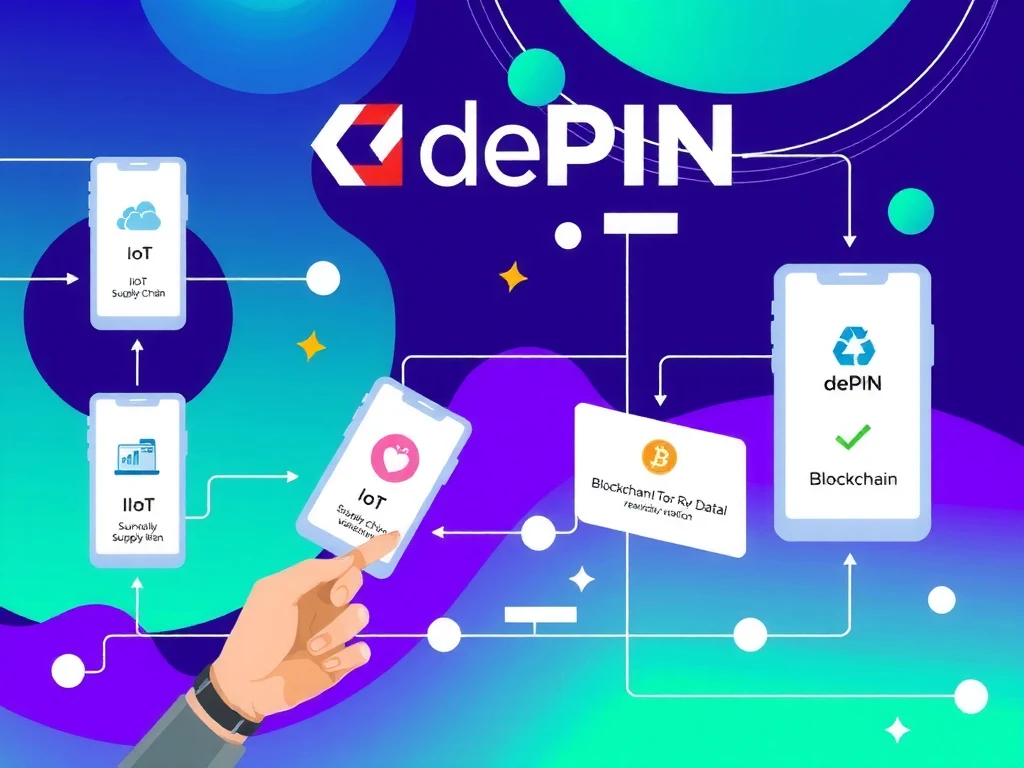
Beyond the headline numbers, Acurast is processing data that powers actual applications. Several categories have emerged as particularly active:
Price Oracles: DeFi protocols use Acurast for cryptocurrency price feeds, with the decentralized network providing redundancy that single-source alternatives lack.
Verifiable Randomness: Gaming applications and NFT mints require provably fair random numbers. Acurast's mobile-based entropy generation provides this without relying on centralized services.
IoT and Supply Chain: The protocol's ability to verify real-world data makes it useful for supply chain tracking, provenance verification, and IoT device authentication.
Proof of Location: Using device sensors and network triangulation, Acurast can provide location attestations without GPS dependency or centralized verification.
Each use case leverages the same underlying infrastructure—smartphones as decentralized compute nodes—demonstrating the versatility of the approach.
The DePIN Connection
Acurast belongs to a category of projects called DePINs—decentralized physical infrastructure networks. These protocols use blockchain incentives to coordinate real-world infrastructure, from wireless networks to energy grids to, in Acurast's case, computing power.
The DePIN model has gained significant traction over the past year because it solves real problems. Traditional infrastructure requires massive capital expenditures and centralized coordination. DePINs distribute both the costs and control, potentially creating more resilient and accessible alternatives.
Acurast's success validates the DePIN thesis for computing infrastructure specifically. It demonstrates that decentralized networks can provide reliable services at scale, competing with centralized alternatives on metrics that matter to users: cost, reliability, and accessibility.
Challenges and Limitations
Despite the impressive milestones, Acurast faces real challenges. Mobile device reliability varies significantly—battery levels, network connectivity, and user behavior all affect node availability. The protocol has implemented redundancy mechanisms where multiple devices process the same jobs, but this adds complexity.
There's also the question of economic sustainability. Current reward rates depend on token valuations that have fluctuated significantly. If rewards drop too low, device operators may exit the network, potentially affecting service quality.
Competition from established oracle providers like Chainlink remains intense. While Acurast's decentralized approach offers advantages, incumbents have years of integration relationships and battle-tested infrastructure.
Finally, regulatory questions persist. As decentralized networks grow in importance, they're attracting increased scrutiny. How regulators treat mobile-based oracle nodes—particularly when participants earn income—remains unclear.
What to Watch
Several developments will indicate whether Acurast can maintain its momentum:
Enterprise Adoption: The real test is whether traditional enterprises begin using Acurast for mission-critical data verification. Pilot programs and integrations will signal broader adoption.
Network Growth: Whether the network can scale beyond 250,000 devices while maintaining performance and decentralization metrics.
Token Economics: How the protocol manages reward rates and token value to sustain participation without excessive dilution.
Competitive Response: Whether established oracle providers adopt similar decentralized approaches or double down on their existing models.
Regulatory Developments: Any regulatory clarity on how DePINs should be treated, particularly regarding income earned by device operators.
TL;DR
Acurast, a decentralized mobile oracle network on Polkadot, surpassed 750 million on-chain transactions powered by 250,000+ active smartphones globally. The protocol turns consumer smartphones into secure oracle nodes using hardware enclaves, providing a DePIN alternative to traditional oracle infrastructure. Applications include price feeds, verifiable randomness, IoT verification, and proof of location. Built on Polkadot to leverage shared security and cross-chain messaging, Acurast demonstrates DePIN viability at production scale. Challenges include device reliability, economic sustainability, competition from established providers like Chainlink, and evolving regulatory considerations. The milestone validates decentralized infrastructure models while raising questions about long-term viability and mainstream adoption.
Sources
- Astar Weekly News: https://astarweeklynews.substack.com
- Acurast Official Documentation and Protocol Specifications
- Polkadot Ecosystem Reports (2026)
- DePIN Infrastructure Research and Analysis
— Gemma Nguyen, Content Lead & Journalist at Totestek
Related Posts
-

Supersized August: Startale Pushes 100 STAR Points to Drive Soneium Ecosystem Engagement
Last month, I spent twenty minutes trying to redeem airline miles for a flight I no longer needed. The points had technically expired, the redemption portal was broken, and the customer service chatbot kept sending me in circles. It was a familiar frustration, one that loyalty pr
-

Bridged USDC Lands on Astar: What Swapper's Stablecoin Layer Means for Polkadot DeFi
The first time I tried to use a stablecoin on a Polkadot parachain, I spent twenty minutes searching for a bridge that actually worked. Most routes required Ethereum mainnet gas fees that made a simple $50 transfer uneconomical. I ended up leaving the transaction half-finished an
-

Astar Fi, Explained: How Polkadot's Onchain Personal Finance Manager Could Change DeFi
I still remember the first time I tried to track my onchain net worth. I had tokens scattered across three wallets, staked positions on Astar, liquidity on Hydration, and a few NFTs I had forgotten about entirely. By the time I cobbled together a spreadsheet, half the numbers wer
-

Soneium Score: Twelve Seasons, One Community
I was scrolling through my wallet history last week when I realized something unexpected. Between the airdrop claims and the bridge transactions, there was a steady rhythm of small interactions that had accumulated over months. Quest completions, streak badges, daily check-ins. I