

The OCC's Crypto Charter Wave: Federal Oversight or Regulatory Capture?
The OCC's Crypto Charter Wave: Federal Oversight or Regulatory Capture?
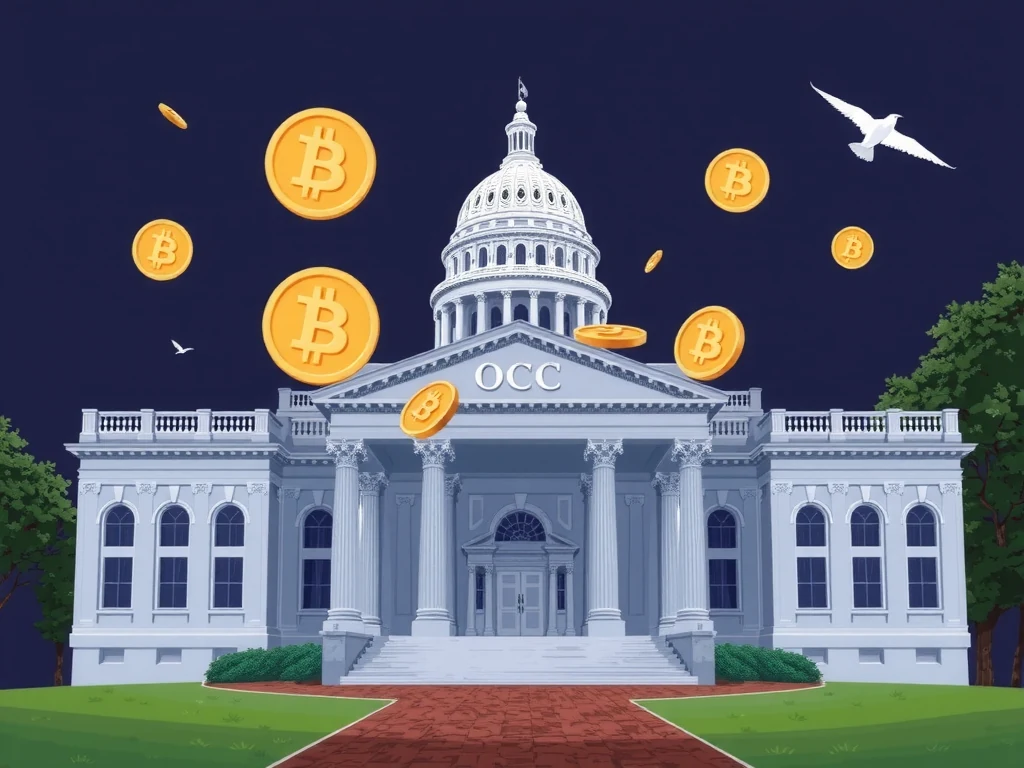
I remember when the Office of the Comptroller of the Currency was the quiet bureaucrat in the corner of American finance, the kind of regulator that made community bankers fill out forms in triplicate. They were the paper-pushers of the banking world, not the gatekeepers of digital assets. But in the span of 83 days, the OCC approved eleven companies for national trust bank charters—a stampede that included Coinbase, Crypto.com, and a parade of crypto firms seeking federal legitimacy.
The headline numbers look impressive: Coinbase alone is managing $376 billion in assets, controlling over 80% of U.S. BTC and ETH ETF custody. The OCC calls this "bringing digital assets into the banking system." The firms call it "regulatory clarity." But when you follow the money and the permissions, the picture gets more complicated.
What the Charters Actually Mean
A national trust bank charter is not a traditional bank charter. These institutions cannot take deposits from ordinary consumers or make loans. What they can do is custody digital assets under federal oversight—and that's precisely what Coinbase, Crypto.com, and the others wanted.
The OCC's December 12, 2025 announcement approved five firms conditionally. By early 2026, the number had grown to eleven. The conditions are substantial: capital requirements, governance structures, operational procedures, and pre-opening examinations. But here's the catch—the OCC allowed these firms to create required policies and procedures AFTER conditional approval, not before.
That is not normal banking regulation. That is regulatory accommodation.
The Centralization Problem
Look at the custody concentration. Coinbase controls the vast majority of institutional ETH and BTC custody in the United States. When the ETF floodgates opened, Coinbase was already positioned as the custodian of choice. Now, with a federal charter, they have something even more valuable: preemption over state regulations and a badge of federal legitimacy.

The Custody Concentration Matrix
| Custodian | Charter Status | Estimated ETH/BTC ETF Share | Risk Factor |
|---|---|---|---|
| Coinbase | Conditionally Approved | 80%+ | Systemic |
| Crypto.com | Conditionally Approved | 5-10% | High |
| Other Approved Firms | Conditionally Approved | 10-15% | Moderate |
Interpretive Letter 1188: The Real Prize
While everyone focused on the charter approvals, the OCC quietly issued Interpretive Letter 1188. This document confirmed that national banks can engage in "riskless principal" activities with crypto—essentially trading digital assets as principal under certain conditions.
This is where the story shifts from custody to something more profitable. The OCC is not just bringing crypto into the banking system; it is opening the door for traditional banks to compete in crypto markets. The charters are the foothold. The interpretive letters are the pathway to full integration.

The Federal Preemption Game
Here is the critical detail most coverage misses: these national trust banks get federal preemption. Under state "wild card" statutes, state-chartered trust companies may get some of these permissions, but they do not get the benefit of federal preemption. The OCC approvals create a two-tier system.
The firms with OCC charters can operate across all fifty states with uniform federal oversight. State-chartered competitors must navigate a patchwork of regulations. This is not just regulatory clarity—it is regulatory advantage.
The Decentralization Theater Score (DTS)
To understand what is really happening, I have developed a simple framework to grade these regulatory moves:
Formula: DTS = (Actual Decentralization × 0.6) + (Regulatory Accessibility × 0.4)
(Scale 1-10, where 10 is truly decentralized and accessible)
OCC Charter Wave DTS: 2.8 / 10
Reasoning: High centralization (few firms approved, massive custody concentration), limited accessibility (only well-capitalized firms need apply), and federal preemption that advantages incumbents over new entrants.
What This Means for Ethereum
Ethereum is the asset most affected by these custody shifts. Unlike Bitcoin, Ethereum has staking, DeFi integration, and smart contract complexity. Custody of ETH is not just holding private keys—it is participating in consensus, managing slashing risk, and navigating a constantly evolving protocol.
The OCC-approved custodians will control institutional ETH not just as static assets, but as yield-generating, governance-participating positions. When BlackRock or Fidelity wants to stake their ETH ETF holdings, they will turn to these chartered custodians. The custodians become not just vaults, but validators.
This is centralization wearing the mask of regulation.

The Verdict
The OCC's charter wave is not about protecting consumers or promoting decentralization. It is about bringing the largest crypto custodians into the federal fold, giving them advantages that state-chartered competitors cannot match, and positioning traditional finance to capture the institutional crypto market.
Coinbase did not win a charter because it was the most decentralized option. It won because it was already the biggest. The OCC is not regulating crypto into the banking system; it is selecting winners and blessing them with federal preemption.
Decision Framework: Who Benefits?
If you are an Institutional Investor: ✅ Better regulatory clarity and federal oversight protections, but limited custodian choice.
If you are a Retail ETH Holder: ⚠️ Custody centralization increases systemic risk; your ETH may be held by increasingly powerful intermediaries.
If you are a Crypto Startup: ❌ Higher barriers to entry; federal charter requirements favor established, well-capitalized firms.
If you believe in Decentralization: ❌ This is the opposite of decentralization—concentration of custody and validation power in federally-approved entities.
The OCC calls this progress. The Ethereum Foundation calls it stewardship. I call it what it is: the old system putting the new system in a cage, then charging rent for the view.
The OCC approved eleven crypto firms for national trust bank charters in 83 days, including Coinbase with its $376 billion custody empire. While marketed as regulatory clarity, this creates a two-tier system with federal preemption advantages for approved custodians. Coinbase and other giants gain federal legitimacy and competitive moats, while the actual decentralization of ETH custody suffers. The Decentralization Theater Score is 2.8/10—this is centralization with better branding.
Sources:
- Forbes: "Coinbase Wins OCC Nod For $376 Billion Institutional Custody Empire" (April 8, 2026)
- OCC Press Release: "OCC Announces Conditional Approvals for Five National Trust Bank Charter Applications" (December 12, 2025)
- FinTech Weekly: "Eleven Companies, Eighty-Three Days: The Race for a Federal Crypto Banking License"
- Crypto.com Press Release: "Crypto.com Receives Conditional Approval from OCC for National Trust Bank Charter" (February 23, 2026)
- National Law Review: "OCC Conditionally Approves Digital Asset Trust Bank Charters, Signaling Cautious Expansion of Federal Oversight"
Related Posts
-

The EPA Is Watching Bitcoin Miners: What Extended Emissions Rules Mean for Proof-of-Work
The EPA is introducing new emissions disclosure requirements for large-scale Bitcoin mining operations. Discover how these reporting rules impact proof-of-work facilities and what they mean for the future of industry compliance.
-

The IRS Wants to Know About Your Bitcoin: What the New 2026 Tax Guidance Actually Means
The IRS is introducing Form 1099-DA for the 2026 tax season, shifting reporting burdens to crypto exchanges. Learn how the $600 threshold and new cost basis rules will impact your Bitcoin holdings.
-

Wyoming Joins the Bitcoin Reserve Rush: What the Seven-State 2026 Push Reveals About America's Monetary Future
Wyoming is leveraging a decade of crypto-friendly laws to join a seven-state push for Strategic Bitcoin Reserves. Discover how this movement challenges federal monetary authority and reshapes the American financial landscape.
-

Arizona's Seized Bitcoin Gambit: What HB2324 Actually Means for State-Level Crypto Sovereignty
Arizona is poised to create a Strategic Bitcoin Reserve funded entirely by seized criminal assets. Discover how HB2324 could turn confiscated crypto into a sovereign state reserve without using taxpayer dollars.