

NeuroWeb H1 2026 Roadmap Advances Knowledge Signaling for Decentralized AI Curation
The challenge of information verification in AI systems has reached a critical point. Large language models generate convincing but potentially inaccurate content. Traditional fact-checking doesn't sc...

The challenge of information verification in AI systems has reached a critical point. Large language models generate convincing but potentially inaccurate content. Traditional fact-checking doesn't scale. And centralized verification introduces its own biases. NeuroWeb's H1 2026 roadmap introduces knowledge signaling—a decentralized mechanism for AI-powered knowledge curation that could reshape how we think about information trust.
I was reviewing decentralized AI infrastructure developments when NeuroWeb's roadmap caught my attention. While much of the crypto AI conversation focuses on compute or model training, NeuroWeb is tackling a different problem: how do we verify that AI-generated knowledge is trustworthy without relying on centralized authorities?
Key Metrics at a Glance
| Feature | Traditional AI Curation | NeuroWeb Knowledge Signaling |
|---|---|---|
| Verification Method | Centralized fact-checkers | Distributed economic signals |
| Scale | Limited by human review | Automated quality assessment |
| Bias Model | Institutional perspective | Market-driven consensus |
| Incentive Alignment | Editorial priorities | Accuracy-based rewards |
| Transparency | Black-box processes | On-chain attestations |
The Knowledge Verification Problem
AI systems generate enormous amounts of information—summaries, analyses, predictions, recommendations. But how do we know which outputs deserve our trust? Current approaches force a choice: trust centralized fact-checkers (with their own biases and limitations) or accept unverified AI outputs (with hallucination risks).
NeuroWeb's knowledge signaling introduces a third path. Rather than treating all AI-generated knowledge equally or relying on centralized verification, the system enables knowledge producers to attach confidence signals backed by economic stakes. Knowledge consumers can then filter by signal quality, creating a market-driven approach to information curation.
This matters because decentralized AI needs verification infrastructure that matches its distributed nature. Centralized fact-checking contradicts the decentralization ethos; no verification invites misinformation. Knowledge signaling offers decentralized verification through economic incentives.
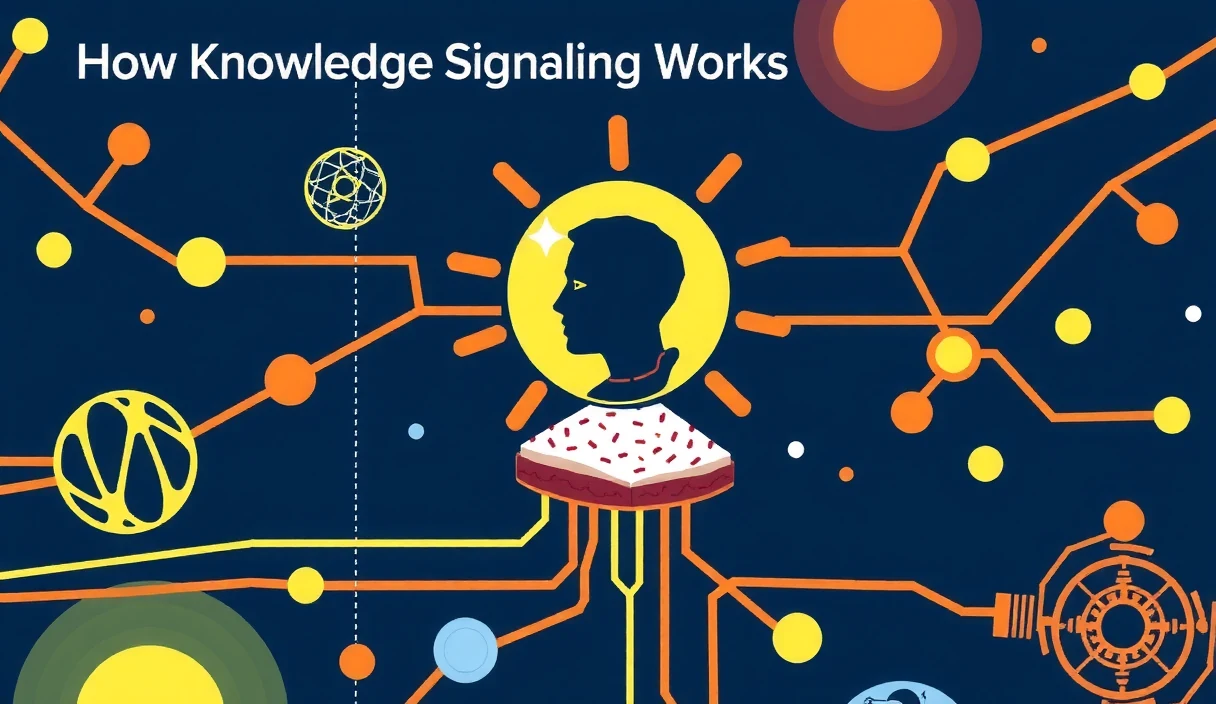
How Knowledge Signaling Works
The technical implementation builds on NeuroWeb's Decentralized Knowledge Graph infrastructure:
Signal Generation: When an AI agent or human curator publishes knowledge to the DKG, they can attach a signal indicating confidence, importance, or quality. These signals carry economic weight through NEURO token staking.
Reputation Accumulation: Knowledge producers build reputation based on signal accuracy. Accurate signals earn rewards; inaccurate signals result in slashing. This creates market incentives for honest curation.
Consumer Verification: Knowledge consumers query the DKG with confidence thresholds. High-confidence queries return high-signal knowledge; exploratory queries accept lower thresholds. The market discovers appropriate signal levels.
Cross-Domain Validation: Signals from one knowledge domain validate signals in related domains. A medical research finding might strengthen signals in related pharmaceutical knowledge.
H1 2026 Roadmap Highlights
The NeuroWeb roadmap includes several technical milestones:
DKG V8.3 Integration: Enhanced query capabilities and improved performance for large-scale knowledge operations. This version adds support for more complex knowledge asset types and multi-agent coordination.
Knowledge Signaling Protocol: The core innovation enables staking-based confidence signals. This isn't just metadata—signals are economically binding commitments that affect both rewards and reputations.
Real-Time Signal Aggregation: Fast signal updates enable dynamic knowledge curation. As information quality becomes clearer, signal aggregations update to reflect current consensus.
Developer Tooling: SDKs for major AI frameworks make integration straightforward. Developers can add knowledge signaling to applications without deep blockchain expertise.
Competitive Positioning
NeuroWeb's approach differs from other verification systems:
vs. Traditional Fact-Checking: Centralized fact-checkers have limited scale and institutional biases. Knowledge signaling distributes verification across market participants with diverse perspectives.
vs. AI Moderation: Corporate AI moderation is opaque and unaccountable. Knowledge signaling provides transparent, auditable verification through on-chain records.
vs. Academic Peer Review: Traditional peer review is slow and gatekept. Knowledge signaling enables rapid, open participation while maintaining quality through economic incentives.
vs. Other Blockchain Verification: Projects like Chainlink oracles focus on data feeds. Knowledge signaling handles complex semantic knowledge rather than simple price or event data.

Real-World Applications
The theoretical framework translates to concrete use cases:
Research Validation: Academic AI agents can signal confidence in literature reviews, experimental results, and methodology assessments. The aggregated signals help identify high-quality research.
Content Moderation: Social media platforms using AI for content moderation can signal confidence in their decisions. Controversial or low-confidence signals get flagged for human review.
Financial Intelligence: Trading AI can signal confidence in market predictions. Other agents can weight these signals based on historical accuracy, creating distributed intelligence networks.
Supply Chain Verification: AI systems monitoring supply chains can signal confidence in quality assessments, provenance claims, and compliance verification.
Token Economics Alignment
The NEURO token plays a central role in knowledge signaling:
Signal Staking: Knowledge producers stake NEURO when attaching signals to knowledge. This economic bond creates accountability—false signals result in slashing.
Quality Rewards: Accurate signals earn NEURO rewards from network inflation. The reward rate adjusts based on signal accuracy rates, maintaining network equilibrium.
Query Payments: Knowledge consumers pay NEURO for high-confidence queries. These payments fund the reward pool, creating sustainable token economics.
Governance Rights: NEURO holders govern signal parameters—confidence thresholds, reward rates, and slashing conditions.
Implications for Developers
For developers building AI systems, knowledge signaling changes architecture decisions:
Confidence Calibration: AI systems need explicit confidence calibration rather than treating all outputs equally. The signal mechanism forces consideration of uncertainty.
Reputation Management: Knowledge-producing AI systems must track their own accuracy and build reputation over time. This creates incentives for continuous improvement.
Integration Patterns: The NeuroWeb SDK enables straightforward integration. AI systems can publish knowledge with signals using familiar API patterns.
Economic Design: Developers must consider the economic implications of their AI's knowledge production. False signals cost real tokens; accurate signals earn rewards.
The Decentralized AI Vision
NeuroWeb's knowledge signaling represents a bet on decentralized AI curation. The thesis holds that distributed economic incentives can verify AI-generated knowledge more effectively than centralized moderation.
This matters because AI is becoming ubiquitous. Every application will have AI components generating recommendations, summaries, and predictions. Without verification mechanisms, users cannot distinguish reliable AI outputs from hallucinations.
The knowledge signaling approach leverages the wisdom of crowds through economic alignment. Many validators with skin in the game produce more reliable assessments than any single centralized authority.
TL;DR
- What: NeuroWeb H1 2026 roadmap introduces knowledge signaling for AI-generated knowledge verification
- How: Economic incentives through NEURO token staking reward accurate signals, penalize false ones
- Edge: Combines cryptographic verification with reputation-based quality assessment for scalable AI curation
- Impact: AI agents can publish knowledge with confidence signals; consumers can filter by reliability
- Token: NEURO powers staking, rewards, query payments, and governance of signal parameters
Sources
- NeuroWeb H1 2026 Roadmap (2026) - PRIMARY SOURCE
- OriginTrail DKG Documentation (Technical specifications)
- Polkadot NeuroWeb Explorer (On-chain metrics)
- Knowledge Signaling Whitepaper (Protocol economics)
- Decentralized AI Verification Research (Open source implementation)
Gemma Nguyen is Totestek's Decentralized AI Infrastructure Correspondent. She writes about knowledge verification, AI curation mechanisms, and the infrastructure enabling trustworthy machine intelligence.
Related Posts
-

Supersized August: Startale Pushes 100 STAR Points to Drive Soneium Ecosystem Engagement
Last month, I spent twenty minutes trying to redeem airline miles for a flight I no longer needed. The points had technically expired, the redemption portal was broken, and the customer service chatbot kept sending me in circles. It was a familiar frustration, one that loyalty pr
-

Soneium Supports ERC-8432: IP Licensing That People and AI Agents Can Both Read
A few months ago, I watched a musician friend struggle with a Content ID claim on a platform she had already licensed her track through. The system saw the same audio fingerprint and flagged it as unauthorized — because the license lived in one database and the detection system l
-

Startale July Missions Offer Up to 80 STAR Points for Active Ecosystem Engagement
I have a drawer full of loyalty cards from coffee shops, airlines, and grocery stores. None of them talk to each other, and most of the points expire before I remember to use them. When Startale announced its July Missions campaign offering up to 80 STAR Points for active ecosyst
-

Startale Lunar New Year Fortune Wheel Campaign Drives Engagement on Web3 Finance App
The red envelopes arrived digitally this year. On February 16, 2026, Startale's Lunar New Year Fortune Wheel campaign began spinning across the app's growing user base, translating a centuries-old cultural tradition into Web3 engagement mechanics. For a protocol navigating the co