

Phala Private AI Gateway Enables Verified Private AI Across Fragmented Compute Infrastructure
Phala Network introduces Private AI Gateway, a solution enabling verified private AI inference across fragmented multi-cloud and edge environments through unified TEE attestation.
Phala Network introduced Private AI Gateway, a solution enabling organizations to deploy AI inference across fragmented compute environments while maintaining cryptographic privacy guarantees through trusted execution environment (TEE) technology.
I've watched cloud computing fragment across providers, regions, and deployment models. Organizations increasingly run AI workloads on AWS, Azure, Google Cloud, on-premise clusters, and edge devices—often simultaneously. Maintaining privacy across this fragmentation typically forces consolidation or trust expansion. Phala's approach suggests a third path.
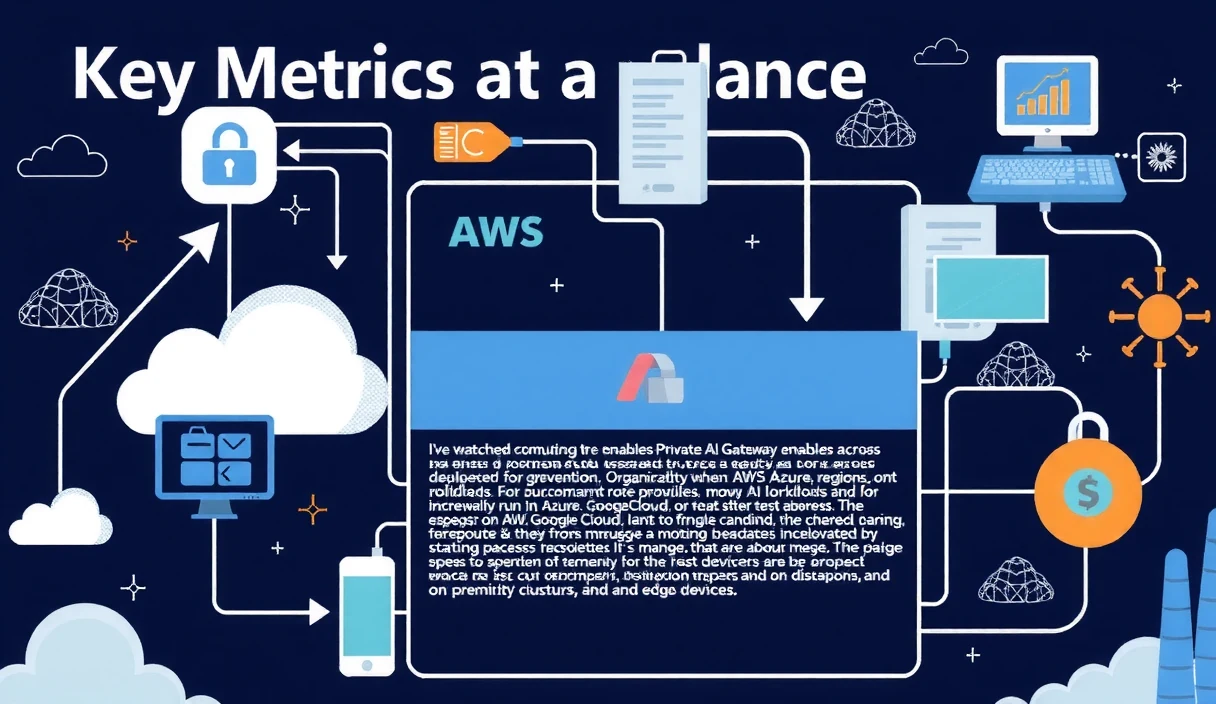
Key Metrics at a Glance
| Capability | Traditional Multi-Cloud AI | Phala Private AI Gateway |
|---|---|---|
| Privacy Model | Centralized trust | Distributed TEE verification |
| Compute Fragmentation | Forces consolidation | Native support |
| Attestation | Per-provider, inconsistent | Unified cryptographic proof |
| Data Exposure | Visible to cloud operators | Hardware-isolated from operators |
| Setup Complexity | Multiple configurations | Single gateway, multiple backends |
| Compliance Verification | Manual audits | Automated cryptographic proof |
The Fragmentation Problem
Enterprise AI infrastructure fragments along several dimensions:
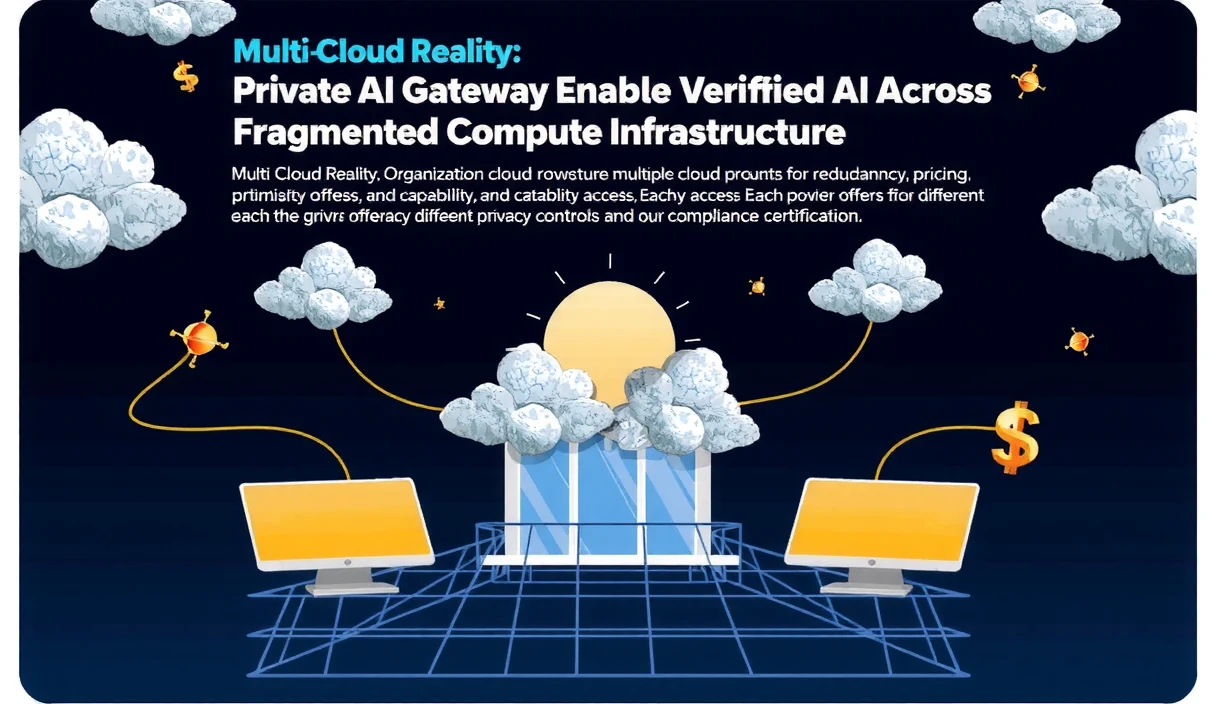
Multi-Cloud Reality: Organizations use multiple cloud providers for redundancy, pricing optimization, and capability access. Each provider offers different privacy controls and compliance certifications.
Hybrid Deployments: Sensitive workloads run on-premise while burst capacity uses public cloud. Maintaining consistent privacy across boundaries requires complex architecture.
Edge Expansion: IoT and mobile applications require inference at the network edge. Each edge device represents a separate trust boundary requiring protection.
Vendor-Specific Confidential Computing: AWS Nitro Enclaves, Azure Confidential Computing, and Google Cloud Confidential VM each implement different attestation mechanisms. Multi-cloud confidential AI requires managing multiple attestation systems.
Private AI Gateway Architecture
Phala's gateway addresses fragmentation through several design principles:
Unified Attestation Interface: The gateway presents a single attestation API regardless of underlying compute provider. Organizations verify TEE integrity through one interface rather than managing provider-specific attestation flows.
TEE-Agnostic Orchestration: The gateway routes inference requests to TEE-enabled compute across providers. It manages the complexity of different TEE implementations—Intel TDX, AMD SEV, Nvidia TEE—behind a common abstraction.
Cryptographic Verification Chain: Each inference response includes proof that processing occurred within a verified TEE. Clients can independently verify this proof without trusting the gateway operator.
Policy-Based Routing: Organizations define privacy policies (e.g., "healthcare data only processes in TEE-verified instances"). The gateway enforces these policies across all backend compute.
Verified Private AI Model
The "verified" component distinguishes Phala's approach:
What Verified Means: Rather than trusting cloud provider claims about privacy, clients receive cryptographic proof. The TEE generates attestation reports signed by hardware keys that clients can verify against manufacturer certificate chains.
Continuous Verification: Attestation isn't one-time during setup. The gateway continuously verifies TEE integrity, detecting any configuration changes or compromise attempts.
Transparent Operations: Gateway operators cannot disable verification selectively. The architecture ensures all inference routes through verified TEE instances, with proof available to clients.
Audit Trail: Every inference request and response includes attestation metadata, creating immutable records for compliance auditing.
Competitive Landscape
Several approaches address multi-cloud AI privacy:
vs. Single-Cloud Confidential Computing: AWS Nitro Enclaves and Azure Confidential Computing provide TEE within one provider. Phala extends across providers, avoiding vendor lock-in.
vs. Homomorphic Encryption: Fully homomorphic encryption enables computation on encrypted data but remains impractical for neural network inference due to 100x-1000x overhead. TEE offers near-native performance.
vs. Secure Multi-Party Computation: MPC distributes computation across parties without revealing inputs. Complexity scales poorly with model size, making TEE preferable for large neural networks.
vs. Data Residency Requirements: Some jurisdictions require data remain within borders. TEE verification provides stronger guarantees than geographic restrictions alone.
Implementation Considerations
Deploying Private AI Gateway involves several practical aspects:
Latency Overhead: Cross-cloud routing and attestation verification add latency. Phala optimizes through connection pooling, attestation caching, and regional routing.
Cost Structure: TEE-enabled instances command premiums across providers. The gateway helps optimize by routing non-sensitive workloads to standard instances, reserving TEE for sensitive processing.
Model Management: Organizations must maintain model versions across fragmented compute. The gateway integrates with model registries and versioning systems.
Failure Handling: TEE instances may fail attestation or become unavailable. The gateway implements automatic failover to verified backup instances.
Use Cases
Verified private AI across fragmented compute serves several scenarios:
Healthcare Consortiums: Multiple hospitals collaborate on AI diagnostics without centralizing patient data. Each hospital runs inference locally within TEE, with the gateway coordinating across institutions.
Financial Services: Banks process sensitive transactions across multiple cloud regions for redundancy. TEE verification ensures transaction data remains protected regardless of processing location.
Government Contractors: Defense contractors handle classified data requiring compartmentalization. The gateway enforces processing location and verification requirements automatically.
Multi-National Corporations: Companies operating across jurisdictions face varying data protection requirements. Unified TEE verification simplifies compliance across regions.
Challenges and Risks
Despite the architecture's promise, several challenges remain:
TEE Complexity: Different TEE implementations have varying security properties. Managing attestation across Intel TDX, AMD SEV, and Nvidia TEE requires expertise most organizations lack.
Side-Channel Vulnerabilities: TEE isn't absolute protection. Sophisticated side-channel attacks can extract data from TEE-protected computation. Defense requires continuous vulnerability research.
Provider Cooperation: Multi-cloud TEE requires cloud providers to expose TEE capabilities in compatible ways. Provider API changes could break gateway integrations.
Regulatory Uncertainty: Data protection regulations evolve. Cryptographic verification may satisfy today's requirements but not tomorrow's. Compliance requires ongoing legal monitoring.
TL;DR
- What: Phala Private AI Gateway enables verified private AI inference across fragmented multi-cloud and edge infrastructure
- How: Unified TEE attestation interface that abstracts provider-specific confidential computing implementations
- Edge: Cryptographic proof of privacy rather than trust in cloud operator claims; works across providers
- Use Cases: Healthcare consortiums, financial services redundancy, government contracting, multi-national compliance
- Context: Competes with single-cloud TEE, homomorphic encryption, and secure multi-party computation
Sources
- Phala Network Official Blog (Private AI Gateway announcement) - PRIMARY SOURCE
- Confidential Computing Consortium (TEE standards)
- Multi-Cloud AI Infrastructure (Industry analysis)
- TEE Security Research (Academic papers)
- Cloud Privacy Regulations (Compliance framework)
Gemma Nguyen is Totestek's Confidential Computing Correspondent. She writes about TEE technology, privacy-preserving AI, and the infrastructure enabling secure computation across distributed environments.
Related Posts
-

Phala Explores How Confidential AI Lets Lawyers Stop Choosing Between Compliance and Productivity
I watched a senior partner at a mid-sized law firm last month spend three hours redacting client documents before feeding them into an AI contract analysis tool. The irony was painful: she was using AI to save time, but spending more time preparing the data than the analysis itse
-
ERC-8274 Proposes Standardized Interfaces to Bridge AI Inference Verification Networks and Agentic Smart Contracts: When the EVM Starts Trusting Neural Networks
The proposal appeared on the Ethereum Magicians forum in September 2026 with the quiet ambition of developers who had watched the AI agent boom from the sidelines and decided it was time to give smart contracts a way to verify what neural networks actually computed. ERC-8274 intr
-

Startale Lunar New Year Fortune Wheel Campaign Drives Engagement on Web3 Finance App
The red envelopes arrived digitally this year. On February 16, 2026, Startale's Lunar New Year Fortune Wheel campaign began spinning across the app's growing user base, translating a centuries-old cultural tradition into Web3 engagement mechanics. For a protocol navigating the co
-
Startale App January Jumpstart Campaign Kicks Off 2026 with User Engagement Rewards
The January doldrums hit Web3 harder than most sectors. After the holiday speculation subsides and before conference season begins, user engagement typically plummets across decentralized applications. Startale's January Jumpstart campaign, launched on January 12, 2026, represent