

Hyperbridge Relaunches as Interoperability Hyperstructure for Cross-Chain Asset Messaging
Hyperbridge unveils its relaunch as an interoperability hyperstructure, redesigning cross-chain messaging architecture with cryptographic verification and modular chain support.

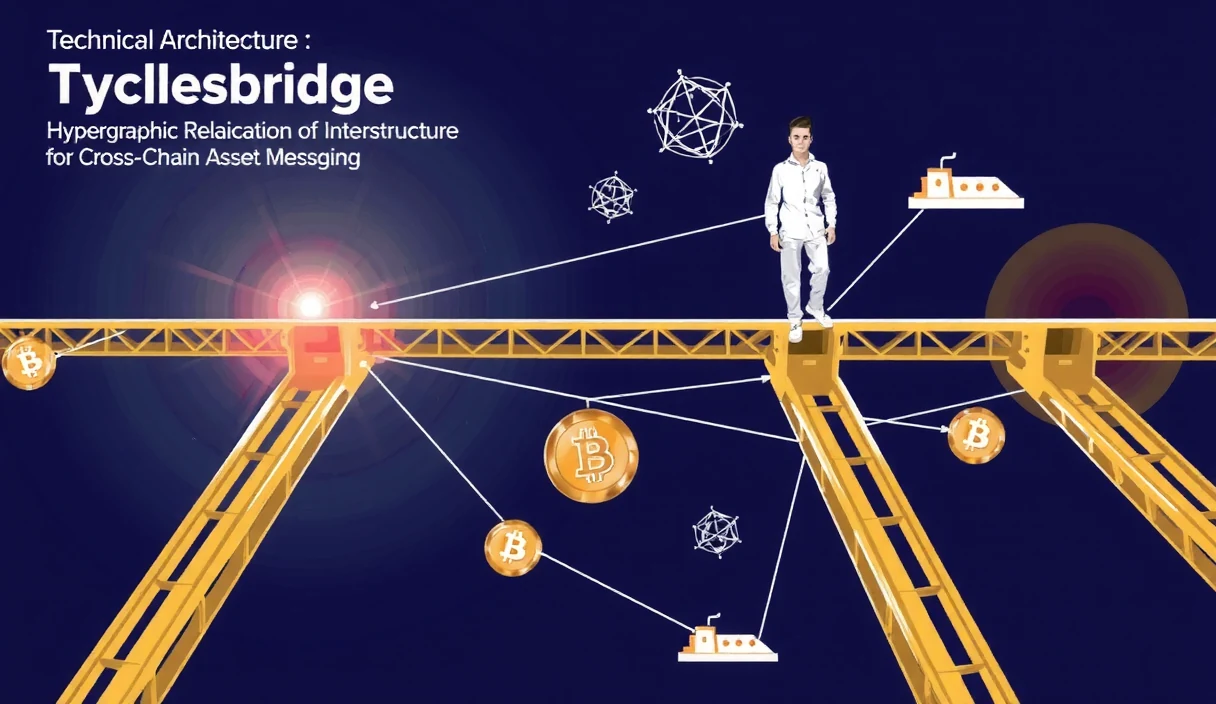
Hyperbridge unveiled its relaunch as an interoperability hyperstructure, fundamentally redesigning its cross-chain messaging architecture to enable more efficient, secure, and scalable asset transfers across blockchain networks. The repositions the project from a bridge protocol to infrastructure layer for cross-chain communication.
I've followed bridge exploits since the Wormhole and Ronin incidents that collectively lost over a billion dollars in user funds. The bridge category carries understandable stigma. Hyperbridge's relaunch as a "hyperstructure" suggests architectural lessons learned from earlier failures—specifically, moving from trusted multi-sig validator sets to cryptographically verifiable message passing.
Key Metrics at a Glance
| Aspect | Legacy Bridge Design | Hyperstructure Architecture |
|---|---|---|
| Validator Model | Trusted multi-sig | Cryptographic proof |
| Settlement Finality | Hours to days | Minutes |
| Supported Chains | Limited selection | Modular, expandable |
| Security Model | Economic stake | Cryptographic verification |
| Upgrade Mechanism | Hard forks | Seamless parameter updates |
| Message Types | Asset transfers only | General cross-chain messages |
The Hyperstructure Concept
Hyperbridge's relaunch centers on architectural principles:
Cryptographic Verification: Rather than trusting validator attestations, the hyperstructure uses zero-knowledge proofs and cryptographic commitments to verify cross-chain messages. This eliminates the validator collusion risk that plagued earlier bridges.
Modular Chain Support: New blockchain integrations require only implementing a standard interface rather than deploying bespoke bridge contracts. This reduces integration time from months to weeks.
General Message Passing: While bridges traditionally handle only asset transfers, the hyperstructure supports arbitrary cross-chain messages—smart contract calls, governance votes, and oracle data.
Economic Efficiency: The new architecture reduces the capital requirements for bridge operators while maintaining security through cryptographic mechanisms rather than economic staking alone.

Technical Architecture
The hyperstructure implements several technical innovations:
Light Client Verification: Rather than trusting third-party validators, the system runs light clients of connected chains within smart contracts. This enables direct verification of chain state without intermediary trust assumptions.
Optimistic Verification with Challenge Periods: Messages propagate optimistically but can be challenged during a defined window. This balances speed with security, allowing rapid transfers while maintaining fraud detection capability.
Aggregate Messaging: Multiple cross-chain messages bundle into single proofs, amortizing verification costs across many transfers. This addresses the high per-message costs that make small transfers uneconomical on traditional bridges.
Relayer Incentive Design: Permissionless relayers compete to deliver messages, with economic incentives aligned to prompt delivery. This avoids the centralization risks of permissioned relayer sets.
Competitive Landscape
Cross-chain interoperability has several approaches:
vs. Traditional Bridges: Wormhole, Multichain, and Ronin bridge relied on trusted validator sets. Their security failures demonstrated the limitations of this model. Hyperbridge's cryptographic approach offers stronger guarantees.
vs. Layer 2 Bridges: Optimism and Arbitrum bridges connect to Ethereum specifically. Hyperbridge generalizes across any blockchain rather than specializing in one ecosystem.
vs. Cosmos IBC: The Inter-Blockchain Communication protocol enables sovereign chain communication but requires chains implement Tendermint consensus. Hyperbridge works with any chain including Ethereum and Bitcoin.
vs. Polkadot XCM: Cross-Consensus Messaging enables parachain communication within the Polkadot ecosystem. Hyperbridge extends beyond Polkadot to external chains.

Security Model Evolution
The relaunch addresses security through several mechanisms:
Cryptographic Guarantees: Mathematical proofs replace economic incentives as the primary security mechanism. This eliminates scenarios where attacker wealth exceeds staked collateral.
Bug Bounty Program: Comprehensive incentives for vulnerability discovery, with rewards scaled to potential impact. This crowdsources security review beyond internal teams.
Insurance Integration: Partnerships with decentralized insurance protocols provide coverage for bridge users, creating additional security layer beyond protocol design.
Gradual Rollout: New chain integrations launch with transfer limits that increase as the system demonstrates reliability. This limits potential losses from undiscovered vulnerabilities.
Real-World Applications
The hyperstructure enables several cross-chain scenarios:
Multi-Chain DeFi: Users can collateralize assets on one chain and borrow on another without fragmented liquidity. This creates unified DeFi experience across ecosystems.
Cross-Chain Governance: DAOs can conduct governance votes that affect contracts across multiple chains simultaneously, eliminating manual coordination.
Chain-Agnostic NFTs: NFTs can move between chains while maintaining provenance and ownership records. This enables marketplaces that aggregate liquidity across ecosystems.
Interoperable Identity: Decentralized identity credentials verified on one chain become valid across all connected chains, reducing fragmentation in identity management.
Challenges and Risks
Despite architectural improvements, cross-chain infrastructure faces challenges:
Complexity: Cryptographic verification adds implementation complexity. Bugs in verification logic could be catastrophic, as they undermine the entire security model.
Latency Trade-offs: Optimistic verification introduces delays for finality. Users must choose between speed and security based on transfer size and risk tolerance.
Chain Finality Assumptions: Light client verification assumes connected chains maintain consistent finality. Reorgs or consensus failures on connected chains could corrupt bridge state.
Regulatory Uncertainty: Cross-chain transfers complicate regulatory jurisdiction. Assets moving between chains with different regulatory regimes create compliance complexity.
The Interoperability Infrastructure Context
Hyperbridge's relaunch fits into broader industry trends:
Multi-Chain Reality: Rather than one chain dominating, the ecosystem fragments across L1s and L2s. Interoperability infrastructure becomes essential rather than optional.
Modular Blockchain Design: Separation of execution, data availability, and settlement creates need for communication between layers. Hyperstructure architecture serves this modular trend.
Institutional Requirements: Traditional finance entering blockchain demands higher security standards than retail DeFi. Cryptographic verification meets institutional risk requirements.
Standardization Efforts: Industry groups work toward interoperability standards. Hyperbridge contributes to and implements emerging cross-chain communication standards.
TL;DR
- What: Hyperbridge relaunches as interoperability hyperstructure with cryptographic verification
- How: Zero-knowledge proofs, light client verification, optimistic message passing with challenge periods
- Edge: Cryptographic security replaces trusted validators; modular support for any chain
- Use Cases: Multi-chain DeFi, cross-chain governance, chain-agnostic NFTs, interoperable identity
- Context: Addresses bridge security failures through cryptographic rather than economic security
Sources
- Hyperbridge Official Blog (Relaunch announcement) - PRIMARY SOURCE
- Cross-Chain Security Analysis (Industry incident review)
- Light Client Verification Research (Academic foundations)
- Interoperability Standards (Ecosystem context)
- Bridge Insurance Market (Risk mitigation)
Gemma Nguyen is Totestek's Cross-Chain Infrastructure Correspondent. She writes about interoperability protocols, bridge security, and the infrastructure connecting fragmented blockchain ecosystems.
Related Posts
-

Post-Mortem: Hyperbridge MMR Verifier Exploit, April 13, 2026
I watched the numbers roll in on April 13, and they did not add up. A bridge that had processed millions in cross-chain volume suddenly showed withdrawals that exceeded deposits. The Merkle Mountain Range verifier, the cryptographic gatekeeper of Hyperbridge's Polkadot Hub mainne
-

Hyperbridge Asset Restoration & Snapshot Announcement
I still remember the sinking feeling when I checked my portfolio in early July 2026 and saw the Hyperbridge retirement notice. Like many others who held vETH and vMANTA tokens bridged through Hyperbridge's infrastructure, I had assumed the interoperability layer was permanent inf
-

Hyperbridge Expands Verifiable Interoperability to Polkadot Hub Mainnet
I first encountered Hyperbridge at a developer workshop in late 2025, where the team demonstrated cryptographic proofs that bridged assets had actually moved between chains. The skepticism in the room was palpable: bridge hacks had stolen over $2.5 billion that year, and "trustle
-

Startale Lunar New Year Fortune Wheel Campaign Drives Engagement on Web3 Finance App
The red envelopes arrived digitally this year. On February 16, 2026, Startale's Lunar New Year Fortune Wheel campaign began spinning across the app's growing user base, translating a centuries-old cultural tradition into Web3 engagement mechanics. For a protocol navigating the co