

Soneium Allocates 100 Million ASTR Tokens to Boost Ecosystem Growth and Astar Collective Expansion
Soneium announces a strategic allocation of 100 million ASTR tokens designed to accelerate ecosystem growth, incentivize developers, and expand the Astar Collective within the Soneium network.

Soneium announced a strategic allocation of 100 million ASTR tokens designed to accelerate ecosystem growth, incentivize developers, and expand the Astar Collective within the Soneium network. The allocation represents one of the largest ecosystem incentive programs in the Polkadot ecosystem, signaling confidence in the chain's trajectory despite challenging market conditions.
I've watched ecosystem incentive programs evolve from simple liquidity mining to sophisticated multi-year development campaigns. The 100 million ASTR figure caught my attention not because of its size, but because of its structure—this is not a speculative airdrop but a multi-phase program targeting specific growth metrics.
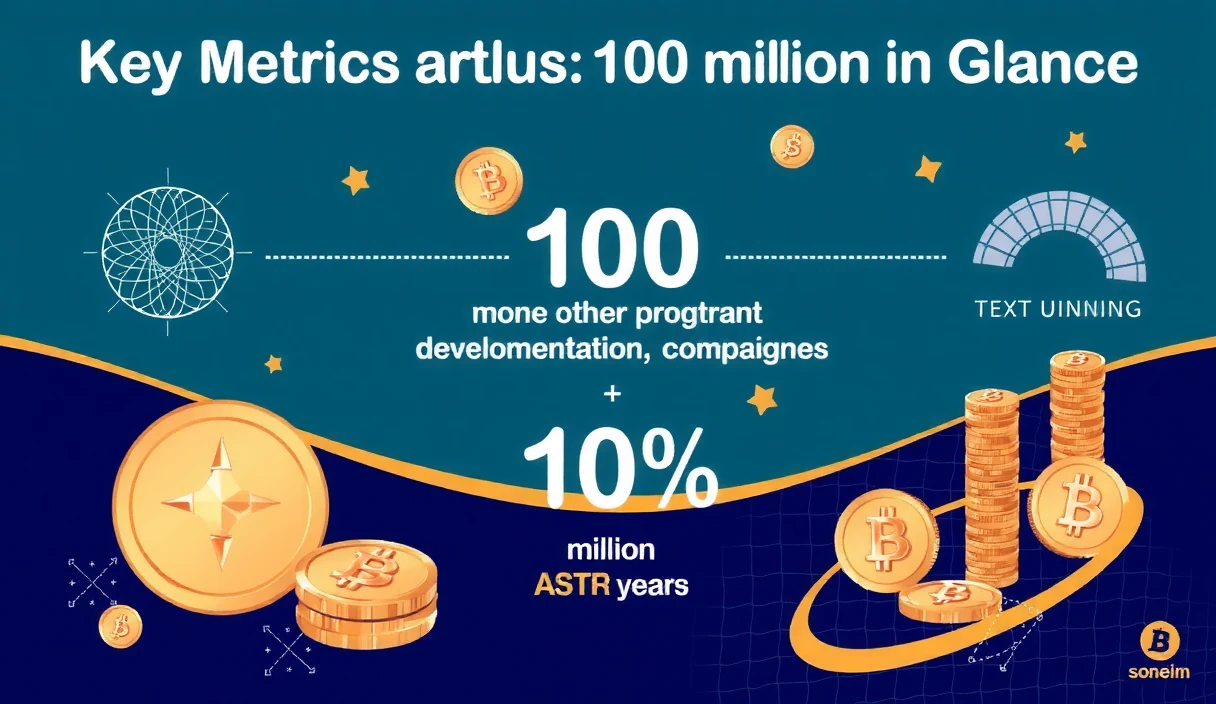
Key Metrics at a Glance
| Allocation Component | Amount | Purpose |
|---|---|---|
| Developer Grants | 35M ASTR | dApp development and migration |
| Ecosystem Incentives | 30M ASTR | Liquidity and user acquisition |
| Astar Collective Expansion | 20M ASTR | Community growth and governance |
| Infrastructure Support | 10M ASTR | Tooling and middleware |
| Reserve Fund | 5M ASTR | Emergency and opportunity |
| Total Allocation | 100M ASTR | Multi-year ecosystem growth |
The Soneium-Astar Relationship
Understanding the allocation requires context on how Soneium and Astar relate:
Soneium: A Layer 2 blockchain built on Optimism's Superchain stack, incubated by Sony Network Communications. It focuses on entertainment, gaming, and consumer applications with Web3 infrastructure.
Astar Network: A Polkadot parachain providing smart contract infrastructure and cross-chain connectivity. Astar pioneered dApp staking and multi-chain support within the Polkadot ecosystem.
Astar Collective: The governance and community body that coordinates between Astar Network and Soneium. Token holders participate in both networks through shared governance mechanisms.
Shared Token: ASTR serves as the native token for both Astar Network and Soneium, creating unified economics across the Polkadot parachain and the Ethereum L2.
Allocation Strategy Breakdown
The 100 million ASTR allocation distributes across strategic priorities:
Developer Grants (35%): Targeting teams building consumer-facing applications on Soneium. Grants are milestone-based rather than upfront payments, ensuring recipients deliver working products. Priority areas include gaming, social applications, and content creation tools.
Ecosystem Incentives (30%): Liquidity mining and user acquisition programs designed to bootstrap network activity. Unlike perpetual inflation models, these incentives taper over 24 months, transitioning projects to sustainable tokenomics.
Astar Collective Expansion (20%): Community growth initiatives including ambassador programs, educational content, and governance participation rewards. This component recognizes that healthy ecosystems require engaged communities, not just capital.
Infrastructure Support (10%): Funding for essential middleware—bridges, oracles, indexing services, and developer tooling that reduces friction for new teams entering the ecosystem.
Reserve Fund (5%): Discretionary allocation for emerging opportunities or urgent ecosystem needs. This provides flexibility without requiring additional governance votes for every adaptation.
Competitive Context
Soneium enters a crowded Layer 2 landscape:
vs. Base: Coinbase's Layer 2 benefits from exchange distribution and mainstream branding. Soneium counters with Sony's entertainment industry relationships and Japanese regulatory clarity.
vs. Arbitrum: Arbitrum dominates DeFi with mature infrastructure. Soneium differentiates through consumer entertainment applications rather than competing directly for DeFi liquidity.
vs. Optimism Mainnet: As a Superchain member, Soneium shares technical foundations with Optimism but targets different use cases. The ASTR allocation funds differentiation rather than infrastructure parity.
vs. Polygon: Polygon's multi-chain strategy spans various technologies. Soneium's focused Layer 2 approach with clear Sony backing provides a simpler value proposition.

Developer Incentive Mechanics
The grant program incorporates several design features:
Milestone-Based Distribution: Rather than receiving full grants upfront, teams unlock funds by delivering functional prototypes, testnet deployments, and mainnet launches. This aligns incentives with execution.
Technical Support: Grant recipients receive engineering support from Soneium's core team, reducing the time to resolve integration issues. This support is often more valuable than the funding itself for early-stage teams.
Co-Marketing Opportunities: Selected projects participate in coordinated marketing campaigns, amplifying reach beyond what individual teams could achieve independently.
Ecosystem Integration: Grants prioritize projects that compose with existing Soneium applications, creating network effects rather than isolated experiments.
Astar Collective Governance
The allocation involves governance decisions:
Voting Process: ASTR token holders voted on the allocation framework through Astar Collective governance. The proposal passed with substantial participation, demonstrating community alignment.
Transparency Requirements: Recipients must publish regular progress reports, creating accountability without excessive bureaucracy. This balance enables oversight while preserving team autonomy.
Conflict of Interest Management: Sony Network Communications' involvement creates potential conflicts. Governance mechanisms ensure allocation decisions benefit the broader ecosystem rather than Sony-specific interests.
Cross-Chain Coordination: Because ASTR operates across Astar Network and Soneium, the allocation requires coordination between parachain and Layer 2 governance processes.
Risks and Considerations
No ecosystem program is without challenges:
Token Price Pressure: Large allocations can create sell pressure if recipients immediately liquidate holdings. The milestone-based distribution and vesting schedules mitigate but do not eliminate this risk.
Competition for Talent: Multiple ecosystems offer similar grants. Soneium must compete for limited developer talent against better-funded or more established alternatives.
Regulatory Scrutiny: Japanese regulators increasingly examine token allocations. The program must navigate securities regulations, particularly for non-Japanese participants.
Metric Accountability: Defining success for ecosystem growth is complex. User numbers, transaction volumes, and unique addresses each tell different stories about ecosystem health.
TL;DR
- What: Soneium allocates 100 million ASTR tokens for ecosystem growth and Astar Collective expansion
- How: Multi-phase program with 35% developer grants, 30% ecosystem incentives, 20% community growth
- Edge: Sony-backed entertainment focus differentiates from DeFi-centric Layer 2 competitors
- Structure: Milestone-based distribution with governance oversight and transparency requirements
- Context: Competes with Base, Arbitrum, and Optimism for developer talent and user adoption
Sources
- Soneium Official Blog (ASTR allocation announcement) - PRIMARY SOURCE
- Astar Network Documentation (Ecosystem context)
- Optimism Superchain (Technical infrastructure)
- Layer 2 Ecosystem Analysis (Competitive data)
- Japanese Blockchain Regulation (Regulatory framework)
Gemma Nguyen is Totestek's Layer 2 Ecosystem Correspondent. She writes about rollup infrastructure, ecosystem incentives, and the consumer applications driving blockchain adoption.
Related Posts
-

Startale Summer Fiesta with Mini Apps Brings Rewards to Soneium Ecosystem Users
I opened the Startale App last Tuesday expecting the usual sparse interface, and instead found a carnival. Mini Apps for everything from token swaps to prediction markets were live, each with point multipliers and limited-time rewards. On August 11, 2026, Startale launched its Su
-

Startale Lunar New Year Fortune Wheel Campaign Drives Engagement on Web3 Finance App
The red envelopes arrived digitally this year. On February 16, 2026, Startale's Lunar New Year Fortune Wheel campaign began spinning across the app's growing user base, translating a centuries-old cultural tradition into Web3 engagement mechanics. For a protocol navigating the co
-

Startale App January Jumpstart Campaign Kicks Off 2026 with User Engagement Rewards
The January doldrums hit Web3 harder than most sectors. After the holiday speculation subsides and before conference season begins, user engagement typically plummets across decentralized applications. Startale's January Jumpstart campaign, launched on January 12, 2026, represent
-

Hyperbridge February 2026 Roundup: Cross-Chain Volume Milestones and Protocol Updates
The cross-chain infrastructure sector measures success differently than traditional DeFi. While lending protocols trumpet total value locked and decentralized exchanges celebrate trading volume, interoperability protocols face a more fragmented metric landscape. Hyperbridge's Feb