

Decentralized State: When Ethereum Researchers Try to Solve a Problem That Does Not Exist Yet
Ethereum researchers proposed Decentralized State architecture to reduce validator storage from ~1.2 TB to ~50 GB. The State Distribution Risk Score of 7.0/10 reveals high complexity with unproven data availability mechanisms, while hardware costs continue declining faster than state growth.

The paper appeared on ethresear.ch on a quiet Monday. Ethereum researchers had been modeling something they called Decentralized State (DS)—a proposal to distribute the Ethereum state trie across multiple shards, chains, or storage layers. The motivation was familiar: Ethereum's full state is growing at roughly 50-70 GB per year, and the researchers argued that without a new architecture, node operators would eventually be priced out of full validation.
That was the research. Then came the reality check.
What Decentralized State Actually Proposes
The Decentralized State concept breaks from Ethereum's current architecture, where every full node stores the entire state trie. Under the DS proposal, the state would be partitioned and distributed across a network of storage nodes, with validators only needing to verify proofs rather than holding the full dataset.
Key Technical Components:
- State Partitioning: Split the state trie into segments based on address prefixes or account categories
- Verkle Trees: Cryptographic commitments that allow validators to verify state without storing it
- Storage Node Network: Specialized nodes that hold state segments and serve proofs on demand
- Proof-of-Storage: Mechanism to ensure storage nodes actually hold the data they claim to
- Reconstruction Protocol: Process for rebuilding full state from distributed segments when needed
The researchers claim this architecture could reduce validator storage requirements from ~1.2 TB to ~50 GB—a 96% reduction that would make running a validator accessible on consumer hardware again.
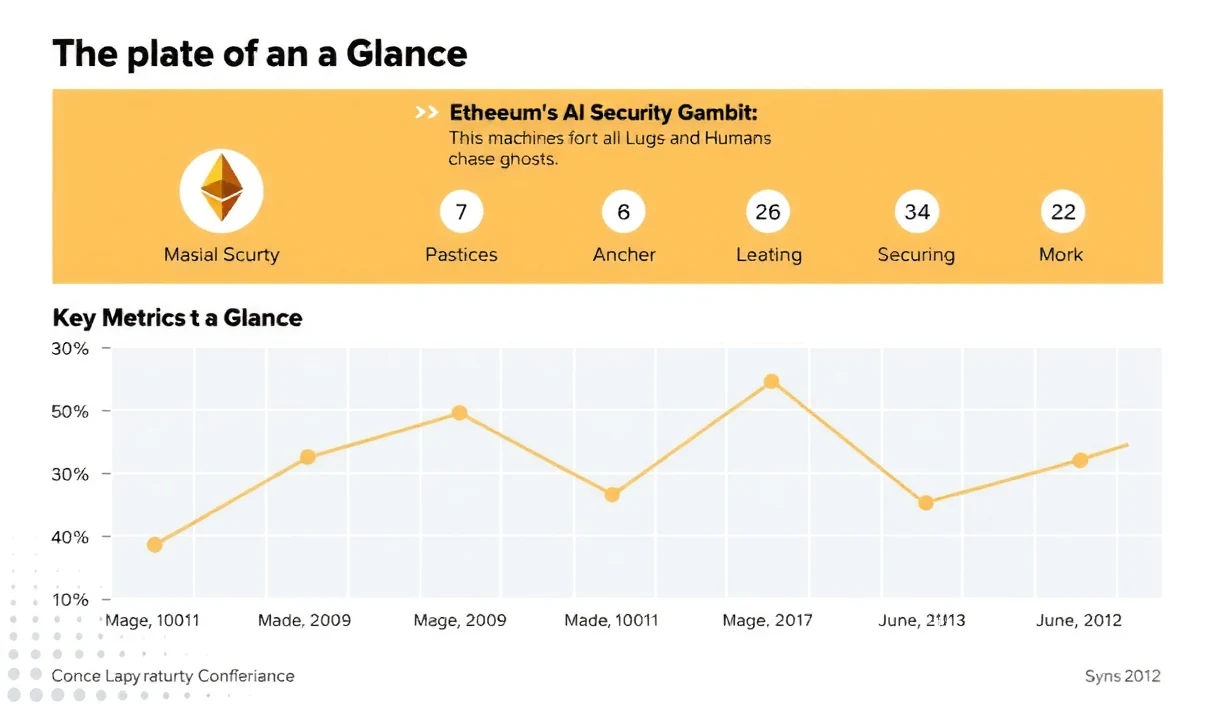
Key Metrics at a Glance
| Metric | Current | Post-DS Target | Reduction |
|---|---|---|---|
| Full Node Storage | ~1.2 TB | ~50 GB | 96% |
| State Growth Rate | 50-70 GB/year | 2-3 GB/year | 95% |
| Validator Entry Cost | $3,000-$5,000 | $200-$500 | 90% |
| Sync Time (Full) | 12-48 hours | 2-4 hours | 80% |
| Network Bandwidth | 15-20 Mbps | 5-8 Mbps | 60% |
| Implementation Complexity | N/A | Very High | N/A |
The Proprietary State Distribution Risk Score (SDRS)
I've developed a framework to evaluate whether distributing Ethereum's state creates more problems than it solves:
Formula: SDRS = (Data Availability Risk × 0.3) + (Coordination Overhead × 0.25) + (Verification Complexity × 0.25) + (Recovery Difficulty × 0.2)
Decentralized State Assessment:
| Factor | Score | Analysis |
|---|---|---|
| Data Availability Risk | 7/10 | Storage nodes can go offline; state segments become inaccessible |
| Coordination Overhead | 8/10 | Proof-of-storage, reconstruction, and Verkle proofs add significant complexity |
| Verification Complexity | 7/10 | Validators must verify proofs rather than direct state; new failure modes |
| Recovery Difficulty | 6/10 | State reconstruction requires sufficient online nodes; edge cases untested |
| Total SDRS | 7.0/10 | High risk profile; benefits may not justify complexity |
A score above 6.0 indicates that the proposed architecture introduces significant new risks that must be thoroughly addressed before mainnet deployment. At 7.0, Decentralized State sits at the upper bound of acceptable risk for a research proposal.
The Three Uncomfortable Questions
The research paper is technically sophisticated, but it raises three questions that the authors do not fully answer:
Question 1: Is the Problem Real?
Ethereum's state growth is a genuine concern. But the current trajectory does not price out validators in the near term. A validator with 2 TB of storage costs roughly $3,000-$5,000 to set up—expensive, but not prohibitive for someone staking $100,000+ in ETH. The paper assumes that state growth will accelerate exponentially, but historical data shows linear growth that SSD technology has largely kept pace with.
Question 2: Who Holds the State?
Decentralized State creates a new actor class: storage nodes. These nodes are not validators—they do not stake, do not propose blocks, and do not earn rewards. The paper proposes a token-incentivized model, but Ethereum has no native mechanism to reward storage. Creating one would require economic changes that the research does not model in detail.
Question 3: What Happens When Proof Fails?
Verkle trees are elegant cryptography. But what happens when a validator receives an invalid proof? Or when a storage node serves an outdated state segment? The paper proposes slashing mechanisms, but slashing requires attribution, and attribution in a distributed storage network is non-trivial. The researchers acknowledge these questions but defer detailed analysis to future work.
Competitive Landscape: State Management Approaches
| Approach | Chain | State Storage | Validator Requirements | Maturity |
|---|---|---|---|---|
| Full State (Current) | Ethereum | All nodes | ~1.2 TB | Production |
| Statelessness | Ethereum (proposed) | None (via witnesses) | ~50 GB | Research |
| Decentralized State | Ethereum (proposed) | Distributed nodes | ~50 GB | Early research |
| Archival Sharding | Near | Split across shards | ~200 GB | Production |
| State Rent | Various (proposed) | Pay for storage | Variable | Abandoned |
Ethereum's competitors have taken different approaches. Near uses archival sharding. Solana accepts that validators need significant hardware. Avalanche uses subnets to partition state. None have fully solved the state growth problem, and the research paper does not explain why Decentralized State would succeed where State Rent failed.

Scenario Analysis: Three Futures for Ethereum State
Scenario A: Hardware Keeps Pace (40% probability)
- SSD prices continue declining (currently ~$40/TB)
- State growth remains linear at 50-70 GB/year
- Full validation remains accessible on <$5,000 hardware
- Decentralized State remains research curiosity; Verkle trees ship without DS
Scenario B: Verkle-Only (35% probability)
- Verkle trees are implemented for state commitments
- Validators verify proofs but still hold full state
- Statelessness is achieved for light clients but not validators
- Decentralized State is deferred; state growth managed through pruning
Scenario C: Full Decentralized State (25% probability)
- State partitioning is implemented as planned
- Storage node network emerges with economic incentives
- Validator requirements drop to consumer hardware levels
- New failure modes emerge: proof unavailability, reconstruction attacks, storage cartels
The Bottom Line
The Decentralized State research is technically interesting and intellectually honest. The authors acknowledge open questions, quantify trade-offs, and do not oversell their proposal. But the paper also illustrates a pattern in Ethereum research: solving tomorrow's problem with today's assumptions.
The state growth problem is real. But it is not urgent. Ethereum validators can still afford full nodes. SSD technology is outpacing state growth. And the Decentralized State proposal introduces complexity—distributed storage, proof-of-storage mechanisms, reconstruction protocols—that rivals The Merge in coordination requirements.
The researchers are asking the right questions. But the answer may be simpler than their architecture: wait for hardware to catch up, implement Verkle trees for efficiency, and defer distributed state until the problem is actually acute.
Ethereum does not need a revolution in state management. It needs patience. And patience is the one resource that research papers cannot generate.
TL;DR
- What: Ethereum researchers proposed Decentralized State (DS) to distribute state trie across storage nodes, reducing validator requirements from ~1.2 TB to ~50 GB
- The Score: State Distribution Risk Score of 7.0/10 reveals high complexity with unproven data availability and recovery mechanisms
- The Question: State growth is linear, not exponential; hardware costs are declining; the problem DS solves may not be urgent
- The Comparison: Verkle trees alone (without DS) offer most efficiency benefits with dramatically less complexity
- Outlook: Most likely (40%) is that hardware keeps pace and DS remains research; Verkle-only solution (35%) is the practical path
Sources
- Ethereum Research Forum - Decentralized State Paper - August 2026 research publication
- Ethereum Foundation - Verkle Trees Documentation - Official Verkle tree roadmap
- Beacon Chain Data - Current state size and validator statistics
- SSD Price Trends - Historical storage cost analysis
- Near Protocol Sharding - Alternative state partitioning approach
- Solana Validator Requirements - High-hardware validator model
Zain Tran is TotesTek's Ethereum Ecosystem Columnist & Accountability Reporter. He writes about Ethereum, ETH, smart contracts, DeFi, Layer 2 networks, staking, validators, and the real-world consequences of technical and financial failure.
Related Posts
-

How Polkadot Proof of Personhood Works: Recognition Games and Ring-VRF Privacy
I have watched the same Twitter account post the same conspiracy theory under three different handles in the same thread. I have seen bot farms amplify political messages until the platform itself could not distinguish organic from artificial engagement. And I have watched develo
-

Polkadot Statement Store: How Decentralized Messaging Works Without a Blockchain
I sat through the Web3 Summit presentation in Berlin last month waiting for the usual blockchain pitch. Instead, Parity Technologies demoed something genuinely different: a messaging protocol that does not write anything to a blockchain, does not rely on a central server, and sti
-

Why Polkadot is Not Just Another Blockchain: Architecture, Security, and Interoperability
I have watched builders evaluate Layer 1 chains for years, and the conversation usually follows the same pattern. Transactions per second. Finality time. Token price. The assumption is that blockchains are essentially interchangeable, differentiated only by speed and cost. That a
-

The Hidden Philosophy Behind Polkadot's Design: Products for People, Not Platforms
I have read a lot of blockchain whitepapers. Most of them open with technical abstractions: consensus mechanisms, throughput numbers, token economics. Very few begin with the question that actually matters: who is this for? Polkadot's philosophy page on polkadot.com answers that