

U.S. Attorney's Office EDNC Announces Seizure of $61 Million in Cryptocurrency Linked to Pig Butchering Investment Scam
DOJ Eastern District of North Carolina seized over $61 million in Tether from addresses allegedly associated with pig butchering romance scams, marking one of the largest cryptocurrency recoveries tied to this fraud type.

The Department of Justice's Eastern District of North Carolina announced on February 24, 2026, the seizure of over $61 million worth of Tether cryptocurrency from addresses allegedly associated with pig butchering investment scams. The seizure represents one of the largest cryptocurrency recoveries tied to romance-based fraud schemes in American law enforcement history.
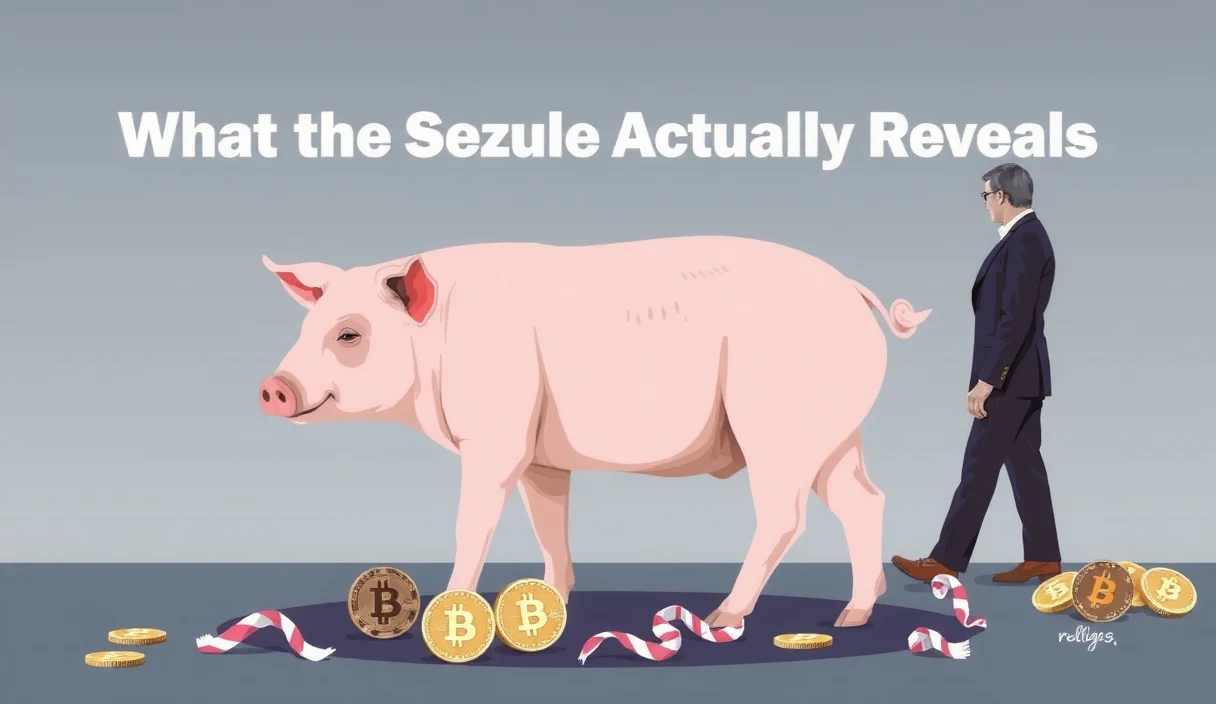
Pig butchering scams follow a distinctive pattern. Criminals build trust with victims through fake romantic relationships, typically initiated on dating applications or social media platforms. After establishing emotional connection, the fraudsters introduce victims to seemingly legitimate trading platforms that are actually controlled by the scam operators. Victims invest increasing amounts, encouraged by fabricated gains, until the platform suddenly freezes withdrawals or disappears entirely. The term "pig butchering" derives from the Chinese phrase for fattening a pig before slaughter — the scammer "fattens" the victim's account before stealing everything.
Key Metrics at a Glance
| Metric | Detail |
|---|---|
| Announcement Date | February 24, 2026 |
| Seizing Agency | U.S. Attorney's Office, Eastern District of North Carolina |
| Investigating Agency | Homeland Security Investigations |
| Amount Seized | $61 million (USDT) |
| Scam Type | Pig butchering / Romance-based investment fraud |
| Cryptocurrency | Tether (USDT) |
| Status | Civil forfeiture proceedings initiated |

What the Seizure Actually Reveals
The $61 million seizure exposes several features of modern crypto fraud that distinguish it from traditional financial crime. First, the concentration of value in stablecoins rather than volatile cryptocurrencies indicates sophisticated operational planning. Unlike Bitcoin, which fluctuates dramatically, Tether maintains a stable dollar peg that allows scammers to calculate and preserve victim investments without market risk complicating their bookkeeping.
Second, the seizure was conducted through blockchain tracing rather than traditional account freezing. Tether operates on multiple blockchains including Ethereum, Tron, and Solana. Law enforcement traced transactions across these networks, identifying addresses controlled by the scam operators and working with exchanges to freeze associated accounts. The technical sophistication required demonstrates that blockchain analysis capabilities have matured significantly since early crypto investigations.
Third, the scale of the seizure — $61 million from a single investigation — suggests organized criminal networks rather than isolated operators. Pig butchering scams require substantial infrastructure: fake trading platforms, social media personas, customer service operations to maintain victim engagement, and money laundering channels to convert cryptocurrency into fiat currency. Individual scammers cannot sustain this infrastructure alone.
Fourth, the geographic concentration in the Eastern District of North Carolina reflects Homeland Security Investigations' specialized cybercrime capabilities rather than any particular regional prevalence of victims. The investigation likely originated from victim reports across multiple jurisdictions, with EDNC serving as the prosecutorial hub due to technical expertise and interagency coordination capacity.
The Market Structure Implications
The seizure creates implications for three categories of market participants: stablecoin issuers, exchanges, and potential victims.
On stablecoin issuers, the seizure highlights the tension between decentralization ideals and centralized control. Tether Limited, the company behind USDT, maintains the ability to freeze addresses associated with illicit activity. This capability is essential for law enforcement effectiveness but contradicts the censorship-resistance principles that attract many crypto users. The seizure will likely intensify debate about whether stablecoins should incorporate freezing capabilities and under what circumstances issuers should exercise them.
On exchanges, the seizure demonstrates the effectiveness of transaction monitoring and know-your-customer systems when properly implemented. The scam operators eventually needed to convert Tether to fiat currency, requiring exchange interaction. Exchanges that have implemented robust chain tracing and compliance systems can identify and report suspicious patterns. The seizure rewards compliant exchanges while creating pressure on less rigorous platforms.
On potential victims, the seizure provides a measure of accountability but limited financial recovery. Civil forfeiture proceedings allow the government to claim seized assets, but victim restitution requires separate proceedings that may recover only fractions of total losses. The $61 million seizure represents a small fraction of estimated pig butchering losses, which the FBI estimates at billions of dollars annually.

What Remains Unresolved
The seizure leaves several questions open. First, the ultimate disposition of seized assets remains uncertain. Civil forfeiture allows the government to keep property connected to criminal activity, but victims may file claims seeking restitution. The allocation between government retention and victim recovery will be determined through judicial proceedings that could take years.
Second, the seizure does not address the international dimension of pig butchering operations. Many scam networks operate from Southeast Asia, particularly Cambodia, Myanmar, and Laos, where organized crime syndicates run industrial-scale fraud compounds. American law enforcement can seize assets within U.S. jurisdiction but cannot directly dismantle overseas operations.
Third, the seizure raises questions about Tether's role in facilitating fraud. Critics argue that Tether's opacity about reserves and redemption processes makes it attractive to criminal operators seeking stable value storage outside traditional banking. Tether has enhanced compliance measures in recent years, but the seizure demonstrates that significant volumes of fraudulent activity continue to use the stablecoin.
TL;DR
- What: DOJ Eastern District of North Carolina seizes $61 million in Tether linked to pig butchering romance scams, one of largest crypto fraud recoveries in U.S. history
- Why: Demonstrates maturation of blockchain tracing capabilities; exposes organized criminal networks behind romance-based fraud; highlights stablecoin concentration in modern scams
- Impact: Rewards compliant exchanges with robust monitoring; intensens debate about stablecoin freezing capabilities; provides limited victim recovery despite large seizure
- Watch: Asset disposition between government and victims; international enforcement against Southeast Asian fraud compounds; Tether compliance enhancements and transparency
Sources
Filip Peshko is Senior Opinion Columnist & Blockchain Technology Analyst at TotesTek. He writes about Bitcoin, blockchain technology, crypto markets, Web3 infrastructure, digital asset custody, institutional adoption, and legislation affecting the crypto industry.
Related Posts
-

White House Integrates Financial Technology Innovation into Regulatory Frameworks
The White House published a fact sheet on May 19, 2026, outlining President Trump's initiative to integrate financial technology innovation into federal regulatory frameworks. The announcement represents the most comprehensive executive-level statement on digital asset policy sin
-

CFTC Seeks Public Comment on Proposed Rule Changes for Commodity Pool Operator and Commodity Trading Advisor Registration
The Commodity Futures Trading Commission published Release 9284-26 on August 18, 2026, seeking public comments on proposed amendments to registration requirements for commodity pool operators and commodity trading advisors. The proposed changes aim to reduce duplicative oversight
-

The Dogecoin Perpetual Future Is Here, and Nobody Asked the Dog
There is a moment in every financial bubble when the grown-ups arrive with spreadsheets. For Dogecoin, that moment came this week when Bitnomial Exchange filed a self-certification with the Commodity Futures Trading Commission to list Dogecoin perpetual futures. A memecoin born f
-

Treasury Issues Request for Comment on GENIUS Act Implementation for Stablecoin Regulation
The U.S. Department of the Treasury issued a Request for Comment on August 12, 2026, to fulfill its obligation under section 9(a) of the Guiding and Establishing National Innovation for U.S. Stablecoins Act — the GENIUS Act. The request initiates a 90-day public comment period th