

White House Integrates Financial Technology Innovation into Regulatory Frameworks
The White House issued a fact sheet outlining President Trump's initiative to integrate financial technology innovation into federal regulatory frameworks, addressing digital assets, blockchain technologies, and modernizing oversight structures.

The White House published a fact sheet on May 19, 2026, outlining President Trump's initiative to integrate financial technology innovation into federal regulatory frameworks. The announcement represents the most comprehensive executive-level statement on digital asset policy since the administration took office, addressing blockchain technologies, digital assets, and the modernization of oversight structures for emerging financial technologies.
The fact sheet arrives at a critical moment in American crypto policy. After years of regulatory ambiguity that pushed innovation offshore and created compliance confusion for domestic firms, the administration is attempting to establish a coherent framework that balances innovation encouragement with consumer protection. Whether the initiative succeeds depends on implementation details that remain largely unspecified.
Key Metrics at a Glance
| Metric | Detail |
|---|---|
| Publication Date | May 19, 2026 |
| Issuing Office | White House Fact Sheet |
| Policy Focus | Financial technology, digital assets, blockchain |
| Key Themes | Regulatory modernization, innovation integration, competitiveness |
| Implementation | Agency-level guidance and rulemaking |
| Coordinating Body | White House Office of Science and Technology Policy |
What the Initiative Actually Proposes
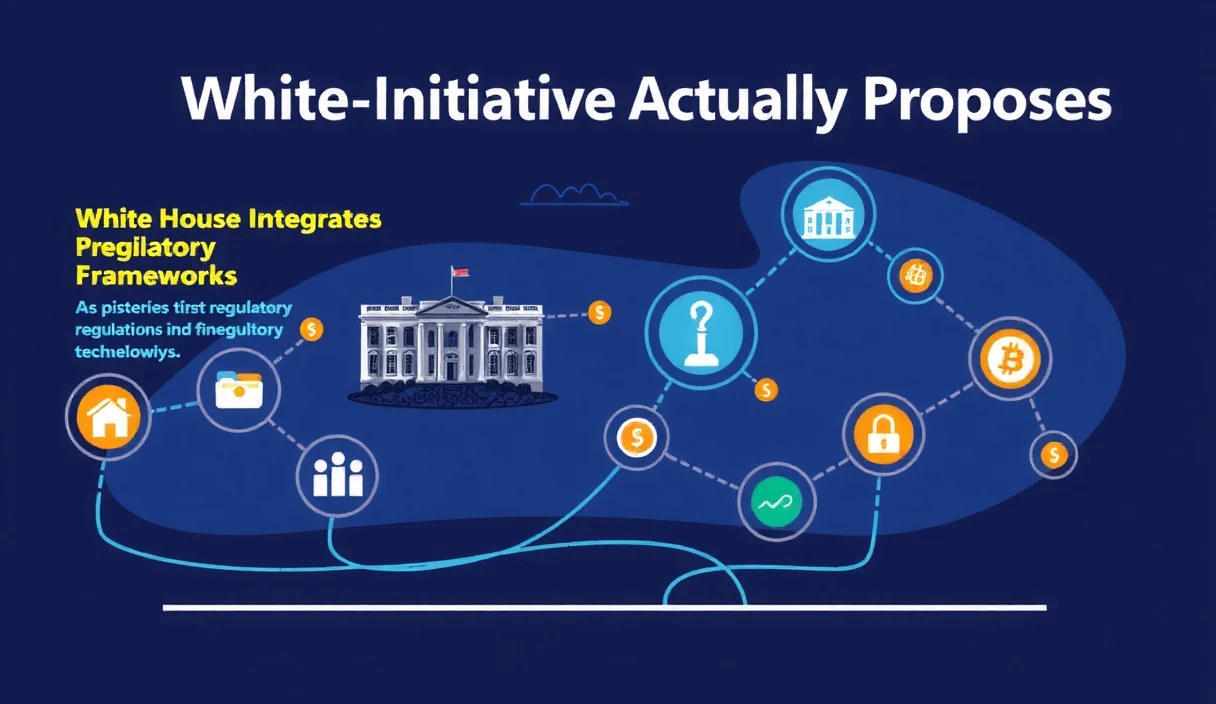
The White House fact sheet outlines five pillars of regulatory modernization. First, it directs federal agencies to review existing regulations for financial technology compatibility, identifying provisions that inadvertently impede innovation or create compliance burdens disproportionate to risk. The review encompasses the SEC, CFTC, Treasury, Federal Reserve, FDIC, and OCC, with agency heads required to submit recommendations within 120 days.
Second, the initiative establishes a Financial Technology Innovation Council within the White House Office of Science and Technology Policy. The council will coordinate interagency policy development, resolve jurisdictional disputes between regulators, and provide a centralized point of contact for industry participants seeking clarity on cross-cutting regulatory questions. The council's composition includes representatives from each major financial regulator plus technology policy experts.
Third, the fact sheet directs Treasury to develop a comprehensive framework for stablecoin regulation in consultation with the Federal Reserve and state banking supervisors. This directive effectively supersedes earlier ad hoc approaches to stablecoin oversight, creating a unified federal standard that would replace the current patchwork of state-level money transmitter licenses and informal federal guidance.
Fourth, the initiative addresses blockchain infrastructure directly, directing the Commerce Department to develop standards for blockchain interoperability and data portability. The standards would address a persistent fragmentation problem in the crypto ecosystem: assets and data locked on incompatible blockchains, creating inefficiencies and counterparty risks.
Fifth, the fact sheet establishes an international coordination component, directing the State Department and Treasury to engage with foreign counterparts on harmonized regulatory standards. The administration explicitly frames this as a competitiveness measure, noting that fragmented global regulation creates advantages for jurisdictions with clearer rules.
The Market Structure Implications
The initiative creates implications for three categories of market participants: domestic crypto firms, traditional financial institutions, and international competitors.
On domestic crypto firms, the regulatory clarity promise addresses a longstanding grievance. American crypto companies have complained for years that regulatory ambiguity forces them to operate under legal risk or relocate to more certain jurisdictions. The initiative does not immediately resolve specific questions — whether particular tokens are securities, how DeFi protocols should register, what custody standards apply — but it creates a process that could produce answers faster than the current enforcement-driven approach.
On traditional financial institutions, the initiative signals administration support for banks and broker-dealers seeking to offer crypto services. The fact sheet explicitly mentions "leveling the playing field" between traditional and crypto-native financial services, suggesting that regulators may be directed to treat similar activities similarly regardless of whether they use blockchain infrastructure.
On international competitors, the initiative frames American regulatory leadership as an economic competitiveness issue. The administration notes that the European Union's Markets in Crypto-Assets framework and the United Kingdom's FCA registration regime have attracted firms that might otherwise domicile in the United States. Whether the initiative produces sufficiently clear rules to reverse that trend remains to be seen.
What Remains Unresolved
The fact sheet leaves several critical questions open. First, it does not specify how jurisdictional disputes between agencies will be resolved. The SEC and CFTC have disagreed for years about which digital assets fall under their respective jurisdictions. The Financial Technology Innovation Council is tasked with coordinating policy, but it lacks statutory authority to compel regulatory action or override agency determinations.
Second, the initiative does not address the status of enforcement actions already initiated under prior regulatory interpretations. Firms facing SEC enforcement for unregistered token offerings or CFTC actions for unregistered derivatives platforms cannot assume the initiative provides retroactive protection. The administration has not indicated whether it will direct agencies to suspend pending enforcement actions pending new rulemaking.
Third, the timeline for implementation remains vague. The 120-day agency review deadline provides a near-term milestone, but the rulemaking process that would follow could take months or years. The fact sheet does not commit to specific implementation deadlines for stablecoin regulation, blockchain standards, or international coordination.
TL;DR
- What: White House fact sheet outlines five-pillar initiative to integrate fintech innovation into regulatory frameworks, including agency review, interagency coordination council, stablecoin framework, blockchain standards, and international harmonization
- Why: Addresses regulatory ambiguity that has pushed innovation offshore; frames American regulatory leadership as competitiveness issue
- Impact: Could provide clarity for domestic crypto firms; signals support for traditional institutions entering crypto; creates process but not immediate answers
- Watch: How jurisdictional disputes between SEC and CFTC are resolved; status of pending enforcement actions; implementation timelines for stablecoin regulation and blockchain standards
Sources
- White House Fact Sheet
- White House Office of Science and Technology Policy
- Treasury Department Digital Asset Policy
Filip Peshko is Senior Opinion Columnist & Blockchain Technology Analyst at TotesTek. He writes about Bitcoin, blockchain technology, crypto markets, Web3 infrastructure, digital asset custody, institutional adoption, and legislation affecting the crypto industry.
Related Posts
-

U.S. Attorney's Office EDNC Announces Seizure of $61 Million in Cryptocurrency Linked to Pig Butchering Investment Scam
The Department of Justice's Eastern District of North Carolina announced on February 24, 2026, the seizure of over $61 million worth of Tether cryptocurrency from addresses allegedly associated with pig butchering investment scams. The seizure represents one of the largest crypto
-

CFTC Seeks Public Comment on Proposed Rule Changes for Commodity Pool Operator and Commodity Trading Advisor Registration
The Commodity Futures Trading Commission published Release 9284-26 on August 18, 2026, seeking public comments on proposed amendments to registration requirements for commodity pool operators and commodity trading advisors. The proposed changes aim to reduce duplicative oversight
-

The Dogecoin Perpetual Future Is Here, and Nobody Asked the Dog
There is a moment in every financial bubble when the grown-ups arrive with spreadsheets. For Dogecoin, that moment came this week when Bitnomial Exchange filed a self-certification with the Commodity Futures Trading Commission to list Dogecoin perpetual futures. A memecoin born f
-

Treasury Issues Request for Comment on GENIUS Act Implementation for Stablecoin Regulation
The U.S. Department of the Treasury issued a Request for Comment on August 12, 2026, to fulfill its obligation under section 9(a) of the Guiding and Establishing National Innovation for U.S. Stablecoins Act — the GENIUS Act. The request initiates a 90-day public comment period th