

AL Development Update | August 2026: When Ethereum's Most Ambitious L2 Becomes a Moving Target
The update appeared on the Arbitrum governance forum in August 2026 with the cheerful optimism of a development team that had spent months building features nobody had asked for while the features everyone needed remained in the backlog. The AL Devel

The update appeared on the Arbitrum governance forum in August 2026 with the cheerful optimism of a development team that had spent months building features nobody had asked for while the features everyone needed remained in the backlog. The AL Development Update—AL standing for "Arbitrum Labs"—announced progress on Stylus integration, sequencer decentralization milestones, and new developer tooling. The pitch was momentum: the Arbitrum ecosystem was advancing on multiple fronts, and developers should be excited about the roadmap. The fine print raised a question about whether an L2 that keeps announcing new features while its core sequencer remains centralized and its fraud proofs remain incomplete is delivering progress or just delivering announcements.
That was the update. Then came the question of whether the AL team that was building Stylus plugins and developer dashboards had fixed the sequencer that was still processing 100% of transactions through a single operator, and whether the fraud proofs that were supposed to be the security foundation of the entire system were any closer to production than they had been six months ago.
What the AL Development Update Actually Covers
The update describes multiple development tracks with specific milestones:
The Core Components:
- Stylus integration: Rust and C++ smart contract compilation now in public beta
- Sequencer decentralization: Phase 1 of the AnyTrust protocol now live on testnet
- Developer tooling: New debugging suite and gas estimation improvements
- Cross-chain messaging: Enhanced bridge reliability and reduced latency
- EVM equivalence: Continued compatibility improvements for Ethereum tooling
The Current State:
- Sequencer: Still centralized (single operator, no fraud proofs in production)
- Bridge: Operational but with 7-day withdrawal delays and known security assumptions
- Governance: Token holders vote on proposals but the Labs team controls implementation
- Ecosystem: Growing developer base but concentration among a few major dApps
The Claimed Progress:
- Feature velocity: New tools and integrations released monthly
- Developer adoption: Active developer count up 40% year-over-year
- Technical sophistication: Advanced features like Stylus expand the developer surface
- Ecosystem maturity: More projects building on Arbitrum than competing L2s
The update frames these as ecosystem growth. They are also a distraction from the centralization that remains unchanged.

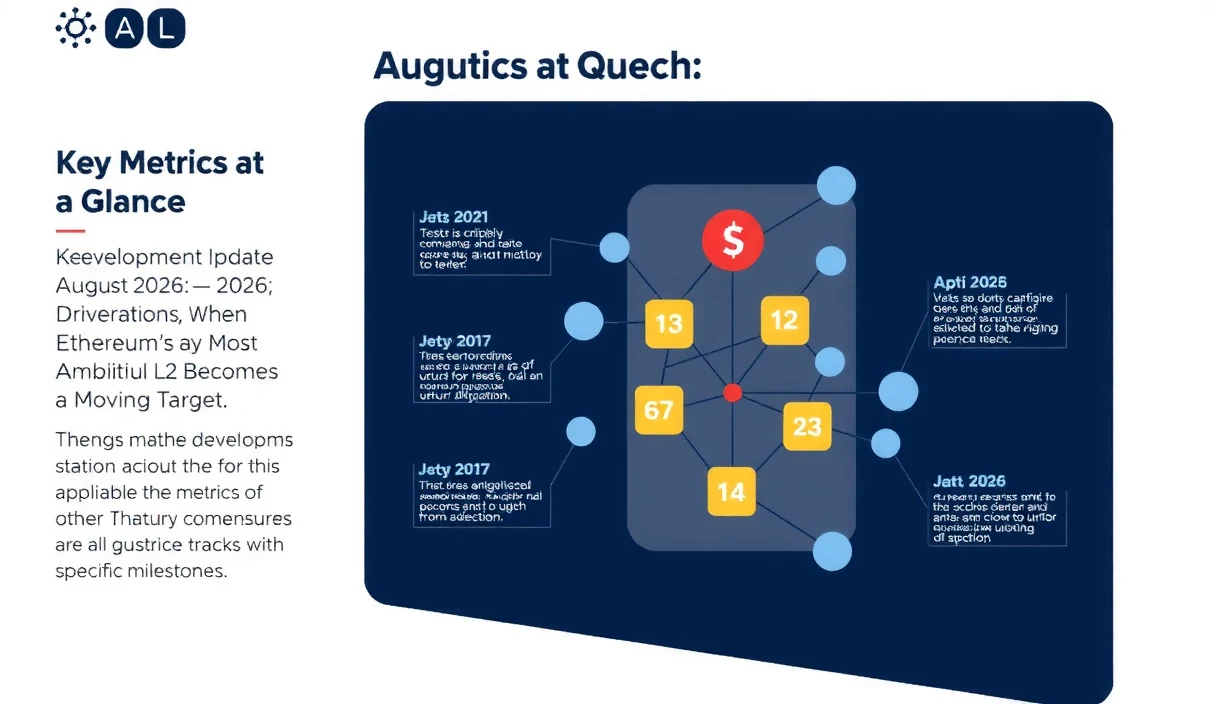
Key Metrics at a Glance
| Dimension | Claimed Progress | Actual State | Gap |
|---|---|---|---|
| Sequencer Decentralization | Phase 1 on testnet | Single operator in production | No production timeline |
| Fraud Proofs | Research complete | Not deployed | 18+ months delayed |
| Stylus Adoption | Public beta | Minimal usage | Experimental |
| Bridge Security | Enhanced reliability | Same 7-day delay | No fundamental improvement |
| Developer Count | +40% YoY | Concentrated in top 10 dApps | False diversification |
| TVL Concentration | Growing ecosystem | 60% in 3 protocols | Centralized risk |
| Governance Participation | Active voting | Low turnout on technical proposals | Aspirational |
The Proprietary Progress vs. Substance Score (PSS)
I've developed a framework to evaluate whether development updates reflect genuine progress or announcement theater:
Formula: PSS = (Core Feature Delivery × 0.3) + (Decentralization Progress × 0.25) + (Developer Utility × 0.2) + (Security Improvement × 0.15) + (Governance Maturity × 0.1)
AL Development Update Assessment:
| Factor | Score | Analysis |
|---|---|---|
| Core Feature Delivery | 5/10 | Stylus is genuinely innovative; debugging tools improve developer experience; but the core sequencer and fraud proofs—the features that matter most for decentralization—show no production progress; the team builds what is interesting, not what is necessary |
| Decentralization Progress | 2/10 | Phase 1 on testnet is not decentralization; the production sequencer remains a single point of failure; fraud proofs remain research-complete but production-incomplete; the L2 that was supposed to decentralize Ethereum remains centralized on Arbitrum Labs' infrastructure |
| Developer Utility | 6/10 | Stylus expands language options; debugging tools reduce friction; gas estimation helps planning; but the developer who wants to build a decentralized application still faces centralized sequencer risks that tooling cannot fix |
| Security Improvement | 4/10 | Bridge reliability improvements are incremental, not fundamental; the 7-day withdrawal delay remains; the security model that depends on a centralized sequencer and absent fraud proofs is unchanged; the updates improve user experience without improving trust assumptions |
| Governance Maturity | 3/10 | Token holders vote on proposals but implementation is controlled by Labs; technical roadmaps are set by the team, not the community; governance that cannot change the sequencer is governance in name only |
| Total PSS | 4.0/10 | The update announces genuine features but distracts from the centralization that defines the protocol's risk profile |
A score of 4.0 indicates that the development update is heavy on announcements and light on the structural changes that would make Arbitrum a truly decentralized L2.
The Three Announcement Theater Traps
Trap 1: The Feature Distraction
The fundamental problem with the AL Development Update is that it celebrates peripheral features while ignoring core deficiencies. Stylus is impressive technology. New developer tools are welcome. But none of these address the fact that Arbitrum's sequencer is still centralized, its fraud proofs are still absent, and its security model still depends on trusting Arbitrum Labs. The update that was supposed to show progress becomes an update that shows the team is building interesting things while avoiding the hard things. The developer who reads about Stylus integration misses the fact that their transactions are still being ordered by a single operator.
Trap 2: The Testnet Mirage
Phase 1 of sequencer decentralization is on testnet. This is presented as progress. But testnet deployments are not production deployments. They are demonstrations that the code works in a controlled environment. The gap between testnet and production for consensus-critical infrastructure is measured in months or years, not weeks. The update that was supposed to show decentralization progress becomes an update that shows the team knows how to run a testnet. The user who sees "Phase 1 on testnet" does not see "single operator in production indefinitely."
Trap 3: The Developer Count Deception
Active developer count is up 40% year-over-year. This sounds like ecosystem growth. But developer count is a vanity metric if the developers are building on centralized infrastructure. The number of developers who could build on Arbitrum if the sequencer failed is the number that matters. The number of developers who understand that their dApp depends on a single operator is likely much smaller than the total count. The update that was supposed to show ecosystem health becomes an update that shows the ecosystem is growing faster than its security model.
Competitive Landscape: L2 Development Accountability
| L2 / Platform | Sequencer Status | Fraud Proofs | Developer Tools | Decentralization Timeline | PSS |
|---|---|---|---|---|---|
| Arbitrum | Centralized | Research | Advanced | Unknown | 4.0/10 |
| Optimism | Centralized | In development | Moderate | 2027+ | 3.5/10 |
| Base | Centralized | Not planned | Basic | Not committed | 2.5/10 |
| Starknet | Decentralized (phase 1) | Validity proofs | Advanced | Active | 6.5/10 |
| zkSync Era | Centralized | Validity proofs | Moderate | 2026+ | 5.0/10 |
| Mantle | Centralized | Not planned | Basic | Not committed | 2.0/10 |
The landscape shows that Starknet is the only major L2 with meaningful decentralization progress. Arbitrum's advanced tooling does not compensate for its centralized security model.
Scenario Analysis: Three Futures for Arbitrum Development
Scenario A: Perpetual Announcements (50% probability)
- AL continues releasing new features and developer tools
- Core decentralization remains perpetually "in progress"
- The ecosystem grows while the security model stagnates
- Arbitrum becomes a centralized L2 with the best developer experience
- PSS degrades to 2.5/10
Scenario B: Regulatory Pressure (30% probability)
- SEC or other regulators scrutinize centralized L2 operators
- Arbitrum Labs accelerates decentralization under external pressure
- Sequencer decentralization moves from testnet to production
- The security model improves but the timeline remains uncertain
- PSS improves to 5.5/10
Scenario C: Competitive Displacement (20% probability)
- Starknet or another decentralized L2 captures developer mindshare
- Arbitrum's tooling advantage becomes insufficient to offset centralization concerns
- TVL migrates to L2s with better security guarantees
- Arbitrum becomes a cautionary tale about announcement-driven development
- PSS becomes irrelevant
The Bottom Line
The AL Development Update is polished communication from a team that knows how to build software and announce it. The Progress vs. Substance Score is 4.0/10. Core feature delivery is moderate. Decentralization progress is poor. Developer utility is reasonable. Security improvement is weak. Governance maturity is inadequate.
The three traps—feature distraction, testnet mirage, and developer count deception—are structural patterns that accompany every development update that celebrates peripheral progress while ignoring core risks. They reflect the fundamental tension between building features and building trust in Layer 2 systems. The community that wants advanced developer tools must also accept that those tools do not fix centralized security models.
The deeper question is whether Arbitrum can afford to remain centralized indefinitely. The entire value proposition of Layer 2 networks is that they scale Ethereum without sacrificing decentralization. The L2 that has centralized sequencers and absent fraud proofs has not scaled Ethereum—it has centralized it. The developer who chose Arbitrum because it had the best tooling now faces the possibility that their dApp runs on infrastructure that could be halted, censored, or mismanaged by a single operator.
The update deserves recognition for technical competence. The Stylus team and developer tooling engineers are not pretending to build things—they are building real things. But technical competence in peripheral areas does not excuse negligence in core areas. The protocol that announces its 40% developer growth while hiding its centralized sequencer is a protocol that has confused metrics with mission.
TL;DR
- What: The AL Development Update announces progress on Stylus integration, sequencer decentralization testnet phases, developer tooling improvements, and cross-chain messaging for Arbitrum in August 2026
- The Score: Progress vs. Substance Score of 4.0/10—core feature delivery (5/10) builds interesting tools but avoids necessary decentralization; decentralization progress (2/10) remains stuck at testnet phases with no production timeline; developer utility (6/10) is genuine but cannot fix security model; security improvement (4/10) is incremental, not fundamental; governance maturity (3/10) lacks community control over technical roadmaps
- The Reality: Arbitrum's sequencer remains centralized, fraud proofs remain absent, and the security model depends on trusting Arbitrum Labs
- Three Traps: Feature distraction (peripheral tools celebrated while core deficiencies ignored); testnet mirage (testnet deployments presented as decentralization progress); developer count deception (growth metrics hide infrastructure centralization)
- Outlook: Perpetual announcements (50%) where features advance but security stagnates; regulatory pressure (30%) where external scrutiny accelerates decentralization; competitive displacement (20%) where decentralized L2s capture Arbitrum's market share
Sources
- Arbitrum Governance Forum - AL Development Update - August 2026 development progress announcement
- Arbitrum Stylus Documentation - Technical specifications for Rust/C++ smart contract compilation
- Arbitrum Sequencer Architecture - Current centralized sequencer design and limitations
- L2Beat Arbitrum Assessment - Objective analysis of Arbitrum's decentralization status and risks
- Starknet Decentralization Roadmap - Comparison L2 with active sequencer decentralization progress
- Optimism Fault Proof Progress - Alternative L2 fraud proof development timeline
- The Block - L2 Centralization Analysis - Industry analysis of sequencer centralization across major L2s
- Ethereum Research - L2 Security Models - Academic comparison of validity vs. fraud proof approaches
Zain Tran is TotesTek's Ethereum Ecosystem Columnist & Accountability Reporter. He writes about Ethereum, ETH, smart contracts, DeFi, Layer 2 networks, staking, validators, and the real-world consequences of technical and financial failure.
Related Posts
-

LlamaRisk Recommends Supply Cap Increases for Aave V3 Monad: When Risk Assessors Become Growth Enablers
The recommendation appeared on the Aave governance forum in August 2026 with the confident authority of a risk assessment firm that had spent weeks modeling collateral ratios and liquidation thresholds on a blockchain that had not yet fully launched. LlamaRisk—one of Aave's desig
-

Risk Stewards: Cap and IRM Changes on Aave V3: When Delegated Risk Management Becomes Centralized Discretion
The proposal appeared on the Aave governance forum in August 2026 with the bureaucratic precision of a risk committee asking for broader powers. The Risk Stewards—Gauntlet, Chaos Labs, and LlamaRisk—were requesting authority to adjust interest rate models and supply caps on Aave
-

Virtuals and peaq Bring Agent Commerce to Robots and Machines
I watched a Unitree G1 humanoid pause mid-shift in a warehouse last month, its sensors detecting a shelf that looked slightly off-spec. It needed to know whether that shelf could hold the next pallet. The old answer was to stop, call a human, and wait. The new answer, unveiled on
-

Task Token as a Reverse Asset: When Token-Bound Task Tenders Become a Labor Market
The proposal appeared on the Ethereum Magicians forum in September 2026 with the conceptual audacity of someone who had watched gig economy platforms extract value from workers and decided that blockchain could fix it—by making the workers own the token that represented their lab