

Ethereum Foundation Updates Protocol Roadmap for Late 2026 and Beyond
Ethereum.org has refreshed its official protocol roadmap documentation, outlining the upgrade path including Glamsterdam and future hard forks, with updated timelines for scaling, security, and usability improvements across the network.
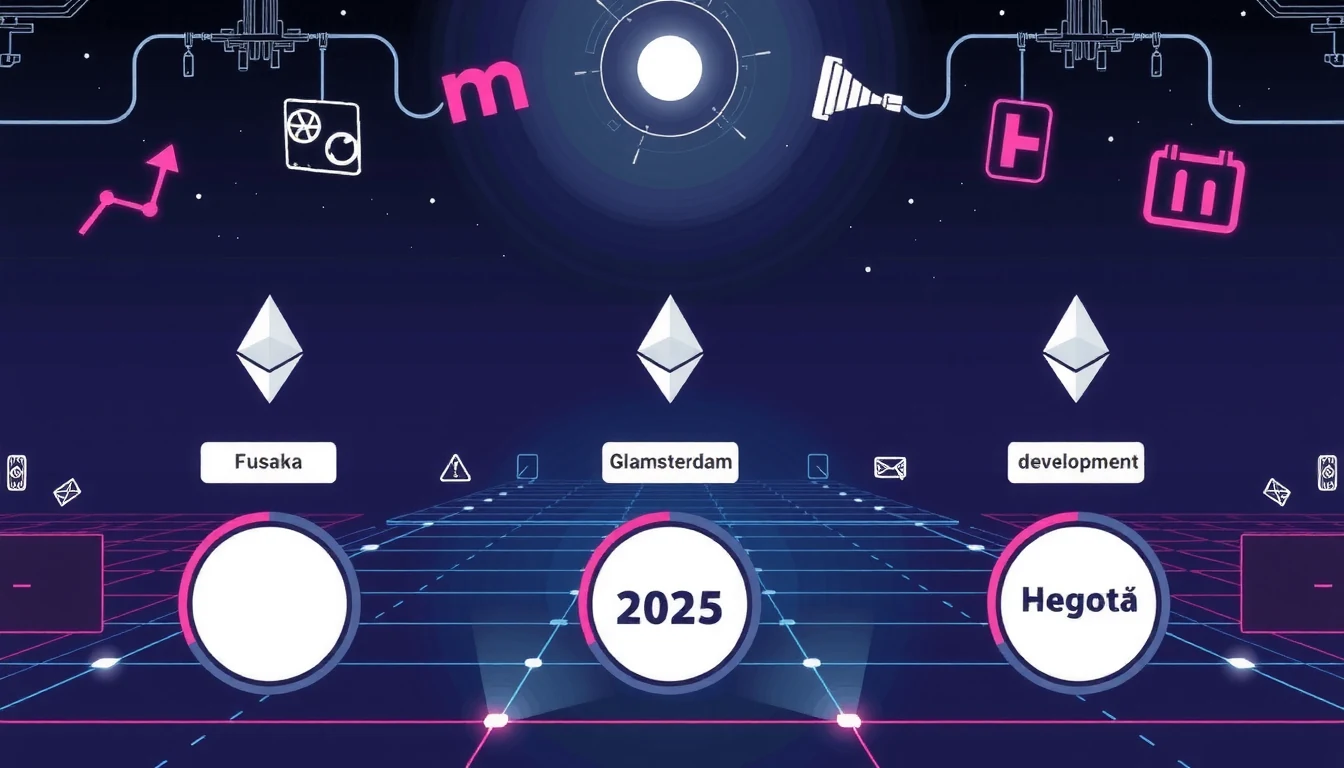
I was staring at the ethereum.org roadmap page at 2 a.m. last Tuesday, coffee cold, watching the little status badges next to each fork. Fusaka said "In production." Glamsterdam said "In development." Hegotá said "In development." That is the whole pitch, really. Three little badges telling you what the Ethereum Foundation thinks it is building next — and, implicitly, what it has not yet finished building.
That is the hook. The roadmap is not a promise. It is a progress report with marketing polish, and this October 8, 2026 refresh is the latest one.
Key Metrics at a Glance
| Metric | Value | Source |
|---|---|---|
| Next mainnet fork | Fusaka — December 3, 2025 | ethereum.org/roadmap |
| Current development fork | Glamsterdam — Q4 2026 | ethereum.org/roadmap |
| Following fork | Hegotá — 2027 | ethereum.org/roadmap |
| Roadmap last refreshed | October 8, 2026 | ethereum.org/roadmap |
| Long-horizon items | Statelessness, zkEVM, single-slot finality, full danksharding, post-quantum security | ethereum.org/roadmap |
| Glamsterdam headline features | Enshrined proposer-builder separation (ePBS), block-level access lists for parallel execution | ethereum.org/roadmap |
What the Roadmap Actually Says Now
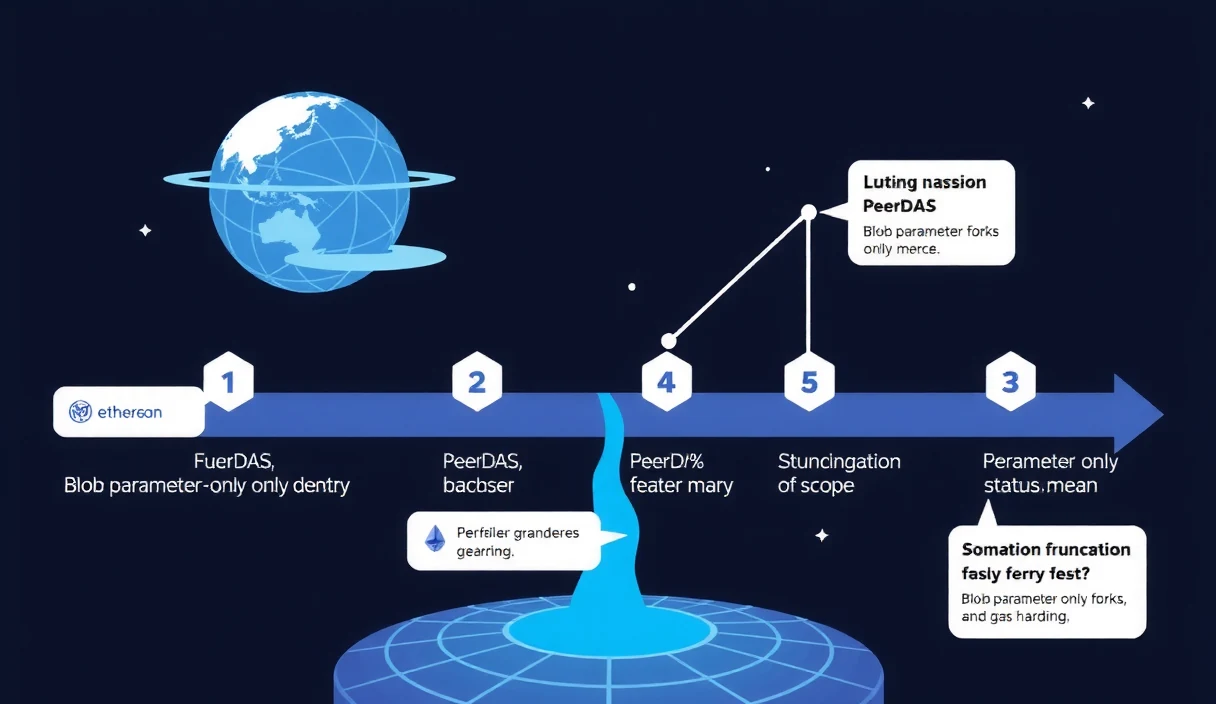
The refresh keeps the same skeleton the roadmap has had since the Merge: a sequence of named forks, each with a scope and a status badge. Fusaka — PeerDAS, blob parameter-only forks, and gas hardening including a 16.7M gas cap per transaction and a raised 60M default block gas limit — is the one already live on mainnet as of December 3, 2025. It is the fork that keeps data availability cheap and closes some denial-of-service edges without touching consensus.
Glamsterdam is the fork everyone is actually waiting on. It is slated for Q4 2026 and still carries the "In development" badge, which means no mainnet date is locked. Its two headline items are enshrined proposer-builder separation — moving block construction further away from solo validators so big builders can no longer quietly dominate the mempool — and block-level access lists, which let clients pre-declare which state they will touch so execution can run in parallel and gas costs get more predictable for state-heavy contracts.
Hegotá, penciled in for 2027, is where the roadmap gets interesting for anyone who cares about censorship. Its flagship is fork-choice enforced inclusion lists (FOCIL), which force block proposers to include transactions that other builders have staged — a direct answer to the worry that a small set of builders could quietly filter what lands on-chain. Frame transactions also show up here, a stepping stone toward native account abstraction and post-quantum signature schemes.
Beyond the named forks, the long-horizon column reads like a wish list: statelessness, a zkEVM, single-slot finality, full danksharding, and quantum-resistant cryptography. None of those have dates, because none of them are done.
Fork-by-Fork: What Each Upgrade Actually Delivers
| Fork | Window | Status | Headline Features | Who It Helps Most | Main Risk |
|---|---|---|---|---|---|
| Fusaka | Dec 3, 2025 mainnet | In production | PeerDAS, BPO forks, 16.7M per-tx gas cap, 60M block gas limit | Rollups (cheaper blobs), node operators (DoS hardening) | PeerDAS sampling edge cases |
| Glamsterdam | Q4 2026 | In development | ePBS, block-level access lists (EIP-style parallel execution) | State-heavy DeFi contracts, solo stakers vs. big builders | ePBS audit scope; access-list bugs |
| Hegotá | 2027 | In development | FOCIL inclusion lists, frame transactions | Censorship-sensitive users, wallet UX, L2 settlement guarantees | FOCIL complexity; inclusion-list liveness |
| Long horizon | No date | Research | Statelessness, zkEVM, single-slot finality, full danksharding, post-quantum | Everyone, eventually | No committed timeline at all |
The Accountability Layer: A Roadmap Delivery Score
Dashboards are leads, not conclusions. So here is a simple proprietary check I run on any protocol roadmap — the Roadmap Delivery Credibility Score (RDCS):
RDCS = (On-time delivery rate × 0.5) + (Scope clarity × 0.3) + (User-facing risk reduction × 0.2)
Scored 0–10, applied to Ethereum's recent fork record: delivery has been reasonably reliable (Dencun March 2024, Pectra May 2025, Fusaka December 2025 all shipped close to plan), scope is clearly documented per fork, and risk reduction is real but mostly indirect for ordinary users — cheaper rollup fees via EIP-4844 blobs, staking withdrawals via EIP-4895, beacon roots via EIP-4788. That puts the current roadmap at roughly 7.5/10 — solid, but the score drops if Glamsterdam slips past Q4 2026 or if ePBS ships without the access-list work that makes it safe.
The pattern to watch is not the badges. It is the gap between "In development" and "In production." Every fork on that page spent time in development. The ones that shipped — Merge, Shapella, Dencun, Pectra, Fusaka — all had concrete mainnet dates attached before they became boring. Glamsterdam does not yet.
What This Means for People Actually Using Ethereum
For a regular user, none of this changes your wallet today. What it changes is the cost floor and the trust assumptions underneath it. Fusaka's blob economics already made L2 transactions cheaper; that is the EIP-4844 line of work finally compounding. Glamsterdam's access lists should make gas costs on state-heavy contracts — DEXs, lending markets, NFT mints — more predictable instead of spiky. And ePBS matters because mempool ordering is where value leaks: enshrining proposer-builder separation at the protocol level is an acknowledgment that the current builder market is concentrated enough to be a problem.
Hegotá's FOCIL is the one with teeth. If inclusion lists work, a builder cannot quietly drop your transaction; if they do not, the roadmap's censorship-resistance story stays theoretical. Frame transactions point at social recovery and spending limits becoming native — wallet UX finally catching up to what users were promised years ago.
Decision Framework: What to Watch Next
Glamsterdam shipped by Q4 2026?
├── YES → Access-list gas predictability is real; watch ePBS audits
└── NO  → RDCS drops; treat roadmap dates as soft estimates
    └── Watch for: testnet activation date, ePBS audit reports,
        access-list spec freeze, any mainnet date announcement
The practical signal is simple: when ethereum.org/roadmap moves Glamsterdam from "In development" to a mainnet date, the roadmap's credibility goes up. Until then, treat Q4 2026 as a target, not a deadline. And keep an eye on Hegotá's FOCIL testnets in 2027 — that is where "censorship resistance" gets proven or exposed.
TL;DR
- What: The Ethereum Foundation refreshed its protocol roadmap on October 8, 2026 — Fusaka live on mainnet since December 3, 2025, Glamsterdam "In development" for Q4 2026, Hegotá planned for 2027
- Why: Glamsterdam brings enshrined proposer-builder separation and block-level access lists; Hegotá adds FOCIL censorship-resistance inclusion lists
- Impact: Cheaper, more predictable L2 and DeFi gas costs; mempool ordering gets more decentralized; wallet UX improves via frame transactions
- Watch: Glamsterdam mainnet date, ePBS audit scope, Hegotá FOCIL testnets — roadmap badges mean nothing until a date is attached
- Score: Roadmap Delivery Credibility Score ≈ 7.5/10
Sources
- Ethereum.org Protocol Roadmap
- Ethereum.org — Fusaka upgrade notes
- EIP-4844 Proto-Danksharding (blob transactions)
- EIP-4788 Beacon block root in the EVM
- EIP-4895 Beacon chain push withdrawals
- EIP-1153 Transient storage opcodes
- EIP-3651 Warm COINBASE
- Ethereum Foundation Blog
Zain Tran is TotesTek's Ethereum Ecosystem Columnist & Accountability Reporter. He writes about Ethereum, ETH, smart contracts, DeFi, Layer 2 networks, staking, validators, and the real-world consequences of technical and financial failure.
Related Posts
-

Oklahoma Introduces Strategic Bitcoin Reserve Bill in 2026 State-Level Crypto Legislation Wave
Oklahoma is joining a growing wave of states proposing strategic Bitcoin reserves. A new 2026 bill would allow the state treasurer to allocate up to 5% of public funds into the digital asset.
-

Earn on Startale App Now Takes USDC: Two New Morpho Vaults Put Idle Stablecoins to Work
Startale App now allows users to earn yield on USDC through two new Morpho vaults on Ethereum. Discover how Gauntlet and Flowmark are putting idle stablecoins to work with RWA and crypto-collateralized loans.
-

The NCUA Just Opened the Door for Credit Unions to Touch Bitcoin: What the 2026 DLT Guidance Actually Means
The NCUA's 2026 guidance provides a new compliance framework for credit unions to engage with Bitcoin and DLT. Discover how this shift impacts community banking and what it means for millions of members.
-

ZKsync Releases Governance 101 Educational Documentation for Ecosystem Participants
ZKsync has launched a new Governance 101 guide to onboard ecosystem participants. While the documentation simplifies voting and proposals, a deeper look reveals the critical power dynamics of its Security Council.