

MakerDAO Governance Portal Reflects Active Sky Ecosystem Proposal Activity
The Maker Governance portal at vote.makerdao.com shows ongoing voting and proposal activity for the Sky ecosystem, including parameter changes and governance decisions that shape the DAI stablecoin and broader Maker protocol.
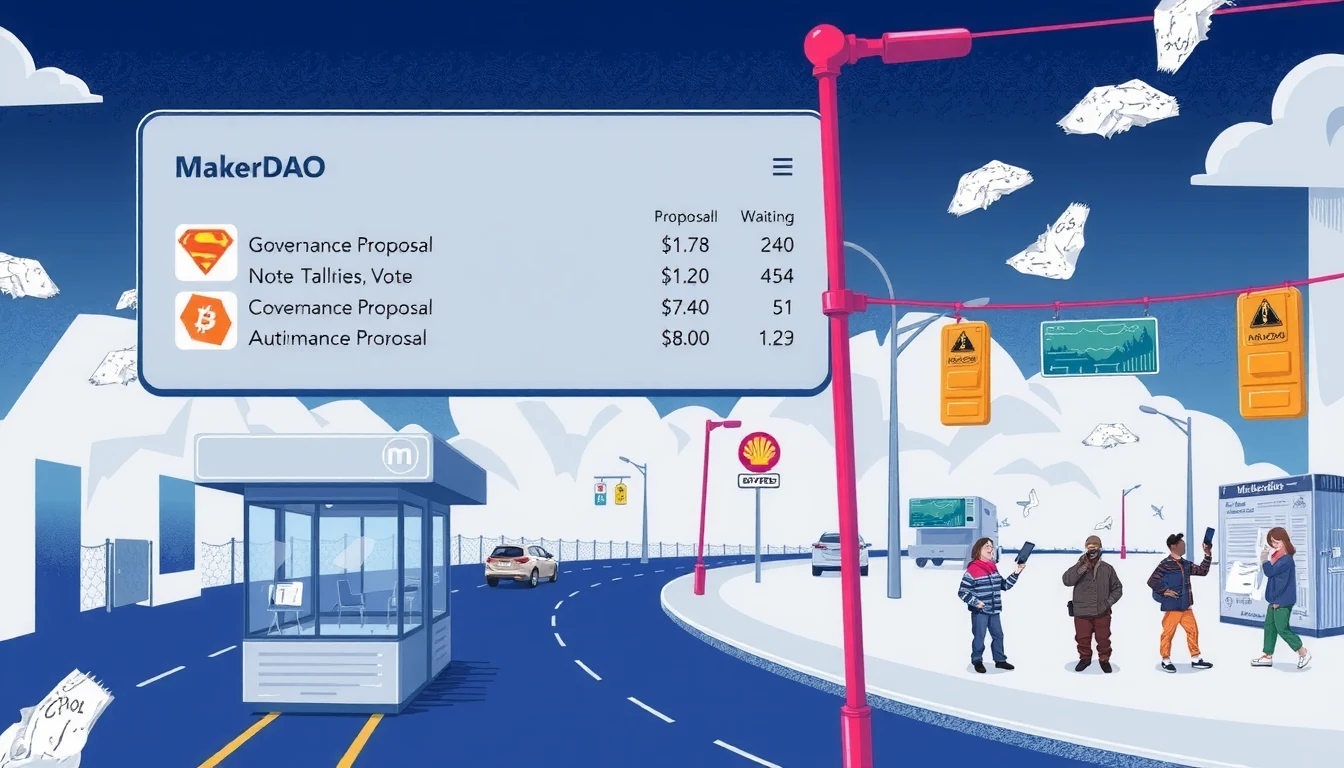
I pulled up vote.makerdao.com on a Tuesday morning and the counters were still moving. New proposals, new vote tallies, new parameter changes queued up like cars at a tollbooth. The portal was updated October 8, 2026, and it shows a governance machine that is very much still running — the question is who is actually holding the wheel.
MakerDAO is one of Ethereum's oldest and largest DeFi protocols, and it is now steering the Sky ecosystem and the DAI stablecoin through its biggest reinvention yet. Active proposals are not a heartbeat by accident. They are the whole point. But a busy governance portal can also be a smokescreen for concentrated power wearing a voting costume.
Key Metrics at a Glance
| Metric | Value | Source |
|---|---|---|
| Governance portal | vote.makerdao.com | MakerDAO |
| Portal last updated | October 8, 2026 | Maker governance feed |
| Ecosystem focus | Sky ecosystem, DAI stablecoin, Maker protocol | vote.makerdao.com |
| Activity type | Parameter changes, governance decisions, proposal voting | Maker governance docs |
| Protocol lineage | One of Ethereum's largest DeFi protocols (since 2017) | DefiLlama / MakerDAO docs |
| Governance token | MKR (with delegated voting) | Maker governance docs |
| Primary risk | Delegate / MKR vote concentration hides real control | Governance analytics (Dune) |
What the Portal Actually Shows
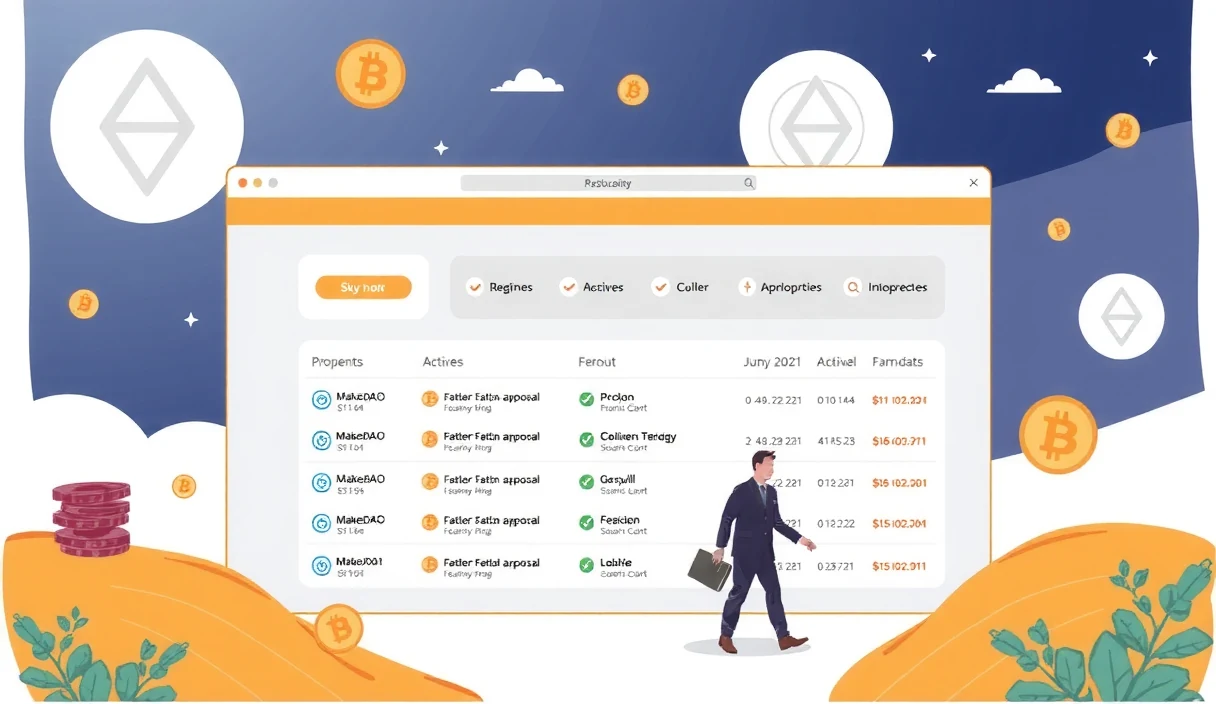
The active proposal list on vote.makerdao.com is the public ledger of who gets to change the rules of a stablecoin that touches half the DeFi economy. Parameter changes set collateral risk ratios, stability fees, and debt ceilings. Governance decisions steer the Sky ecosystem's roadmap and treasury.
That is the official story, and it is largely true. The portal does show real, ongoing voting. The problem is not whether votes happen. The problem is how few hands those votes concentrate in once you follow the delegation chain.
MakerDAO pioneered decentralized governance for DeFi, and much of the playbook — executive votes, polling, delegated voting — was invented here. That matters. But the same machinery that lets anyone vote also lets a handful of delegates control most outcomes. A portal full of activity can still be a portal where ordinary MKR holders are passengers.
The Governance Concentration Problem
Here is the uncomfortable part the dashboard does not headline. In MakerDAO, most voting power is delegated to a small set of active delegates. The portal shows thousands of votes cast; the underlying weight often sits with a few recognized delegates and large MKR holders. When a parameter change passes 70–90% "yes," the more honest question is: yes from how many wallets?
| DeFi Protocol | Governance Token | Voting Model | Delegate Concentration | Quorum/Threshold Mechanics | Transparency |
|---|---|---|---|---|---|
| MakerDAO / Sky | MKR | Delegated voting + executive spells | High (few active delegates) | Executive vote → governance poll → timelock | High (votes are on-chain) |
| Uniswap | UNI | Direct token voting (delegable) | Medium-High | Quorum + majority on proposals | High |
| Aave | AAVE | Direct voting, aAave/instataken voting power | Medium | Quorum + differential thresholds | High |
| Lido | LDO | Direct + delegated voting via Snapshot/Tally | Medium | Snapshot signaling + on-chain votes | High |
The pattern across DeFi is the same: governance is on-chain and auditable, but participation is concentrated. MakerDAO's portal is arguably the most transparent of the bunch — every vote is public — yet its delegate model means the visible participation numbers overstate the distributed control.
The Accountability Layer: A Governance Health Score
Raw vote counts do not tell you whether governance is healthy. So here is a proprietary framework — the Governance Health Score (GHS) — for reading any active proposal portal:
GHS = (Unique voter diversity × 0.35) + (Delegate concentration penalty × 0.25) + (Proposal transparency × 0.25) + (Turnout vs. token supply × 0.15)
Scored 0–10: MakerDAO scores high on transparency (~9/10, on-chain votes, public forum debate) but loses points on delegate concentration and real turnout versus MKR supply. Net: roughly 6.5/10 GHS — a transparent system whose effective control still narrows to a few hands. That is not corruption. That is the structural tax every large DAO pays.
The October 8 update is not a scandal and it is not a victory lap. It is a reminder that governance in DeFi is a permanent machinery — and machinery needs maintenance, not just applause.
What This Means for DAI and Sky Users
If you hold DAI, use Sky, or provide collateral to Maker, every active proposal is a quiet vote on your risk. A stability fee change alters what you pay to mint DAI. A collateral parameter change alters how much cushion stands between you and liquidation. A treasury decision moves money that backs the whole system.
You do not have to vote to be affected. But if you do not vote — and you do not watch the delegates who vote for you — you are trusting a dashboard to tell you who really decided.

Decision Framework: How to Read a Busy Governance Portal
Governance portal shows lots of active proposals?
├── Ask: how many unique wallets voted?
│   └── Low unique count → votes are concentrated, read the delegates
├── Ask: who are the top delegates and what do they represent?
│   └── A few delegates >50% weight → real control is narrower than it looks
├── Ask: is this a parameter change (rates, collateral, fees)?
│   └── YES → it directly changes your borrowing/minting cost or liquidation risk
└── Ask: is the vote transparent on-chain?
    └── YES → verify on Dune/Etherscan instead of trusting the portal summary
        └── Then decide: delegate to someone you trust, or vote yourself
TL;DR
- What: MakerDAO's governance portal (vote.makerdao.com, updated October 8, 2026) shows active voting and proposal activity for the Sky ecosystem and DAI
- Why: Maker is steering one of Ethereum's largest DeFi protocols through parameter, treasury, and roadmap decisions
- Impact: The portal is transparent, but MKR delegated voting concentrates real control in a small set of delegates — a busy portal can hide narrow power
- Watch: Unique voter counts vs. delegate weight, stability fee and collateral parameter changes, treasury proposals, and whether Sky's reinvention keeps power distributed or consolidates it
- Score: MakerDAO Governance Health Score ≈ 6.5/10 — highly transparent, still concentrated
Sources
- MakerDAO Governance Portal — vote.makerdao.com
- MakerDAO Documentation
- MakerDAO Governance Forum
- Sky / DAI ecosystem overview
- DefiLlama — MakerDAO protocol data
- Dune Analytics — MakerDAO governance dashboards
- Etherscan — MKR token and delegate contracts
Zain Tran is TotesTek's Ethereum Ecosystem Columnist & Accountability Reporter. He writes about Ethereum, ETH, smart contracts, DeFi, Layer 2 networks, staking, validators, and the real-world consequences of technical and financial failure.
Related Posts
-
Go-Ethereum Ships Latest Execution Client Release With Performance and Stability Improvements
The go-ethereum team has released a critical update featuring performance tweaks and Glamsterdam compatibility. While routine on the surface, the dominant client's stability is essential to preventing systemic risk during the upcoming hard fork.
-
Ethereum Foundation Refreshes Community Grant Programs and ESP Documentation
The Ethereum Foundation has quietly updated its Ecosystem Support Program documentation and allocation lists. While the refresh clarifies funding tracks, it raises critical questions about transparency and the selection process for builders.
-
L2Fees.info Tracks Real-Time Layer 2 Transaction Costs Across Ethereum Rollups
Stop guessing which Ethereum rollup is the cheapest. L2Fees.info provides real-time transaction cost comparisons across Arbitrum, Base, and zkSync, but a low fee often comes with hidden sequencer risks.
-

Simplex Is Now Available as an npm Library
Hyperbridge has released Simplex as an npm library, allowing teams to embed the solver directly into Node.js applications. Discover how this new deployment mode reduces infrastructure overhead and enables deep code-level control.