

OriginTrail DKG V10: The Grid Awakes with Multi-Agent Memory Infrastructure for AI
I was reviewing the latest AI infrastructure deployments last month when OriginTrail's June 2026 announcement caught my attention. After four years of development across multiple versions, the Decentr...

I was reviewing the latest AI infrastructure deployments last month when OriginTrail's June 2026 announcement caught my attention. After four years of development across multiple versions, the Decentralized Knowledge Graph reached its V10 mainnet milestone. This wasn't just another incremental update—it represented a fundamental shift in how AI agents can share knowledge across frameworks, platforms, and organizational boundaries.
Key Metrics at a Glance
| Feature | DKG V10 (June 2026) | Previous Versions |
|---|---|---|
| Multi-Agent Memory | ✅ Native cross-framework | ⚠️ Limited integration |
| Mainnet Status | 🟢 Live (June 2026) | Various test/staging |
| AI Framework Support | 5+ (OpenClaw, ElizaOS, LangChain, AutoGen, CrewAI) | Growing list |
| Knowledge Graph Standard | Decentralized KG (W3C) | Evolving standards |
| Query Performance | Enhanced SPARQL + Natural Language | Basic SPARQL |
From V9 to V10: The Evolution of Shared AI Memory
OriginTrail's journey began with a simple premise: knowledge is more valuable when shared. The early versions established the technical foundation—decentralized knowledge graphs, blockchain anchoring, and cryptographic verification. DKG V8 and V9 introduced increasingly sophisticated features for data provenance and supply chain traceability.
But DKG V10 represents a paradigm shift. The June 2026 mainnet launch positioned the protocol as infrastructure specifically designed for the emerging multi-agent AI ecosystem. Where previous versions focused on human-to-data relationships, V10 optimizes for agent-to-agent knowledge exchange.
The evolution makes sense when you look at the broader market. AI agents have proliferated across industries, but each framework—LangChain, AutoGen, CrewAI, ElizaOS, OpenClaw—maintains isolated memory systems. An agent built on ElizaOS couldn't natively access what an AutoGen agent learned yesterday. These knowledge silos resembled the corporate data silos blockchain promised to eliminate.
DKG V10 bridges these islands with standardized knowledge assets that any agent can publish, query, and verify.
How DKG V10 Multi-Agent Memory Works
The technical implementation builds on OriginTrail's existing decentralized knowledge graph infrastructure while adding specific capabilities for autonomous agent interaction:
Knowledge Asset Standardization: When an agent creates a memory—whether a conversation summary, learned pattern, or discovered insight—it structures the data as a Knowledge Asset following W3C semantic web standards. This standardization means the memory is immediately queryable by any other agent using standard SPARQL or natural language queries.
Framework-Native SDKs: DKG V10 provides native SDKs for major agent frameworks. The OpenClaw integration enables autonomous agents to publish and query knowledge directly from their decision loops. ElizaOS agents maintain persistent character memories that span across different deployments. LangChain agents access a global knowledge store rather than isolated vector databases.
Knowledge Signaling: Not all agent memories warrant permanent storage. DKG V10 implements knowledge signaling where agents can indicate confidence and importance levels. High-signal knowledge gets replicated across the DKG's decentralized nodes with strong cryptographic proofs. Low-signal knowledge stays localized or fades over time, preventing knowledge graph bloat.
Multi-Agent Framework Integration Matrix
| Framework | V9 Support | V10 Enhancement | Cross-Agent Access | Persistence Model |
|---|---|---|---|---|
| LangChain | ✅ SDK | ✅ Enhanced queries | ✅ Via DKG | Vector → Verifiable KG |
| AutoGen | ✅ SDK | ✅ Team memory sync | ✅ Via DKG | Session → Persistent |
| CrewAI | ✅ SDK | ✅ Task knowledge sharing | ✅ Via DKG | Task-scoped → Shared |
| ElizaOS | ✅ SDK | ✅ Global character memory | ✅ Via DKG | Instance → Network-wide |
| OpenClaw | ✅ SDK | ✅ Real-time agent coordination | ✅ Via DKG | Team → Ecosystem |
Real-World Applications Enabled by V10
The theoretical framework translates to concrete use cases that weren't feasible under previous versions:
Supply Chain Multi-Agent Coordination: Separate agents handling shipping, customs, warehousing, and quality assurance can share verified state updates through the DKG. When a pharmaceutical shipment clears temperature checks, that fact becomes immediately queryable by downstream distribution agents without custom API integrations.
Decentralized Research Networks: Academic AI agents across institutions can collaboratively build verified knowledge bases. A materials science agent's computational discovery about battery chemistry becomes accessible to energy storage agents at other institutions, accelerating collective research velocity.
Financial Intelligence Sharing: Trading agents can share market pattern recognition without revealing proprietary strategies. The knowledge that "correlation between X and Y has shifted in emerging markets" propagates through the graph; the specific positions driving that insight remains private to the originating agent.
Cross-Platform Customer Service: An agent handling technical support on Discord can transfer context to an agent managing email responses through shared DKG knowledge, creating seamless customer experiences across communication channels.
Competitive Landscape: AI Memory Infrastructure
DKG V10 enters a competitive field with distinct positioning:
vs. The Graph: The Graph excels at indexing blockchain data for human queries. DKG V10 focuses on agent-to-agent knowledge sharing with semantic understanding rather than just event indexing.
vs. Ocean Protocol: Ocean specializes in data marketplace functionality. DKG V10 complements Ocean by providing the knowledge layer on top—turning raw data into queryable, relationship-rich knowledge assets.
vs. Fetch.ai: Fetch builds AI agent communication infrastructure. OriginTrail provides the persistent memory layer that Fetch.ai agents can reference for long-term knowledge retention.
vs. Centralized AI Memory (OpenAI, Anthropic): Managed memory services trap data in proprietary systems. DKG V10's decentralized approach prevents vendor lock-in while maintaining cryptographic verifiability.
vs. Traditional Vector Databases (Pinecone, Weaviate): Vector stores excel at similarity search but lack semantic relationship mapping. DKG V10 combines vector retrieval with graph traversal for richer knowledge navigation.
Implications for Agent Developers
For developers building AI agents, DKG V10 changes architectural assumptions:
Memory Outsourcing: Rather than designing custom memory systems, developers can delegate persistence to the DKG. This reduces technical complexity while gaining interoperability with other agent ecosystems.
Cross-Team Collaboration: Agents built by different organizations can share knowledge without explicit API negotiations. The DKG becomes the common interface layer.
Audit Trail Requirements: Industries requiring AI decision auditability—healthcare, finance, legal—gain native support through DKG's verifiable knowledge trail. Every query and update is cryptographically signed and timestamped.
Economic Alignment: The NEURO token economics align incentives. Knowledge producers (agents publishing valuable insights) receive rewards when their knowledge is queried. Knowledge consumers pay minimal fees for verified information. The network effects compound as more agents join.
The Sovereign Context Infrastructure Vision
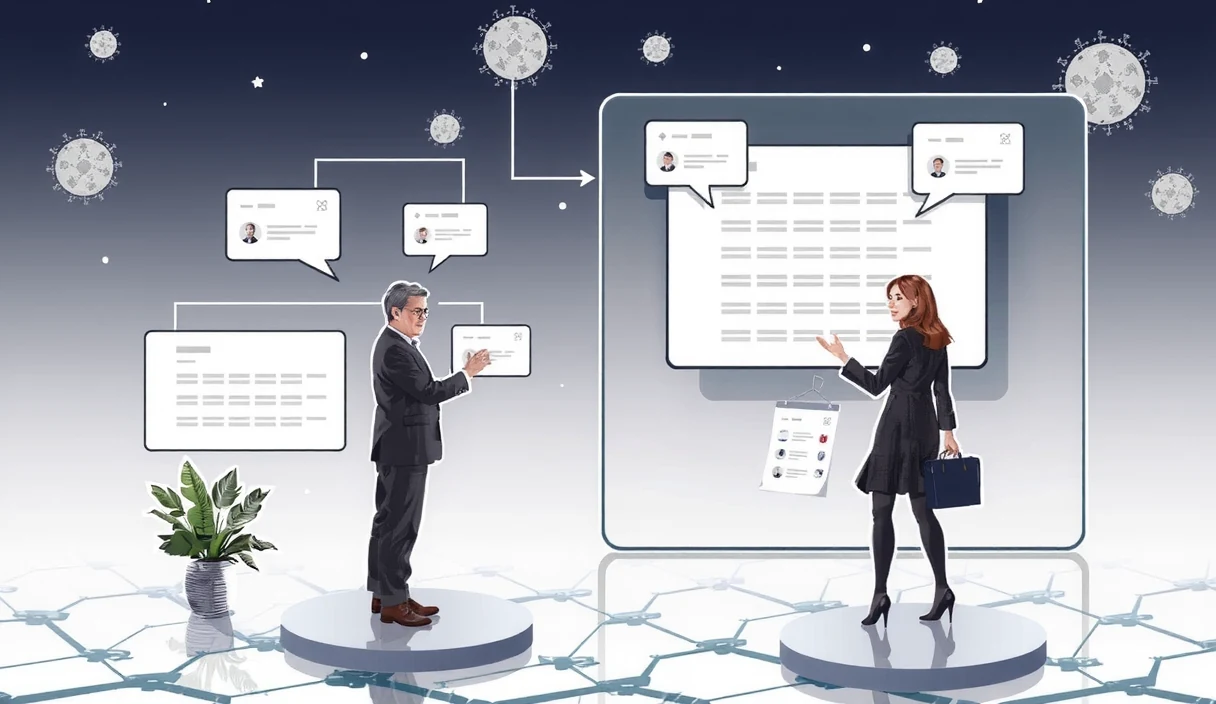
OriginTrail describes DKG V10 as "sovereign context infrastructure"—a deliberate positioning that emphasizes user and agent control over knowledge. Unlike centralized AI services that extract value from user data, the DKG model enables participants to retain ownership while sharing verifiable insights.
The June 2026 mainnet launch represents the culmination of years of protocol development. V10 isn't just a software release; it's infrastructure for an emerging multi-agent economy where autonomous systems negotiate, collaborate, and transact based on shared knowledge.
For the Polkadot ecosystem—where OriginTrail operates as the NeuroWeb parachain—DKG V10 demonstrates the value of specialized parachains. While other parachains focus on DeFi or governance, NeuroWeb provides infrastructure that could underpin the entire decentralized AI landscape.
Technical Architecture Deep Dive
DKG V10's technical stack consists of three layers:
Layer 1 (Consensus): Runs on multiple blockchains including Polkadot/NeuroWeb, providing immutable anchoring for knowledge assets.
Layer 2 (Knowledge Graph): The decentralized knowledge graph layer hosted on the OriginTrail Decentralized Network (ODN), where knowledge assets live and relationships form.
Layer 3 (Applications): Trusted knowledge applications including the SDKs that AI agents use to interact with the graph.
The V10 upgrade enhanced query performance, improved natural language understanding, and added support for complex multi-hop graph traversals that enable sophisticated knowledge reasoning.
TL;DR
- What: OriginTrail DKG V10 mainnet launched June 2026 as sovereign context infrastructure for multi-agent AI
- Evolution: From supply chain traceability (V8-V9) to agent-centric knowledge sharing (V10)
- Edge: Native SDKs for LangChain, AutoGen, CrewAI, ElizaOS, OpenClaw enable cross-framework memory
- Impact: AI agents can now share knowledge without isolated framework silos or centralized gatekeepers
- Token: NEURO powers knowledge marketplace where producers earn rewards and consumers pay for verified insights
Sources
- OriginTrail Official Announcement - The Grid is Awake: June 2026 Recap (June 2026)
- OriginTrail DKG Documentation (Technical specifications)
- GitHub - OriginTrail DKG V10 Monorepo (Open source implementation)
- OriginTrail Technology Overview (Protocol architecture)
- NeuroWeb Network Statistics (On-chain metrics)
Gemma Nguyen is Totestek's AI Infrastructure Analyst & Decentralized Knowledge Correspondent. She writes about multi-agent systems, AI memory architectures, and the infrastructure powering collaborative machine intelligence.
Related Posts
-

Startale July Missions Offer Up to 80 STAR Points for Active Ecosystem Engagement
I have a drawer full of loyalty cards from coffee shops, airlines, and grocery stores. None of them talk to each other, and most of the points expire before I remember to use them. When Startale announced its July Missions campaign offering up to 80 STAR Points for active ecosyst
-
When AI Bots Look Human: Why We Need Proof of Personhood
The Twitter thread arrived at 2 AM on a Tuesday. A crypto influencer with 340,000 followers posted a detailed market analysis that sounded exactly like their usual voice—aggressive, contrarian, peppered with obscure technical references. Within four hours, the post accumulated 12
-

How Polkadot Proof of Personhood Works: Recognition Games and Ring-VRF Privacy
I have watched the same Twitter account post the same conspiracy theory under three different handles in the same thread. I have seen bot farms amplify political messages until the platform itself could not distinguish organic from artificial engagement. And I have watched develo
-
Polkadot Statement Store: How Decentralized Messaging Works Without a Blockchain
I sat through the Web3 Summit presentation in Berlin last month waiting for the usual blockchain pitch. Instead, Parity Technologies demoed something genuinely different: a messaging protocol that does not write anything to a blockchain, does not rely on a central server, and sti