

Introducing P256: Unforgeable Signature for Any Machine on peaq
A drone lands on a charging pad in a warehouse district outside Berlin. The pad has exactly one question: are you the drone you claim to be? In the old world, the answer is a password, an API key, or
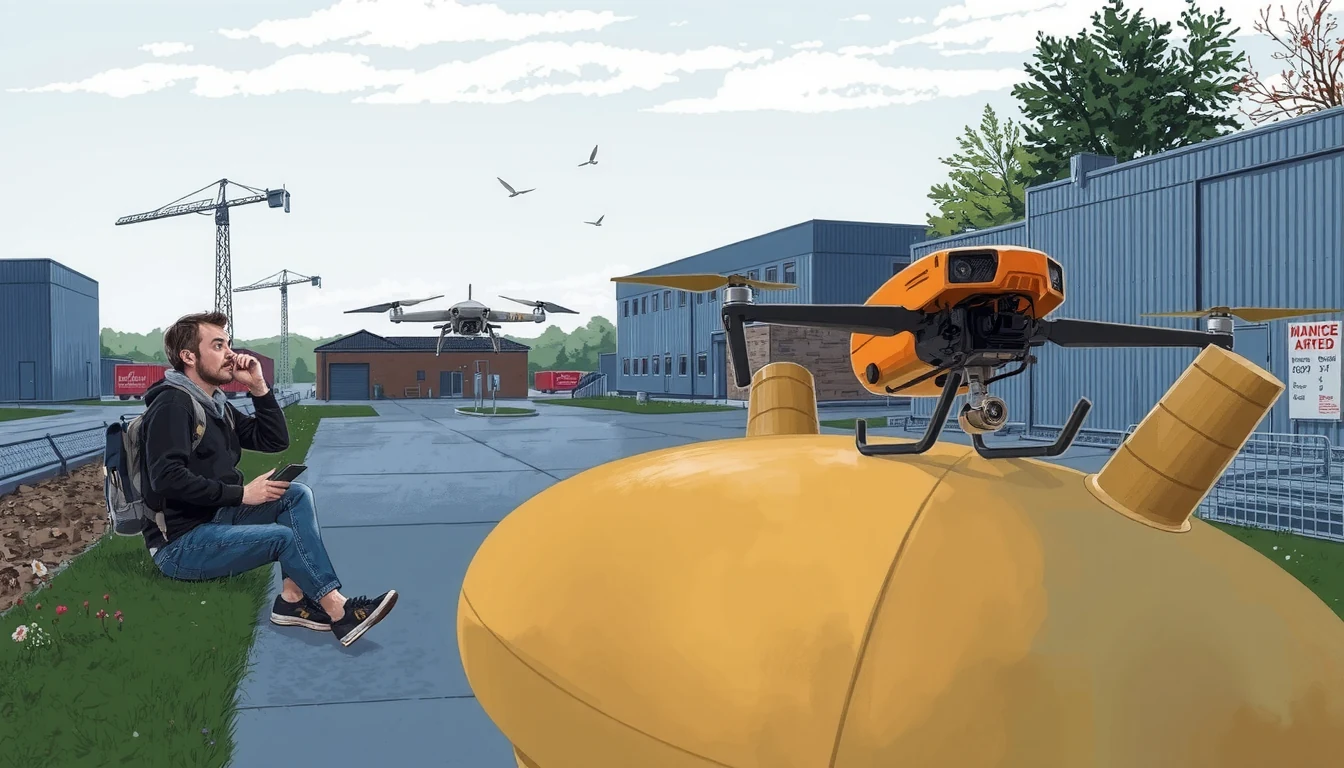
A drone lands on a charging pad in a warehouse district outside Berlin. The pad has exactly one question: are you the drone you claim to be? In the old world, the answer is a password, an API key, or a QR code someone has to scan. All of them are shared secrets. All of them can be copied, leaked, or handed to the wrong machine.
On August 25, 2026, peaq introduced native P-256 signature verification on its network. The drone now signs a challenge with a private key that has never left the secure element soldered to its board. peaq verifies that signature onchain. The pad unlocks. Nobody types anything.
Key Metrics at a Glance
| Metric | Value |
|---|---|
| Signature Standard | P-256 (secp256r1) |
| Key Storage | Secure element, TPM, or mobile secure enclave |
| Exportability | Keys are non-exportable under normal operation |
| Verification Layer | Onchain smart contract on peaq |
| Supported Use Cases | Transactions, M2M orders, data provenance, commands |
| Network | Polkadot-based DePIN |
| Launch Date | August 25, 2026 |
The Signature Problem Machines Have Always Had
A machine can already prove who it is on peaq. Every robot running peaqOS wakes up with a peaq ID, omnichain wallets, and a Machine NFT. From there it can discover and pay for services through peaqOS Scale and robotic.sh.
What has been harder is proving that a specific action—this order, this transaction, this command, this data packet—came from the physical device itself, and not from something impersonating it. The industry's usual answer is a credential stored in software: an API key in a config file, a token from a central authentication server. Copy the file, clone the machine. Take the server offline, and every machine downstream stops working.
Meanwhile the hardware already ships with a better answer. Secure elements, TPMs, and mobile secure enclaves are designed to keep keys non-exportable under normal operation, and sign with them on demand. Many widely deployed systems converge on one curve: P-256, also known as secp256r1. It is the curve behind passkeys and FIDO2, Apple's Secure Enclave, Android's hardware keystore, automotive controllers, and is widely supported across robotics and industrial IoT stacks.
Until now that signature stopped at the edge of the chain. peaq could not check it natively, so builders had to route around it.
P-256, On-Chain on peaq
peaq now verifies P-256 signatures through a smart contract. A machine signs a payload with the key inside its secure hardware, and any developer, contract, service provider, or counterparty can confirm onchain that the signature came from the hardware bound to that machine's peaqOS identity.
Developers can verify signatures on blockchain transactions, machine-to-machine service requests and orders on robotic.sh, machine-generated data, commands sent to infrastructure, and payloads signed by a robot or machine using P-256.
This is not a second identity system sitting next to peaq ID. It extends the identity a machine already has with the signing hardware it already ships with. If your fleet has a secure element, the integration path is short: sign the payload on the device, verify it onchain.
What Changes When the Chip Signs
A machine on peaqOS produces a lot of signed activity in a day. Hardware-backed signatures change what a counterparty can prove about each kind of it.
The money it moves. A payment carries the same guarantee as the identity behind it. The wallet is not authorized by a credential sitting in a config file; it is authorized by a key that cannot leave the chip.
The data it produces. peaqOS Stream already signs data at the moment of capture. P-256 answers the harder question buyers ask: not just which identity signed this frame, but which physical device. Provenance that reaches the silicon is worth more than provenance that stops at the software layer.
The services it buys. A machine running peaqOS discovers and pays for real services through robotic.sh. Signed orders mean a provider can meter and rate-limit against a device that cannot be cloned, and an operator can audit consumption down to the individual unit.
The commands it receives. An instruction to an industrial controller, a gate, a charger, or a fleet is only as safe as the proof of who issued it. That proof now lives in hardware.
The record it builds. A Machine Credit Rating is only as good as the history behind it. Jobs, payments, and datasets that each carry a hardware-backed signature make a track record an underwriter can price.
Showcase: A Drone That Pays for Its Own Charge
A drone flies to a charging station and handles the entire session autonomously. The station issues a cryptographically random, one-time nonce. The drone signs the challenge with the P-256 private key held in its secure element. The key never leaves the chip. peaq verifies the signature onchain, proving the request came from that specific drone's hardware. The drone authorizes a USDT payment for the session using Tether's Wallet Development Kit, signing with the same hardware-backed keys. Payment confirms. The station unlocks. Charging begins.
No password. No API key. No QR code. No human within a hundred meters of the pad.
Competitive Landscape
| Solution | Key Storage | Verification | Chain Native | Hardware Required |
|---|---|---|---|---|
| peaq P-256 | Secure element/TPM | Onchain smart contract | Yes | Yes |
| Traditional API Key | Software/config file | Offchain server | No | No |
| Ethereum ECDSA | Software/hardware wallet | Onchain | Yes | Optional |
| FIDO2/Passkeys | Secure enclave | Offchain Relying Party | No | Yes |
| X.509 PKI | Hardware security module | Centralized CA | No | Yes |
Strategic Implications
P-256 support means peaq meets the robotics, automotive, and industrial hardware world on cryptography it already runs, rather than asking it to adopt something new. For builders, that turns into hardware-backed signatures rooted in a key that cannot be exported, onchain verification checkable by any contract or counterparty, service consumption tracked and auditable down to the physical unit, cryptographically authenticated machine-to-machine interactions with no central authentication server, and secure authorization of real-world services like charging, docking, refueling, access, and tolls.
The practical effect: a robot you did not build, made by a manufacturer you have never spoken to, can prove itself to your infrastructure, buy what it needs, and leave a receipt you can verify. That is what an open Machine Economy needs to work.
Where P-256 Sits in the Stack
Activate. Every robot and machine onboarded with a peaq ID, omnichain wallets, and a Machine NFT. Live.
Scale. Each one discovering and paying for services and Machine Money Markets through robotic.sh. Live.
Stream. Each one turning its data into a signed, verifiable asset and delivering it end-to-end. Live.
Qualify. Each one carrying a dynamic Machine Credit Rating any counterparty can check. Live.
Monetize, Verify, Tokenize. Coming next.
P-256 verification runs underneath all of them. Identity makes payments possible. Payments create a record. The record becomes credit. Hardware-backed signatures are what make each link in that chain something a counterparty can check rather than something they have to believe.
TL;DR
- What: peaq introduces native P-256 signature verification for hardware-backed machine identity
- Why: Software credentials can be copied; hardware keys bound to secure elements cannot
- Impact: Enables autonomous payments, verified data provenance, and auditable machine-to-machine interactions
- Edge: First Polkadot-based DePIN with native P-256 onchain verification for robotics and industrial IoT
- Watch: peaqOS Verify cryptographic attestation and machine credit rating adoption
Sources
Gemma Nguyen is TotesTek's Content Lead and Journalist, covering the intersection of decentralized infrastructure, machine economies, and the human layer that holds them together.
Related Posts
-

Bifrost Monthly Report January 2026: bbBNC Staking Surges 120% and Strategic Outlook Takes Shape
I checked my Bifrost dashboard on the first Monday of February and did a double-take. The bbBNC staking figure had crossed 20 million BNC tokens, up from 8.96 million just two months prior. That is not a rounding error. That is a 120% surge in staking volume, and it signals somet
-
peaq and Allora Bring Predictive Intelligence to Robots and Machines
I watched a humanoid robot end its warehouse shift last month with a day's earnings sitting in its machine wallet. The tokens it was paid in moved with the market, and the market does not wait for morning. It had two options: convert on the spot and take whatever the market happe
-

peaqOS and World ID Enable Proof of Human for Robots and Machines
I watched a delivery robot in Seoul pause at an apartment door last month, its sensors scanning the person who stepped out to collect medication. The hatch stayed sealed. Not because the robot was broken, but because it had no way to know whether the person in front of it was the
-

LlamaRisk Recommends Supply Cap Increases for Aave V3 Monad: When Risk Assessors Become Growth Enablers
The recommendation appeared on the Aave governance forum in August 2026 with the confident authority of a risk assessment firm that had spent weeks modeling collateral ratios and liquidation thresholds on a blockchain that had not yet fully launched. LlamaRisk—one of Aave's desig