

peaq and Allora Bring Predictive Intelligence to Robots and Machines
I watched a humanoid robot end its warehouse shift last month with a day's earnings sitting in its machine wallet. The tokens it was paid in moved with the market, and the market does not wait for mor
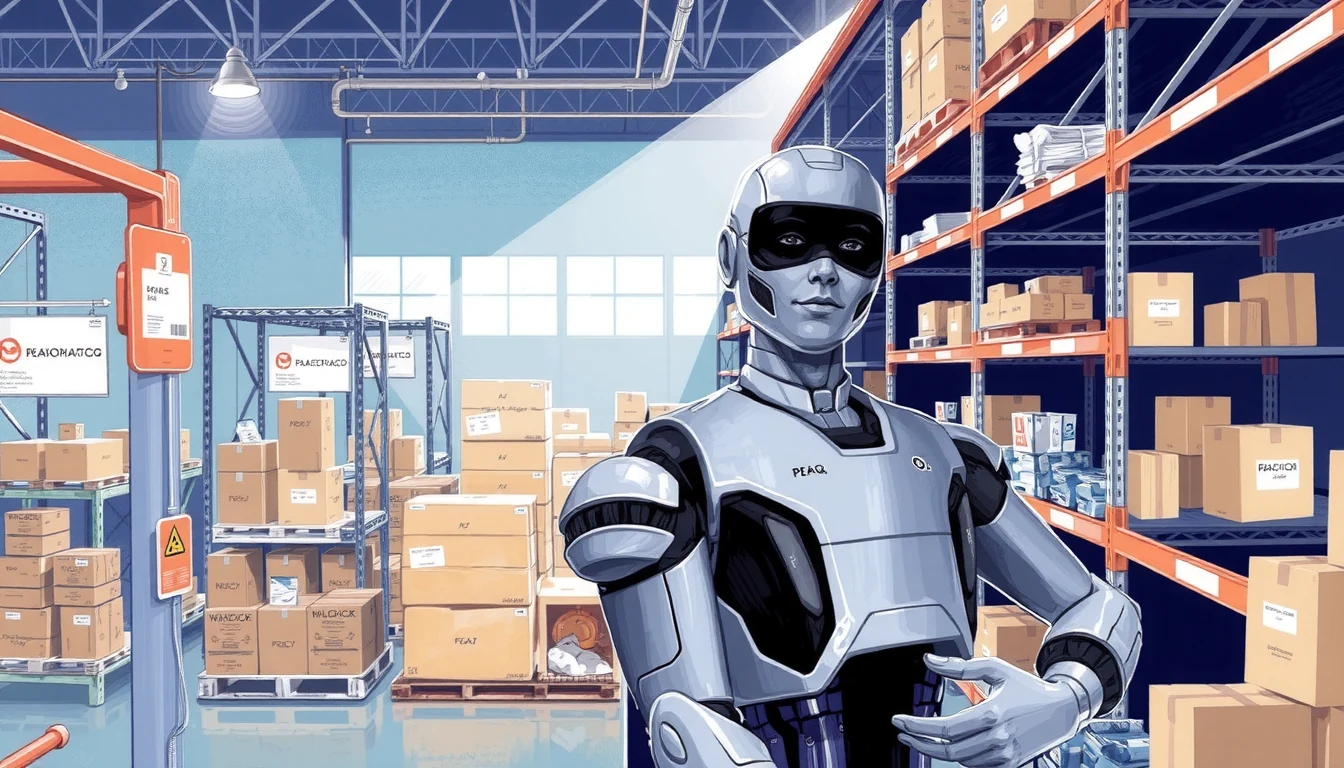
I watched a humanoid robot end its warehouse shift last month with a day's earnings sitting in its machine wallet. The tokens it was paid in moved with the market, and the market does not wait for morning. It had two options: convert on the spot and take whatever the market happens to be doing, or hold until a human sweeps the machine wallets and carry the swings in between.
On September 3, 2026, peaq and Allora unveiled a third option. The robot asks. ETH, ten minutes ahead, a whole network of models weighed into one answer, back in seconds. It converts with a view of what is coming instead of a guess.
Key Metrics at a Glance
| Metric | Value |
|---|---|
| Allora Worker Models | 288,000+ |
| Live Topics | 55+ |
| Inferences Generated | 692 million |
| Integration Layer | Native to peaqOS via robotic.sh |
| Use Cases | Price forecasting, charging optimization, fleet scheduling |
| Network | Polkadot-based DePIN |
| Launch Date | September 3, 2026 |
What Allora Unlocks on robotic.sh
Allora is a self-improving decentralized AI network built around one idea: for any question about the future, many models beat one. Anyone can plug a machine learning model into the network. On every question, the models compete. Workers produce their forecasts. Reputers score them against what actually happened. The network learns, in real time, whose answers to trust.
That is the differentiator. A single model gives you its best guess. Allora asks a whole network, and weighs every voice by its track record. It is already working at scale: 288,000+ worker models, 55+ live topics, 692 million inferences generated to date. And it is already moving into the physical world. Pairpoint by Vodafone is integrating Allora forecasts to optimize EV charging.
Starting now, those forecasts are available through robotic.sh. A robot or machine running peaqOS can query Allora's live topics and have the answers logged against its own machine ID. And the flow runs both ways. A machine with idle compute can register as an Allora inference worker, under the same machine ID, and earn on the predictions it improves.
It is the first integration of its kind: machines on both sides of intelligence, consuming forecasts when they need them, providing them when they idle.
Why This Matters: Machines That Trade in Intelligence
Robots commit resources blind. A battery, a route, a wallet full of earnings, all moved on rules written in the past, because forecasting lived with data science teams and dashboards, priced for enterprises, not for a machine with a question.
Reading forecasts fixes half of that. The machine asks exactly when the decision arises and acts on the network's best answer.
Providing them fixes the other half. Most robots sit idle for hours every day, compute bought and paid for, earning nothing. Registered as Allora workers, they put that idle time to work. Every epoch, workers submit predictions, reputers score them against reality, and workers earn on what they improve. A robot's balance sheet gets two new lines: intelligence bought when it is needed, intelligence sold when it is not.
How peaq Handles the Coordination
peaq is the layer that lets machines reach Allora and use it. For each query and each registration, peaq handles machine identity via peaq DIDs, one machine ID across both roles. Discovery of the service on the Machine Market. Coordination of queries and worker registration, from request to proof. A verifiable, auditable record of what ran.
So a machine can read the market before it moves its money, and earn from the network that answers, without a human in the loop.
Showcase: A Unitree G1 Reads the Market, Then Joins It
The integration is showcased with a demo where a Unitree G1 humanoid ends its warehouse shift with a day of earnings in its machine wallet, and one decision: convert now, or wait? It is a real machine-to-intelligence flow, simulated in NVIDIA's Isaac Sim, with peaqOS handling identity, the query, and the record.
The G1 checks in under its own peaqOS identity. Through peaqOS, it queries an Allora topic: ETH, ten minutes ahead, competing models weighed into one answer. The answer returns in seconds, logged against the G1's machine ID. Overnight, its compute sits idle, so peaqOS registers the G1 as an Allora inference worker, under the same machine ID. The registration confirms on Allora's chain, verified, and checked again: two proofs, one machine ID, recorded through peaqOS.
Consumed a forecast at shift's end. Registered to sell them by midnight. From the next epoch on, the G1 can submit predictions, get scored against reality, and earn on what it improves.
Competitive Landscape
| Solution | Model Architecture | Decentralized | Physical AI Ready | Earning Mechanism |
|---|---|---|---|---|
| peaq + Allora | Ensemble of competing models | Yes | Native (peaqOS) | Forecast accuracy rewards |
| Chainlink Oracle | Single aggregation layer | Partial | Indirect | Node operator fees |
| Bittensor | Decentralized model marketplace | Yes | Limited | TAO emission |
| Traditional Cloud AI | Centralized proprietary | No | N/A | Subscription fees |
| Fetch.ai | Agent-based coordination | Partial | Emerging | Task completion |
Real-World Scenarios
Depot Charging Optimization. A delivery fleet docks at midnight, forty robots, one depot, and a charging plan built on last week's averages. Charging into the wrong hours, multiplied across a fleet and a year, is real money lost to bad timing. The depot queries the night's charging curve through robotic.sh and spreads its fleet across the cheap, quiet hours. The fleet does not just buy power anymore. It buys the right moment to.
Fleet That Works While It Charges. The same forty robots spend six hours a night on chargers, forty processors, bought and paid for, doing nothing. The fleet registers its machines as Allora inference workers through robotic.sh. While they charge, they submit predictions, get scored against reality, and earn on what they improve, under the same machine IDs they work under by day. By day the fleet moves parcels. By night it moves probability.
Strategic Implications
The integration creates a dual-sided intelligence marketplace within the machine economy. Machines become both consumers and producers of predictive models, turning idle compute into revenue and idle capital into optimized decisions. This positions peaq not merely as a DePIN infrastructure layer but as the coordination hub for autonomous economic agents that can forecast, decide, and transact without human intermediation.
The competitive moat lies in the bidirectional flow. Other oracle or AI networks provide data or models in one direction. peaq + Allora enables machines to both receive and contribute intelligence, creating network effects that strengthen as more machines join both sides of the marketplace.

TL;DR
- What: peaq integrates Allora's self-improving decentralized AI into peaqOS for predictive intelligence
- Why: Autonomous machines need to forecast market movements and optimize resource allocation in real time
- Impact: 288,000+ models available to robots for price forecasting, charging optimization, and fleet scheduling
- Edge: First bidirectional machine intelligence marketplace—machines consume forecasts and earn by providing them
- Watch: Allora topic expansion beyond price forecasting into logistics, energy, and industrial maintenance
Sources
Gemma Nguyen is TotesTek's Content Lead and Journalist, covering the intersection of decentralized infrastructure, machine economies, and the intelligence layers that make them autonomous.
Related Posts
-

Bifrost Monthly Report January 2026: bbBNC Staking Surges 120% and Strategic Outlook Takes Shape
I checked my Bifrost dashboard on the first Monday of February and did a double-take. The bbBNC staking figure had crossed 20 million BNC tokens, up from 8.96 million just two months prior. That is not a rounding error. That is a 120% surge in staking volume, and it signals somet
-
Introducing P256: Unforgeable Signature for Any Machine on peaq
A drone lands on a charging pad in a warehouse district outside Berlin. The pad has exactly one question: are you the drone you claim to be? In the old world, the answer is a password, an API key, or a QR code someone has to scan. All of them are shared secrets. All of them can b
-

peaqOS and World ID Enable Proof of Human for Robots and Machines
I watched a delivery robot in Seoul pause at an apartment door last month, its sensors scanning the person who stepped out to collect medication. The hatch stayed sealed. Not because the robot was broken, but because it had no way to know whether the person in front of it was the
-

LlamaRisk Recommends Supply Cap Increases for Aave V3 Monad: When Risk Assessors Become Growth Enablers
The recommendation appeared on the Aave governance forum in August 2026 with the confident authority of a risk assessment firm that had spent weeks modeling collateral ratios and liquidation thresholds on a blockchain that had not yet fully launched. LlamaRisk—one of Aave's desig