

peaq Hosts Challenge at Europe's Largest Robotics Hackathon, Alongside NVIDIA, Universal Robots, NEURA and Doosan
peaq hosts an official challenge at Europe's largest robotics hackathon alongside NVIDIA, Universal Robots, NEURA and Doosan, inviting developers to build decentralized machine-economy applications on peaq's Polkadot-based DePIN network.

I have been to enough hackathons to know the difference between the ones that matter and the ones that do not. The ones that matter put real hardware in the room. The ones that do not hand you a API key and a Zoom link.
In October, peaq is putting a Doosan A0509 cobot in a room in Munich alongside teams from NVIDIA, Universal Robots, NEURA, and Doosan. The challenge is not to build a prototype. It is to make a robot prove what it did, check that proof against policy, and issue a receipt nobody can forge. That is challenge #02 at the robo.innovate Hackathon 2026.
Key Metrics at a Glance
| Metric | Value |
|---|---|
| Hackathon | robo.innovate 2026, 5th edition |
| Location | Munich Urban Colab + TUM MIRMI Geriatronics Campus |
| Duration | October 23–28, 2026 (6 days) |
| Challenge hosts | 8 companies |
| Selected builders | 80+ |
| peaq challenge partner | Doosan Robotics + Codecflow |
| Simulator | Codecflow SimArena |
| Hardware | Doosan A0509 cobot |
The Roster: Who Is in the Room
The companies behind the eight challenges are not startups pitching decks. They are the companies building the arms, the hands, the humanoids, the compute, and the industrial platforms that physical AI actually runs on.
Universal Robots and Teradyne — Collaborative robot arms and automated testing infrastructure.
NEURA Robotics — Humanoid and cognitive robotics with AI-driven manipulation.
Doosan Robotics — Cobots for manufacturing and logistics, including the A0509 used in peaq's challenge.
NVIDIA — GPU compute and AI platforms powering perception, simulation, and control.
Durst and RobCo — Industrial automation and robotic systems for specialized manufacturing.
SILOKING — Agricultural robotics and autonomous machinery.
Kyrall — Robotics middleware and integration platforms.
Marmon — Industrial components and engineered solutions.
LiveKit — Real-time communication infrastructure for robotics and AI agents.
Codecflow — Simulation and digital twin platforms, including the SimArena used in peaq's challenge.
Between them, these companies represent the full stack of physical AI: compute, simulation, hardware, and communication. The hackathon puts them in the same rooms for six days, and the builders get to use all of it.
Challenge #02: Policy-Governed Robot Autonomy
The brief is simple to state and hard to build. Write a robot work plan in simulation. Run it unchanged on a real Doosan A0509 cobot. Prove every step of it afterwards.
Using peaqOS, teams constrain the arm to authorized INSPECT, PICK, and PLACE actions. Every action the robot proposes is checked against policy before the arm moves. When something is hidden, missing, or has shifted, the robot has to fail safely rather than improvise. And the run ends in a RobotWorkReceipt that an independent verifier can confirm without taking anyone's word for it.
Teams get the peaqOS SDK, Doosan hardware, a matching simulator in Codecflow's SimArena, and mentors from all three companies for the full six days. No prior blockchain experience is required. That is the point: if robot monetization and verification require a PhD in cryptography, the machine economy will never scale.
The challenge is designed to surface whether the infrastructure exists for robots to earn, spend, and prove their work without human intermediaries. The answer is not theoretical. The Doosan arm either picks up the part and issues the receipt, or it does not.
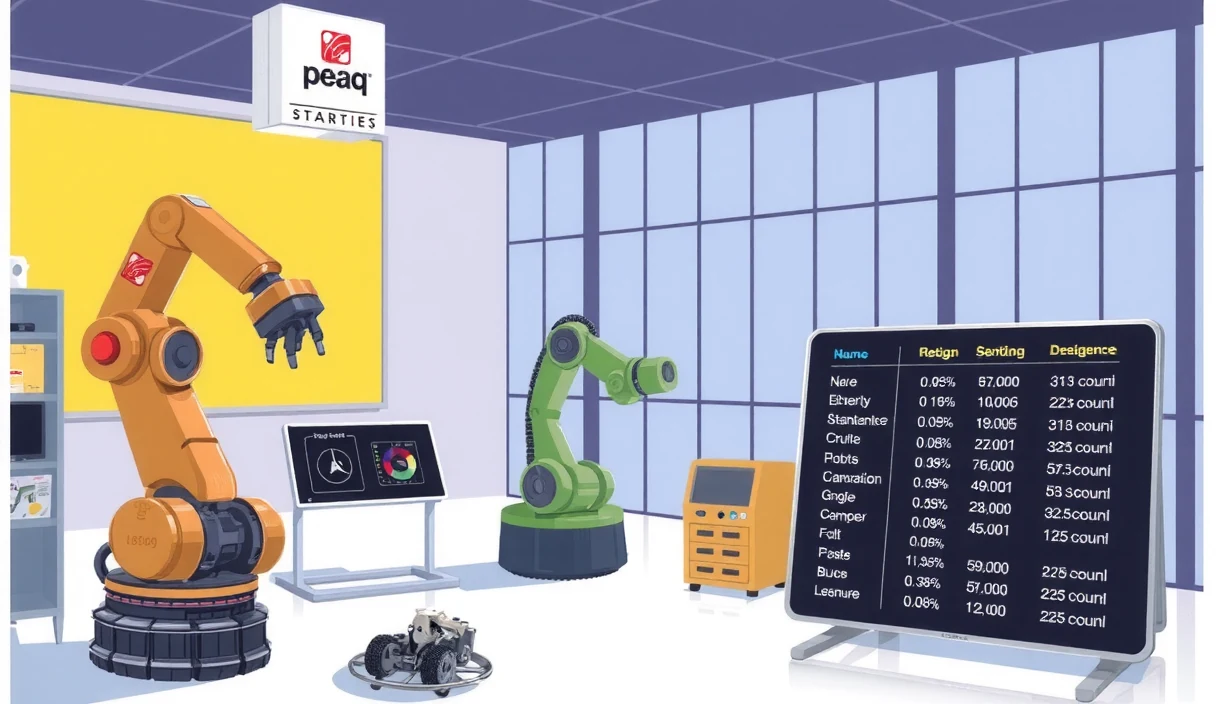
What a RobotWorkReceipt Actually Is
The RobotWorkReceipt is a signed record of what the arm was authorized to do, what it actually did, and whether those two things match. It is checkable by someone who trusts neither the robot, nor the operator, nor the team that programmed it.
This matters because robot work is currently invisible. A factory manager knows what the production line should produce. They do not know whether robot arm #7 executed its sequence correctly, deviated from policy, or was overridden by a maintenance technician. The RobotWorkReceipt makes robot work provable, auditable, and monetizable.
The receipt includes:
- Authorized actions: The policy-defined set of operations the robot is permitted to perform
- Executed actions: What the robot actually did, timestamped and signed
- Verification result: Whether executed actions fall within authorized boundaries
- Payment record: What the robot earned or spent, if the task was part of a compensated workflow
This is not a concept. It is a requirement for any machine economy where robots transact autonomously. If a robot cannot prove its work, it cannot be paid for it. If it cannot be paid, the economic loop closes.
Competitive Landscape: Robotics Hackathons and Physical AI
| Hackathon | Focus | Hardware Access | Prize/Incentive | Verification Layer |
|---|---|---|---|---|
| robo.innovate 2026 | Physical AI + policy autonomy | Doosan, UR, NEURA | Challenge rewards | peaqOS RobotWorkReceipt |
| Amazon Robotics Challenge | Warehouse manipulation | Amazon hardware | Cash prizes | None (manual judging) |
| DARPA SubT Challenge | Subterranean exploration | Custom robots | Government funding | None (telemetry only) |
| RoboCup | Soccer + service robots | Standard platforms | Trophy/competition | None |
| ETH Zurich Robotics | Academic research | Lab equipment | Grants | None |
| NVIDIA Isaac Sim Contest | Simulation + AI | Simulated only | Cash + hardware | None |
The robo.innovate hackathon differentiates itself in two ways. First, it provides real industrial hardware rather than simulation-only environments. Second, it introduces an economic verification layer through peaqOS that other hackathons do not address. The question is not just whether the robot can pick up the part. It is whether the robot can prove it, get paid for it, and do so without human intermediaries.
Strategic Implications
peaq's presence at robo.innovate is not sponsorship. It is a bet on infrastructure.
The physical AI market is moving from research to deployment faster than most observers expected. NVIDIA's recent robotics platform announcements, the proliferation of humanoid startups, and the integration of large language models into robot control all point to a world where machines need to transact, verify, and prove their work at scale.
The current state of robot economics is primitive. A robot arm costs tens of thousands of dollars, requires maintenance, programming, and supervision, and generates no verifiable output record. The factory manager pays for the arm, the electricity, and the technician, and hopes the production numbers are accurate.
peaqOS changes this by adding a verification and payment layer to robot work. The RobotWorkReceipt turns robot output into a tradable, auditable asset. A robot that can prove its work can be paid for it. A robot that can be paid for its work can be financed, insured, and traded as infrastructure rather than equipment.
This is the transition from robots as tools to robots as economic agents. The hackathon is a test of whether that infrastructure works in practice.
What to Watch
Completion rates. The challenge is designed to be achievable but not trivial. How many teams produce a working RobotWorkReceipt by day six? High completion means the SDK and documentation are mature. Low completion means the infrastructure needs more refinement.
Post-hackathon adoption. Do the teams continue building on peaqOS after the event? Hackathon projects often die when the free pizza runs out. Sustained adoption requires that the platform offers genuine utility beyond the competition window.
Policy complexity. The challenge uses a simple three-action policy: INSPECT, PICK, PLACE. Real-world robot policies are more complex. How does peaqOS handle multi-step workflows, exception handling, and dynamic replanning?
Hardware diversity. The Doosan A0509 is one cobot model. The broader machine economy includes drones, humanoids, autonomous vehicles, and industrial arms from dozens of manufacturers. peaqOS's ability to integrate with diverse hardware will determine its scalability.
TL;DR
- What: peaq hosts challenge #02 at robo.innovate 2026 alongside NVIDIA, Universal Robots, NEURA, and Doosan
- How: Teams make a Doosan A0509 cobot prove its work through peaqOS policy checks and RobotWorkReceipts
- Edge: Real hardware + economic verification layer, not just simulation or manual judging
- Impact: Tests whether robots can autonomously earn, verify, and prove their work without human intermediaries
- Watch: Completion rates, post-event adoption, policy complexity handling, hardware diversity
Sources
- peaq: Robotics Hackathon Challenge Announcement
- robo.innovate Hackathon
- Doosan Robotics
- Codecflow SimArena
Gemma Nguyen is TotesTek's Content Lead and Journalist, covering the intersection of decentralized infrastructure, physical AI, and the economic layers that make autonomous machines viable.
Related Posts
-

Lido Proposes Execution Delegation Framework: When Staking Delegates More Than Just Consensus
The proposal appeared on the Lido research forum in September 2026 with the governance language of a DAO that had spent years managing validator sets and was ready to formalize a practice that had been happening informally since the protocol launched. The Execution Delegation Fra
-

ERC-8320: Regulated Asset Claim: When Ethereum Becomes a Compliance Layer
The proposal appeared on the Ethereum standards forum in September 2026 with the regulatory vocabulary of a compliance officer who had finally found a way to bridge the gap between permissionless blockchains and permissioned finance. ERC-8320 proposed a standard for "regulated as
-
EIP-7923: Linear, Page-Based Memory Costing: When Ethereum Fixes One Problem and Creates Another
The proposal appeared on the Ethereum Magicians forum in September 2026 with the technical precision of an engineer who had spent months profiling gas costs and was ready to fix what they saw as an obvious inefficiency. EIP-7923 proposed replacing Ethereum's quadratic memory expa
-
Acurast and peaq Bring Phone-Powered Compute to Robots and Machines
I watched a quadruped robot finish its evening survey of a solar farm last month. Hours of thermal footage, and a defect report due before the morning shift. The robot had more data than it could process, and the nearest cloud instance was a login screen, a credit card, and a hum